
Despite the fact that animal health is a key issue in the EU’s agriculture policy, and was recently highlighted in its Livestock Strategy and the ex-post evaluation of the 2016 EU Animal Health Law, the issue of mass culling of animals after an animal disease outbreak is still left open.
Behind every animal disease outbreak lies a cost rarely accounted for in official statistics: animals killed even when healthy, farmers' lifetime works destroyed, welfare protections that become secondary overnight, and farmers and veterinarians left to carry out killings they never wanted to.
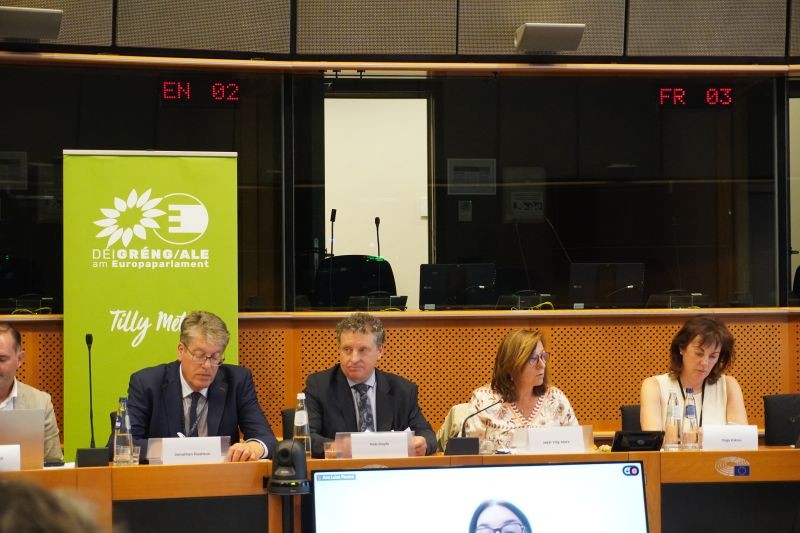
That was the picture presented at a recent European Parliament event where scientists, veterinarians, EU officials, policymakers and farmers examined the true cost of animal disease outbreaks in the EU. The event took place ahead of the European Commission's adoption of the Livestock Strategy.
Participants at the event, co-organised by Animal Advocacy & Food Transition (AAFT) and the Federation of Veterinarians of Europe (FVE), learned that for several animal diseases, mass culling is the default response rather than a genuine last resort.
This is contrary to a statement adopted in November by the FVE General Assembly in Limassol (Cyprus). The FVE stressed the urgent need to avoid, whenever possible, mass killing and disposal by strengthening biosecurity, surveillance for early detection and specifically vaccination, as the cornerstones of animal disease prevention and control.
According to the FVE, delivering quality vaccines to immunise animals against diseases is the best preventive method to stop their spread. It reduces the need for drastic emergency response measures, protects animal lives and farming economies, and relieves pressure on public budgets by limiting the need for large-scale compensation for killed and disposed animals.
Last resort
Transboundary animal diseases – such as the Highly Pathogenic Avian Influenza (HPAI), Bluetongue (BTV), Foot-and-Mouth Disease (FMD) and Lumpy Skin Disease (LSD) – pose serious and growing threats across Europe and the world, which have serious consequences for animals, people and the environment.
In 2025, FMD outbreaks in the EU led to the culling of over 18,000 cattle and caused economic losses exceeding €1 billion. Also in 2025, around 5 million poultry were culled due to Newcastle disease. The EU continues to cull millions of birds annually in response to HPAI. In Greece, a reported half a million sheep were culled during the last couple of years due to sheep pox.
Speakers at the event spoke of animals having to be culled even when healthy or vaccinated due to the fact that international trade rules often will not accept meat from vaccinated herds. Farmers reported losing herds built over generations within days, and veterinarians described being insulted and intimidated while carrying out culls, with some reporting depression, anxiety and post-traumatic stress.
As the EU provides a broad framework for disease control, EU Member States apply their own rules regarding culling operations. "Many of our reactions are focused in terms of trying to get rid of the host, not the pathogen," said Professor Jonathan Rushton, Professor of Economics of Animal Health at the University of Edinburgh.
"European law recognises that animals are sentient. And yet, when disease strikes, our law makes killing the first response, and treats the alternatives as an exception rather than a path they must take," said Dr Valerie Jonckheer-Sheehy, Senior Adviser at Caring Vets. "The killing of healthy animals should be a genuine last resort, written into our laws, not left to discretion."
What next?
According to the evaluation of the Animal Health Law, the law has been widely acknowledged as a significant step forward in harmonising the EU’s approach to animal health and moving from a reactive to a preventive system. However, it is still a work in progress. Most EU Member States have not yet completed the alignment of their national legislation with the law.
Ireland, which on 1 July took over the rotating EU Presidency, was represented by Rob Doyle, Head of Legislation at the Irish Ministry of Agriculture, Food and the Marine. Animal health runs across all three pillars of Ireland's EU Presidency programme – values, security and competitiveness, he said.
For the Irish EU Presidency, this means keeping prevention and preparedness at the centre of the animal health agenda in a changing animal health landscape in the EU, Doyle explained.
"The Irish EU Presidency will help Member States to identify practical ways forward when there is a basis for agreement, fulfilling its role in a balanced, evidence-based and delivery-focused way. Ireland will support work on vaccination as part of a wider prevention and control framework, including surveillance, biosecurity and risk communication."
The Livestock Strategy states that the evaluation of the Animal Health Law will provide a basis for updating the EU's One Health approach to disease management. The Commission will reinforce adaptability to emerging risks and diseases and review whether the current disease categorisation system remains fit for purpose. The issue of culling, however, is not explicitly mentioned.
"We cull, we move on, and then it happens again," Olga Kikou, Director, Animal Advocacy & Food Transition, summarised the event.
"Crisis, cull, crisis again. We keep spinning because we're not addressing what drives it: overcrowded facilities, intensive stocking densities, vast numbers of animals in poor conditions. You don't break out of it by culling faster. You break it by stepping out of it, fewer animals in better conditions."
