
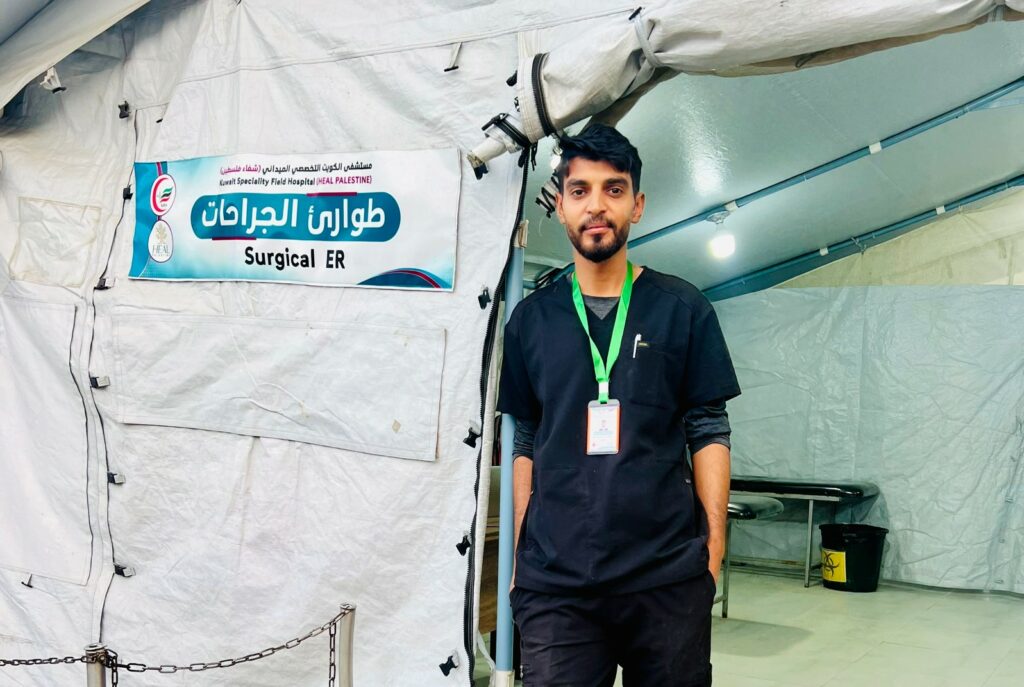
When news reached Palestinian doctor Ahmad Abu Jami, 28, that he had secured a fully funded scholarship to study at a Belgian university, he was over the moon. But due to Belgian restrictions, he is unable to apply for a visa.
After a competitive selection process, Abu Jami was accepted into the Master of Public Health programme at the Institute of Tropical Medicine (ITM) in Antwerp. His joy was short-lived, however, as he quickly ran into difficulties with his visa process.
"Studying in Belgium would mean the world to me," Abu Jami tells The Brussels Times from a tent on the seashore in Gaza, which he shares with his family.
When we speak, he has just got back from working a 24-hour shift at the hospital.
During the last three years of Israel's war in Gaza, after Hamas' terror attack on 7 October 2023, Abu Jami has been volunteering in mobile clinics and medical points, helping in refugee camps and working in hospitals under extreme conditions, all the while being displaced.
He spends most of his days at work, and tries to study in his free time.
"I studied medicine for years, graduated and completed my internship during war," he says. "This scholarship should be a turning point, but I now risk losing it due to circumstances beyond my control."
A formality
For the time being, Abu Jami remains stuck in Gaza: Belgium's Federal Government will not allow him to apply for a visa remotely to travel to Belgium.
At least six other Gazan students who have secured a scholarship at a Belgian university are in the same situation.
But the universities are not taking this situation lying down. In early June, they wrote a joint letter to Prime Minister Bart De Wever (N-VA) and the deputy PMs to demand that remote visa applications be made possible for Gazan students and that, upon approval, they be supported in travelling to Belgium.
Universities in the Netherlands faced a similar situation, until a public campaign and two court cases managed to persuade the Dutch Government to allow over 40 students to come to the country.
The letter from the Flemish universities has not yet had any effect.
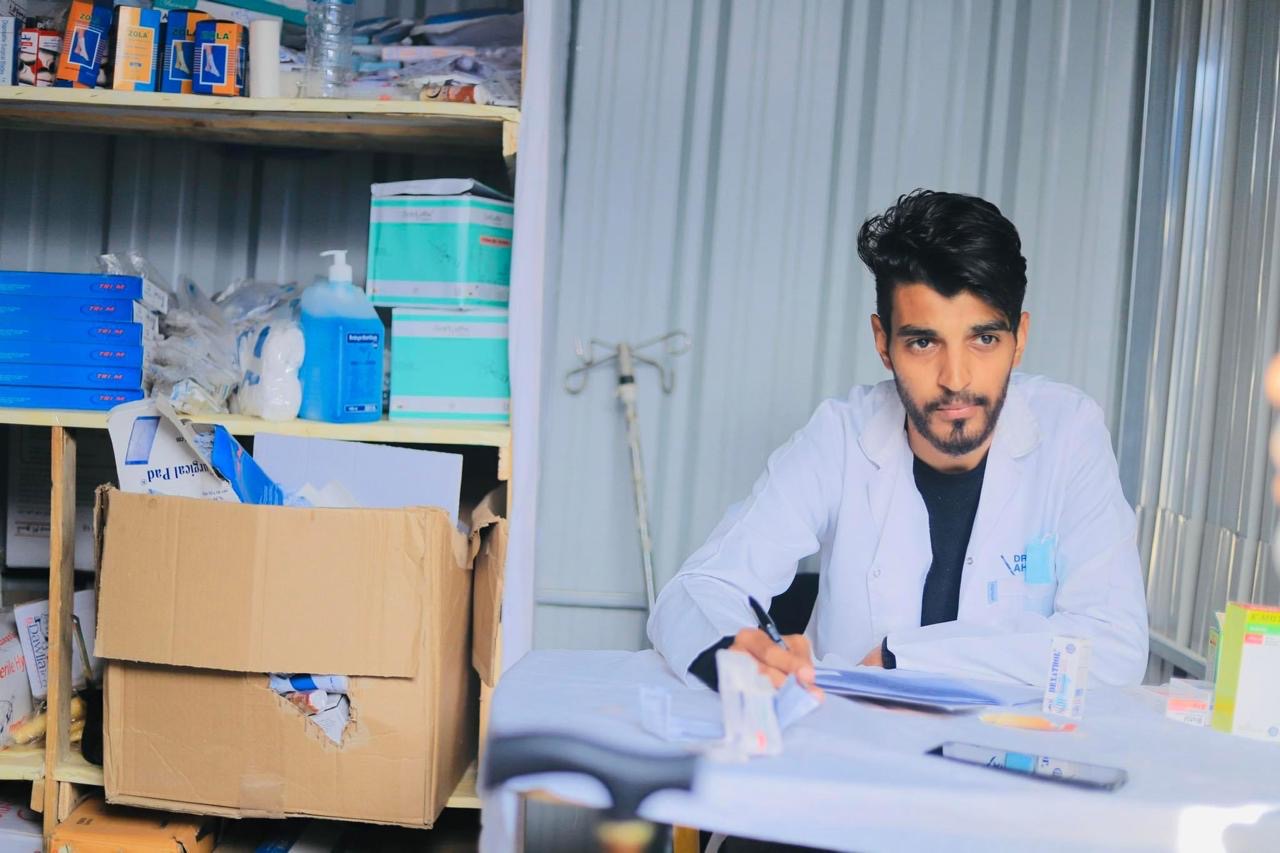
Credit: Ahmed Talat Abu Jami
In a statement to The Brussels Times, the Institute of Tropical Medicine (ITM) in Antwerp stressed that, based on his "academic excellence", Abu Jami was one of two Gazan students they selected for a DGD scholarship – funded by Belgium's Federal Government through the Directorate-General for Development Cooperation.
This means that the budget for his scholarship is indirectly provided by the Federal Government – making the approval of such visas for foreign scholarship students usually a formality.
ITM stressed that it has engaged with the Directorate-General for Development Cooperation and Foreign Minister Maxime Prévot's (Les Engagés) office to explore possible solutions. "Unfortunately, this has not yet resulted in a practical solution that would allow them to apply for a visa."
Underlining the immense health needs and extraordinary pressure on the healthcare system in Gaza, the institute pointed out that highly-trained healthcare professionals will be required to rebuild and strengthen the system.
"Helping prepare the next generation of health professionals is one of the most meaningful contributions ITM can make to this effort," they said. The institute added that their scholarship offer to the students remains open, should they be able to travel to Belgium at a later date.
Trapped between impossible options
The Belgian State argues that international students must apply for their visas at a consulate or embassy in person. Gaza, however, has no Belgian diplomatic mission.
"Leaving Gaza to apply from another country is not possible without a visa. This has created a situation where we are trapped between two impossible options," explained Abu Jami.
For this reason, one of the other six students, who received a scholarship at Hasselt University, brought a legal case against the Belgian state. At the end of May, the judge ruled in his favour, stating that Belgium must allow visa applications to be submitted remotely.
The judge ruled that there is no legislation that obliges scholarship students to apply for their visas in person. A degree of flexibility on the part of the state would be appropriate "given the highly exceptional and dire situation in Gaza", the judge added.
However, the Consulate-General of Belgium in Jerusalem told students in an email, which The Brussels Times has seen, that applications for visas on study grounds for people in the Gaza Strip were not allowed to be submitted by email. This, the consulate said, was only possible for family reunification.
Asked about this by The Brussels Times, the consulate referred any questions to the Ministry of Foreign Affairs in Brussels. The Ministry said it could not comment on individual legal cases or on the specific circumstances of individual cases.
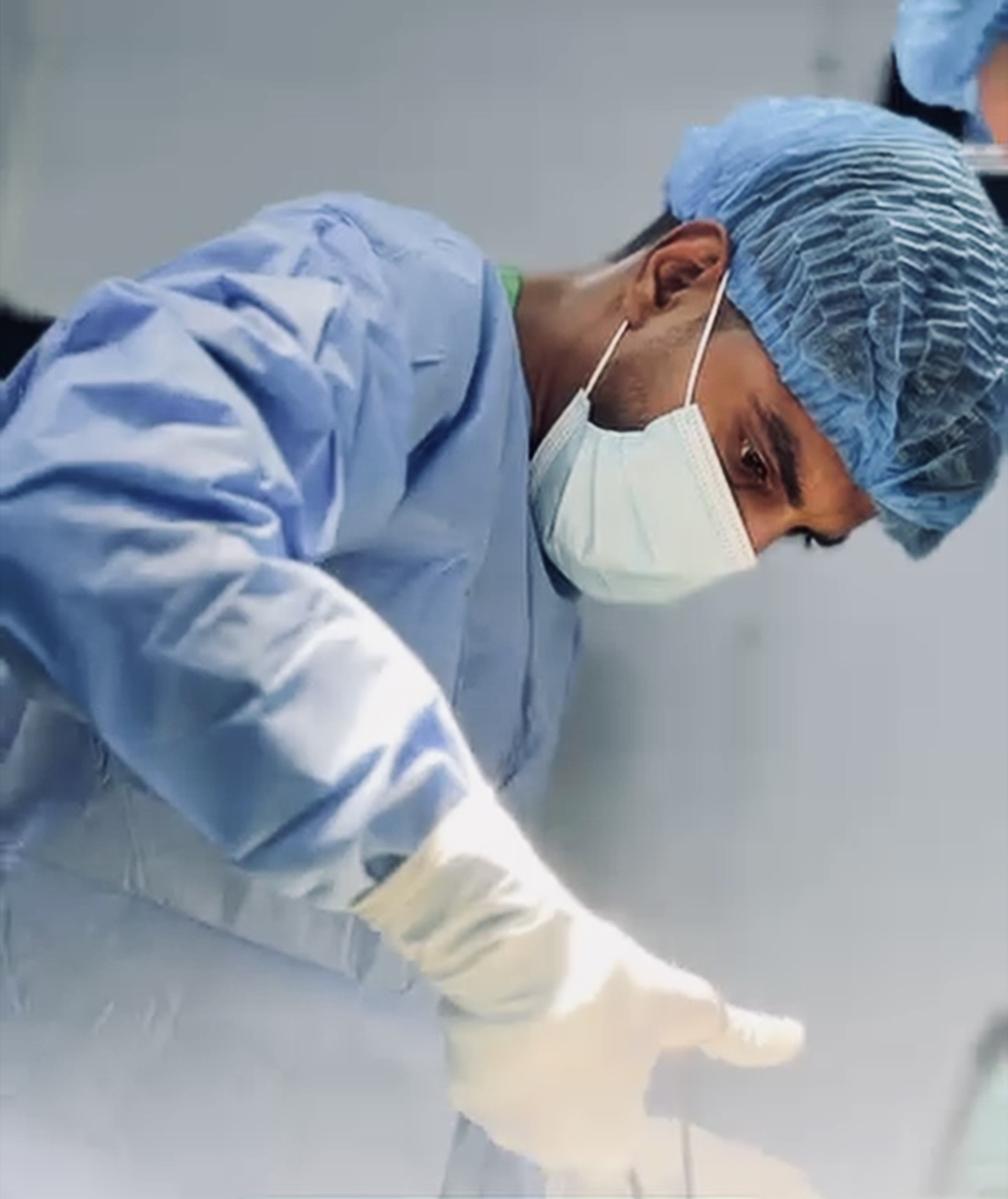
Credit: Ahmed Talat Abu Jami
Abu Jami says that the Belgian authorities are fully aware of the situation, but have not proposed a practical solution.
"Life can be difficult here, fighting for water and food every day, but I do not let it stop me. I still work and study," he says. "But when I hear that no one can help me continue my education, that sometimes takes up all my energy. It is as if I am doing everything for nothing. I am fighting, but nothing is moving."
Thanks to the court ruling, the Gazan student, who has a scholarship at Hasselt University, was able to submit a visa application via email after all. However, The Brussels Times understands that he has not received a response yet.
What's more, approval does not necessarily mean he can leave Gaza, as Belgium is not currently carrying out any evacuations.
More than 1,000 people with visas for family reunification are currently still stranded because the government is not organising any evacuation operations – even when other European countries are.
'Problematic'
In Parliament last Wednesday, Foreign Affairs Minister Prévot stressed that while a visa grants the holder the right to reside in Belgium, it does not entitle the holder to expect Belgium to be responsible for organising an evacuation operation.
"While evacuations are certainly exceptional, they are, above all, exceptionally complicated to carry out in the specific context of Gaza," he said, adding that they are currently "not considered a realistic option, even setting aside any potential willingness to organise them.
Still, Prévot called it "problematic" that students who have been awarded a scholarship to study in Belgium are unable to take it up because they cannot leave Gaza. "I therefore hope to be able to find a solution for them too."
His office clarified to The Brussels Times that the minister is actively working towards a "realistic and workable solution for people currently in Gaza who have been granted permission to come to Belgium", including researchers and students who hold a scholarship.
Now, Prévot's priority is to find a concrete solution that will enable individuals to actually leave Gaza. "Once such a solution has been found, the other practical and administrative aspects will also be addressed, including the submission of visa applications," a spokesperson said.
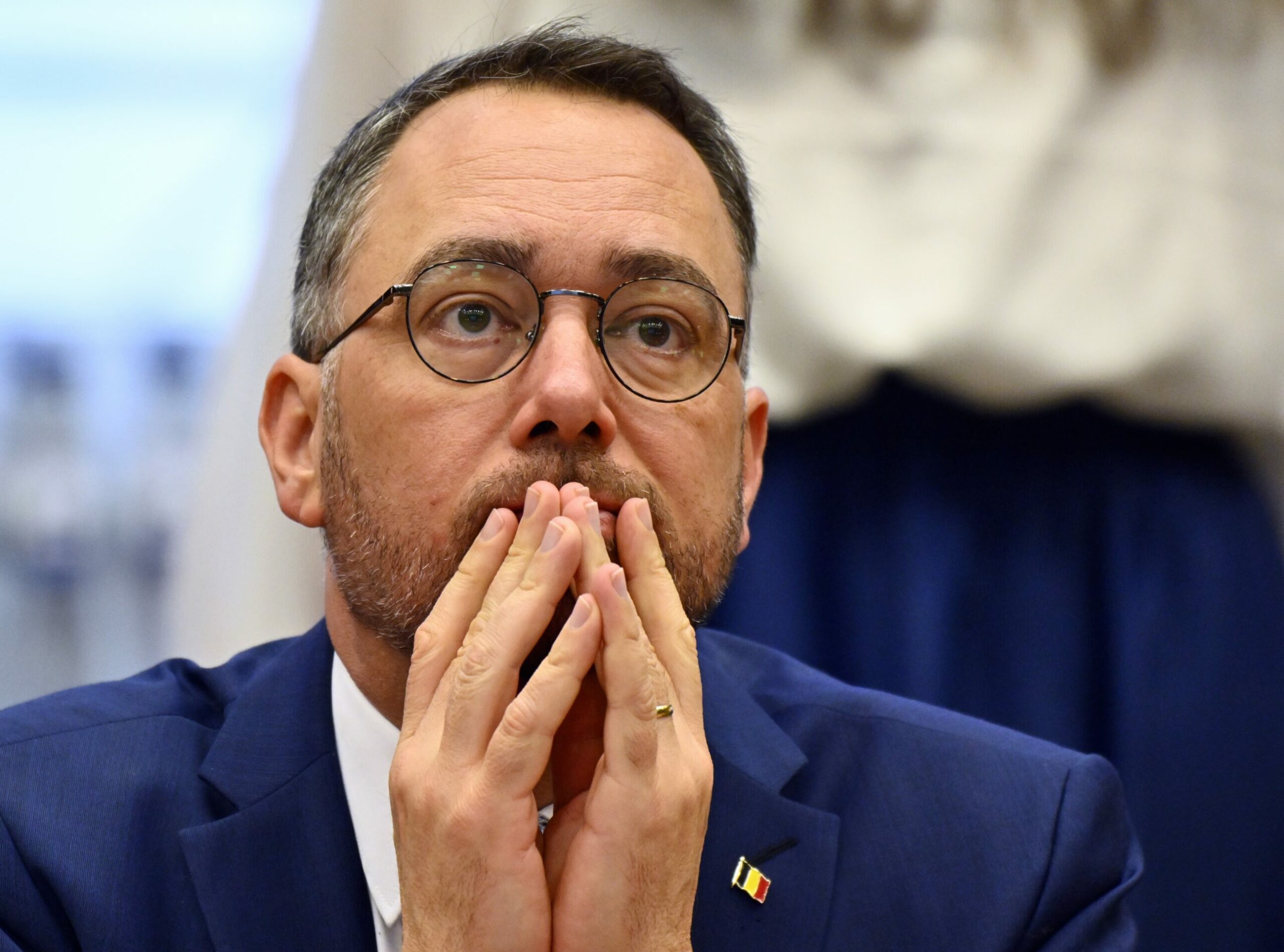
Federal Minister of Foreign Affairs Maxime Prévot (Les Engagés). Credit: Belga/Eric Lalmand
However, he and Asylum and Migration Minister Anneleen Van Bossuyt (N-VA) share the view that the principle of in-person attendance for visa applications must be upheld.
While Van Bossuyt recognised the "exceptionally difficult" conditions in Gaza, she stressed to The Brussels Times that these do not alter the fact that "Belgium must continue to safeguard the integrity of its visa procedures and carry out the necessary security and identity checks".
She stated that applications submitted by email "entail a risk of reduced oversight and increased vulnerability to fraud", explaining that diplomatic and consular missions would not be able to immediately carry out certain checks that require "physical presence, expertise and a local network".
According to the court, however, it would be possible to carry out such checks following a visa application submitted by email.
Importantly, neither Prévot nor Van Bossuyt have offered an alternative.
Despite this, Abu Jami remains hopeful. "I have ambition to be better, gain more knowledge and specialise in a field. So this is a huge opportunity to become a better doctor. After my studies, I want to come back to improve the medical field here with everything I have learned."
His classes start in September, and he vows to keep trying to make it to Belgium. "I worked so hard to get this, something just has to change. And if nothing does, at least I have tried everything I can."
