
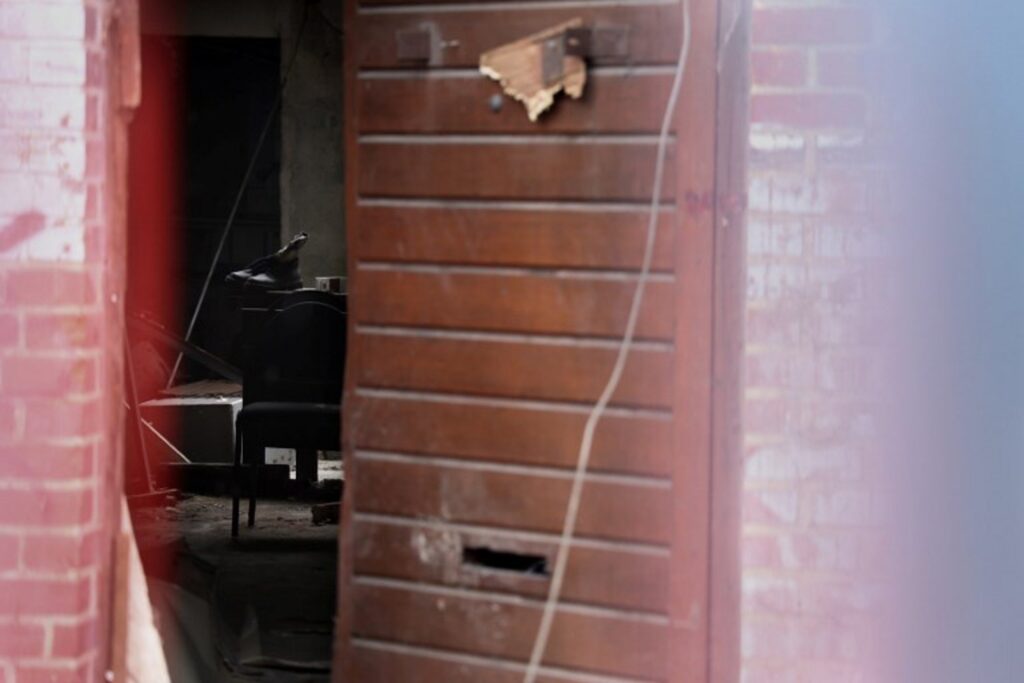
Thirty years after Marc Dutroux was arrested in Marcinelle, the case remains one of Belgium’s darkest scandals, exposing grave failures in policing and justice while still generating fresh investigations from his prison cell.
Dutroux was arrested on 13 August 1996 in Marcinelle, near Charleroi, after investigators gathered witness testimony and other information.
Two days later, on 15 August, Sabine Dardenne, 12, and Laetitia Delhez, 14, were found alive in his home. The girls had been held in a concealed space built into the cellar.
Another grim discovery followed on 17 August, when the bodies of Julie Lejeune and Mélissa Russo were found buried in the garden of another property owned by Dutroux in Sars-la-Buissière, in Hainaut.
On 3 September 1996, the bodies of An Marchal and Eefje Lambrecks, two Flemish teenagers who had disappeared in August 1995, were exhumed near a chalet in Jumet beside another of Dutroux’s properties.
The case quickly triggered shock in Belgium and abroad. It revealed serious failings within the country’s police and judicial institutions.
It emerged that Dutroux, who had previously been convicted of sexual assaults, was on parole at the time of the crimes. Several warning signs and pieces of information about him had either been overlooked or poorly handled by investigators.
Public anger led to an unprecedented mobilisation. On Sunday 20 October 1996, more than 300,000 people joined the White March in Brussels to demand justice for the victims and sweeping reform of the justice system. It was the largest gathering in Belgium since the Second World War.
After eight years of a highly complex investigation, the trial of Dutroux and his accomplices opened at the Assize Court in Arlon on 1 March 2004. The hearings lasted more than three months and drew extraordinary media attention.
On 22 June 2004, Dutroux was found guilty of abduction, unlawful detention, rape and murder, and sentenced to life imprisonment.
His wife, Michelle Martin, was sentenced to 30 years in prison for complicity. Another accomplice, Michel Lelièvre, received a 25-year sentence.
Michel Nihoul, who had been accused of taking part in the abductions, was acquitted on those charges. He was, however, sentenced to five years in prison for drug trafficking and criminal association.
The Dutroux case became a turning point for Belgian society and led to major institutional reform. After the White March, the then prime minister, Jean-Luc Dehaene, pledged to overhaul the justice system and punish those responsible for the failures.
He also announced the creation of a national centre for missing children, which became Child Focus. A parliamentary inquiry was set up soon afterwards. Its hearings, broadcast live on television, attracted audiences of up to 700,000 viewers.
The inquiry highlighted major weaknesses in the investigation, including poor co-ordination and damaging rivalry between different police services. It issued recommendations for reorganising the justice system.
Reform gathered pace after Dutroux’s brief escape in 1998. The incident prompted the immediate resignation of justice minister Stefaan De Clerck and interior minister Johan Vande Lanotte.
In the months that followed, Belgium’s security structure was deeply reshaped. A two-tier integrated police service, local and federal, replaced the previous fragmented system of municipal police and the gendarmerie.
The Franchimont law modernised criminal procedure and significantly strengthened victims’ rights, allowing them to request additional investigative steps and to be heard during parole proceedings.
In 1999, a High Council of Justice was created to safeguard judicial independence. A sentence enforcement court was later established in 2007 to oversee the execution of criminal penalties.
Not all promised reforms were carried through. Plans for a judicial training school, for example, never materialised.
The disciplinary sanctions once promised against those responsible for the failings also came to nothing. Proceedings ended without any effective punishment, whether because no proven misconduct was established, the facts had become time-barred, or procedural flaws had undermined the cases.
Although Dutroux was arrested three decades ago, he remains in the news from his cell in Nivelles prison.
On 31 July 2024, a search of his cell uncovered four envelopes containing around 200 photographs of naked women, some of which may depict minors.
Two years later, the investigation is still ongoing, a delay that Julie Lejeune’s father, Jean-Denis Lejeune, has said he struggles to understand.
After contacting the public prosecutor’s office in Walloon Brabant and receiving no clear outcome, he voiced his frustration on social media. He said many people could not understand how such images had ended up in such a secure environment.
“Either we are dealing with incompetent police officers, or they do not want to tell us the truth,” he said. “I feel as though I am reliving the same kind of situation as when the little girls were abducted in June 1995.”
Dutroux, for his part, has claimed that someone deliberately placed the images in his cell to harass him.
In June 2025, prosecutors said they had enough evidence to seek his referral to the criminal court for possessing images of child sexual abuse. But fresh lines of inquiry have since prolonged the case.
A handwriting analysis was ordered in particular to determine whether notes written on some of the photographs were made by Dutroux himself.
While investigators await those expert findings, which could prove crucial in identifying any outside assistance, his legal defence has also changed.
After representing him for a decade, Bruno Dayez has retired. Dutroux is now defended by a team of three or four lawyers who have, for now, chosen to remain out of the media spotlight.
