
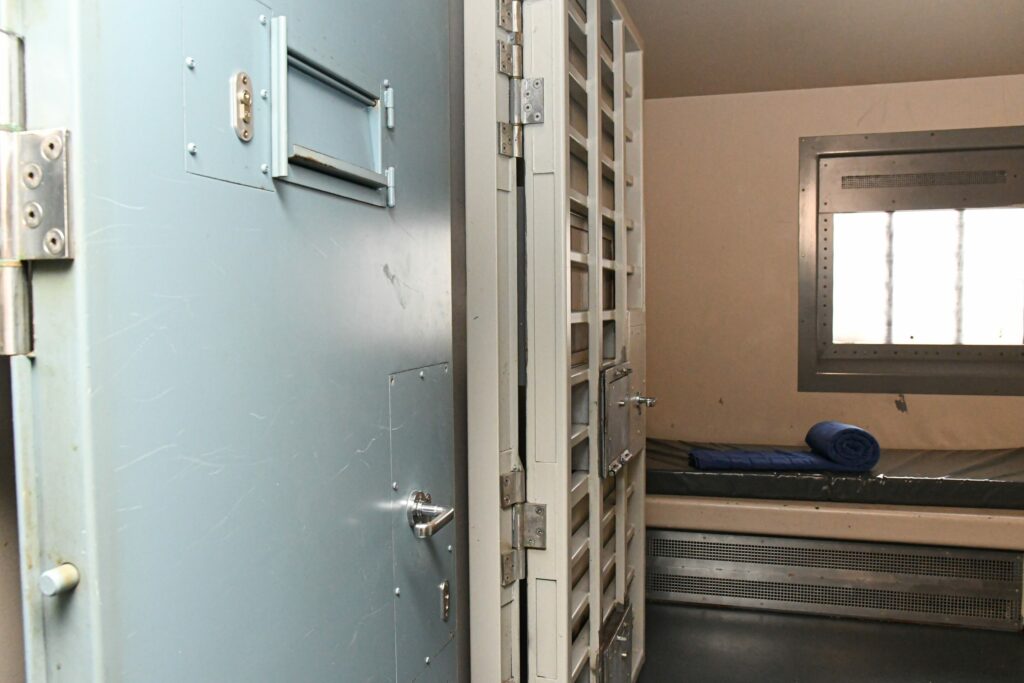
Criminal experts have raised doubts about the effectiveness of a federal plan to require criminals to contribute to the costs of their prison stays, VRT NWS reported on Wednesday.
The Belgian Government struck an agreement earlier this month ahead of the Federal Parliament's summer break.
Among the greenlit measures, the government approved a draft bill by Federal Justice Minister Annelies Verlinden (CD&V) which would require some inmates to help cover the cost of their meals and accommodation.
A spokesperson for Verlinden explained to VRT that this measure would apply to people convicted of “serious forms of organised crime, drug trafficking or human trafficking".
Additionally, a judge would reportedly be responsible for determining the details of the contribution based on an individual's financial means and social situation.
The idea had already been proposed last year as part of the justice minister's broader plan to step up Belgium's fight against organised crime.
Versions of this system have been proposed or adopted in other countries, including Germany, as well as in certain US states, according to the Flemish news outlet.
Nonetheless, some experts in the field question how impactful the measure will be. KU Leuven criminologist Tom Daems told VRT that Belgium already has several systems in place to financially target criminals.
“The proposal seems to be playing on symbolism, whilst it is unclear what benefits it might yield. It is not inconceivable that such systems will ultimately cost more in administration, procedures and recovery than they yield,” he added.
Similarly, the Belgian High Council of Justice has criticised the measure, suggesting that instead more should be done to make the confiscation of criminal assets and the collection of financial penalties more effective.
Verlinden's cabinet responded to some of the criticism, arguing that along with the draft bill, work is already underway to also improve financial prosecution and penalties in the country.
