
Neder-Over-Heembeek is an odd nomenclature for an odd little place. Tucked away abutting the canal and Vilvoorde, it is a coming together of two separate villages – Lower and Upper Heembeek. (Hey, let’s call it Lower-Upper-Heembeek).
It was folded into the City of Brussels commune in 1921 because the latter had the financial chops to develop heavy industry along the canal. And perhaps, whisper who dares, the takeover was part of an attempt by the City of Brussels commune to create a united city like Antwerp or Ghent. Well, good luck with that. Nonetheless if you think the resultant map of Brussels commune looks weird, try Los Angeles!
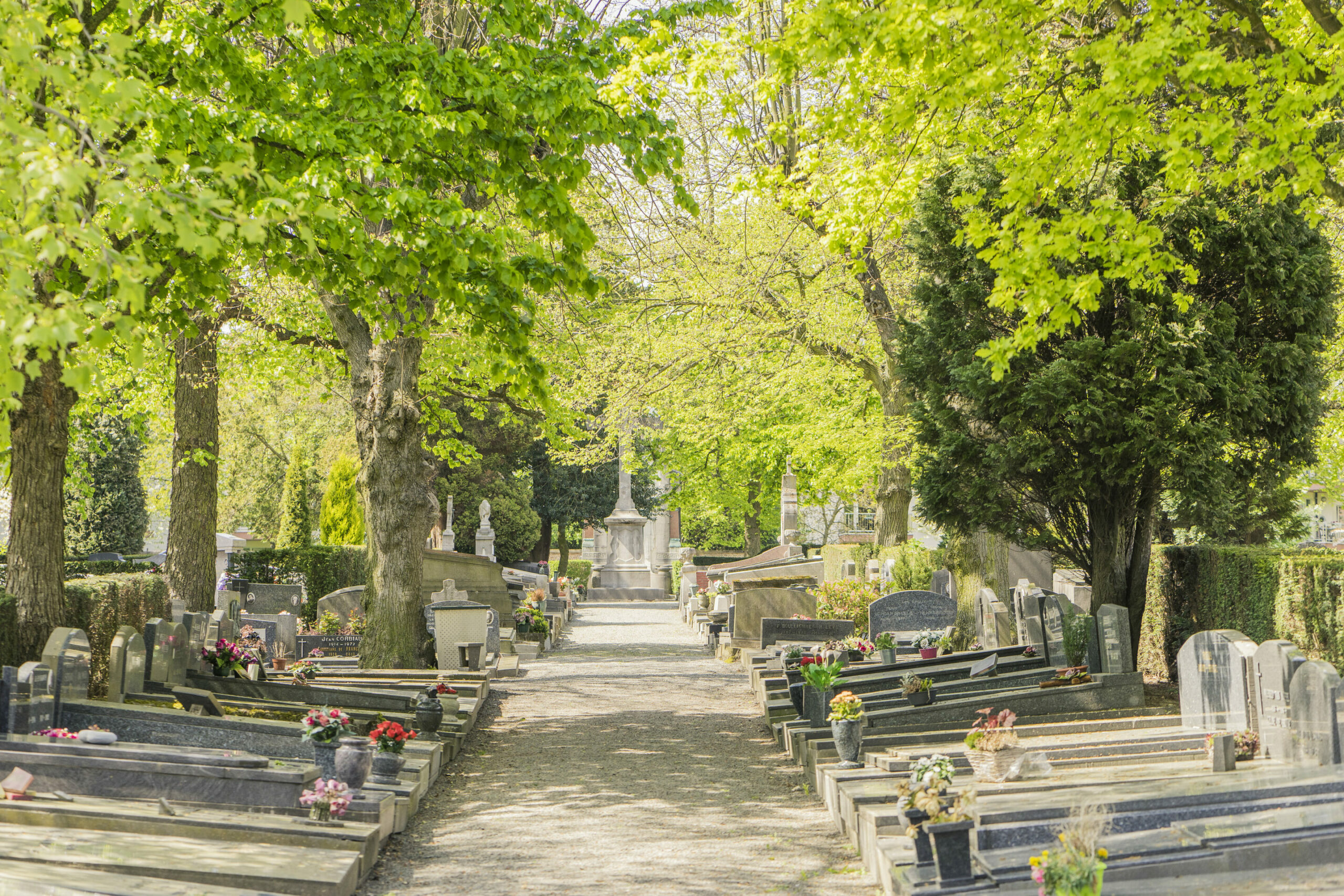
Anyway, the resultant township is now part port, part old Flemish churches, part new tram route, part military hospital, part suburbia, and part a really great swimming pool. The heavy traffic shoots insouciantly past it to the north on the Brussels ring road and to the south-east by the A12 to Antwerp. The slightly forgotten feel was exacerbated by it being a Sunday when my esteemed editor and I strolled into the NOH (sic) graveyard. Once there, however, the small, garden-like enclosure felt positively festive!
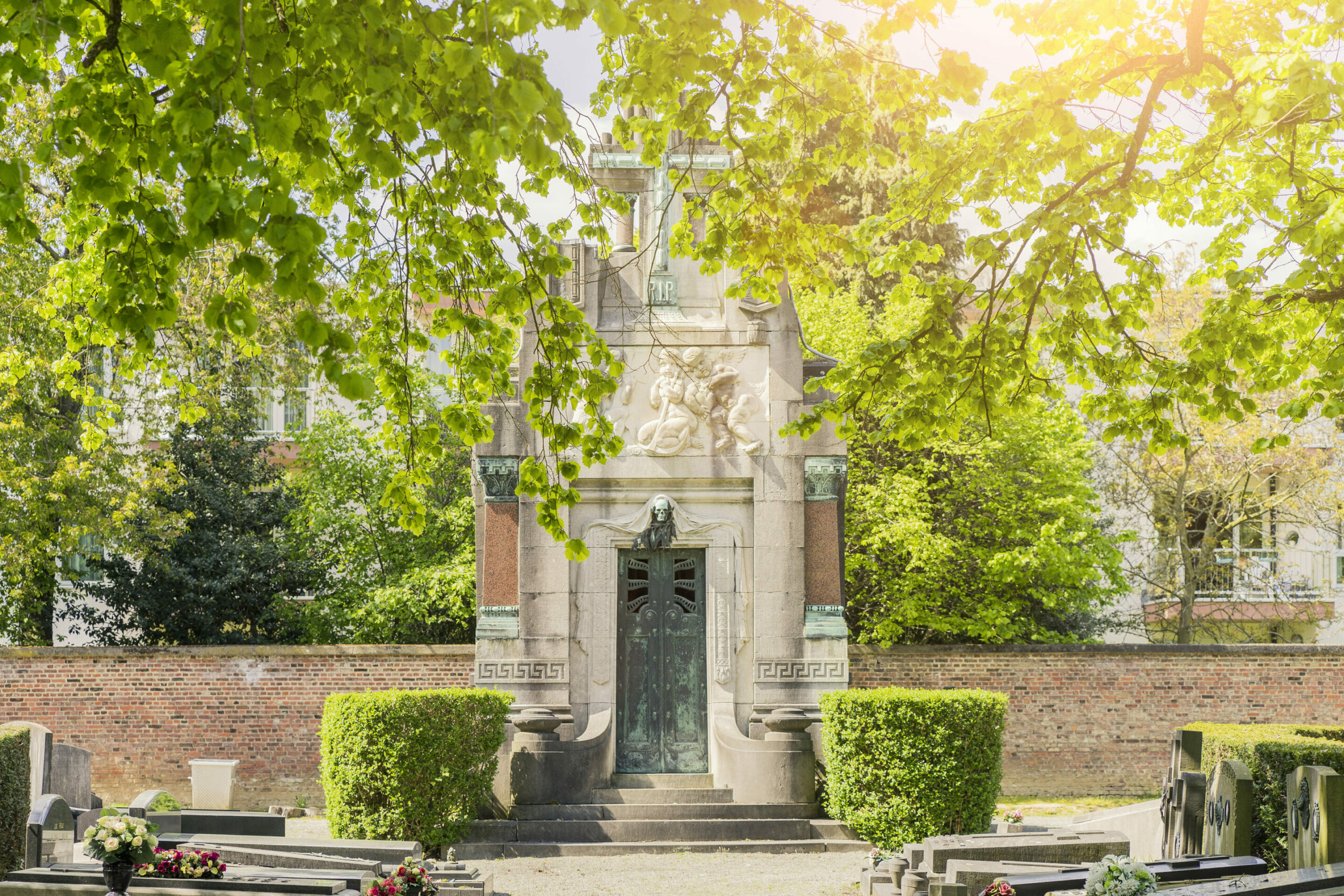
Neder-Over-Heembeek cemetary. Credit: Fiftyfifty
All this gaiety is under the auspices of “Printemps des cimetières”, which is an initiative of the City of Brussels to encourage citizens and others to appreciate what this perennially underrated capital has to offer. A quick search on the web in preparation for this article led me to channel Bx1. There, I was astonished to find myself singing the praises of NOH cemetery to a charming lady with a mic and a camera after the tour. Fame at last! If you wish to follow future events, then best go to the Ville de Bruxelles’ highly informative website. Booking is essential.
On arrival, our eyes were regaled with bunting and tents. We were relieved pleasantly of a small amount of coin of the realm by a hijabed girl and a garrulous young man. Thus, we had purchased the right to join the guide who was about to set off around the acre-sized, red brick-walled cemetery. The guide quickly apprised us of some basic facts: the land was purchased in 1893 and replaced two church graveyards – one for each village – a couple of years after. It is one of four Brussels commune cemeteries: NOH, Laeken, Haren and, well, City of Brussels.
Somewhat unexpectedly, we were quickly ushered into a hedged-off area. Beneath a mediaeval style jousting tent, two actors in Victorian mufti performed a playlet which, what with the rustling trees and the wind, proved beyond my French. It was brief, and the 20 or so, mostly middle-aged, fellow attendees clapped politely.
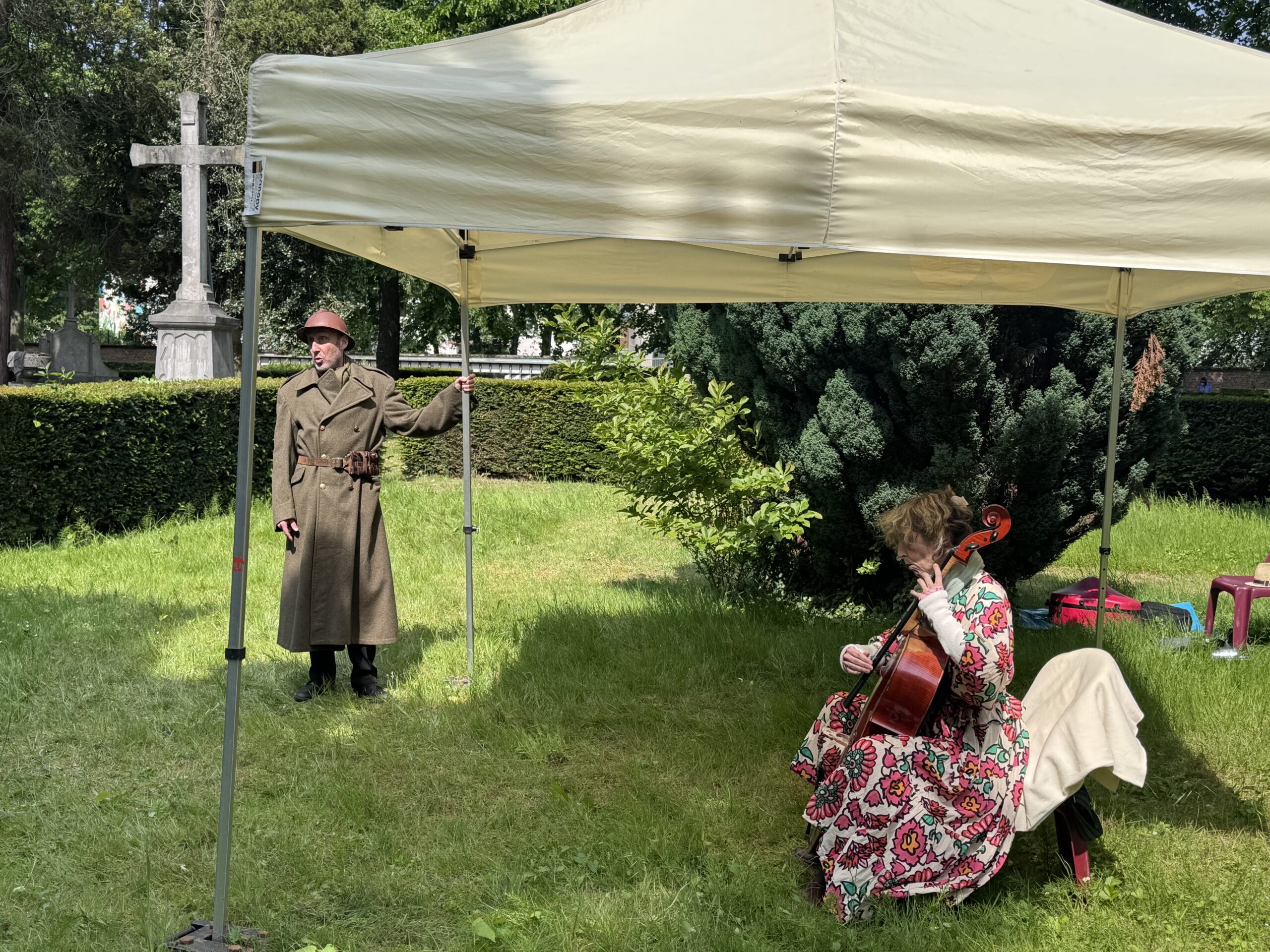
Players performing for the Printemps des cimetière at Neder-Over-Heembeek cemetery
Wallside gravestones
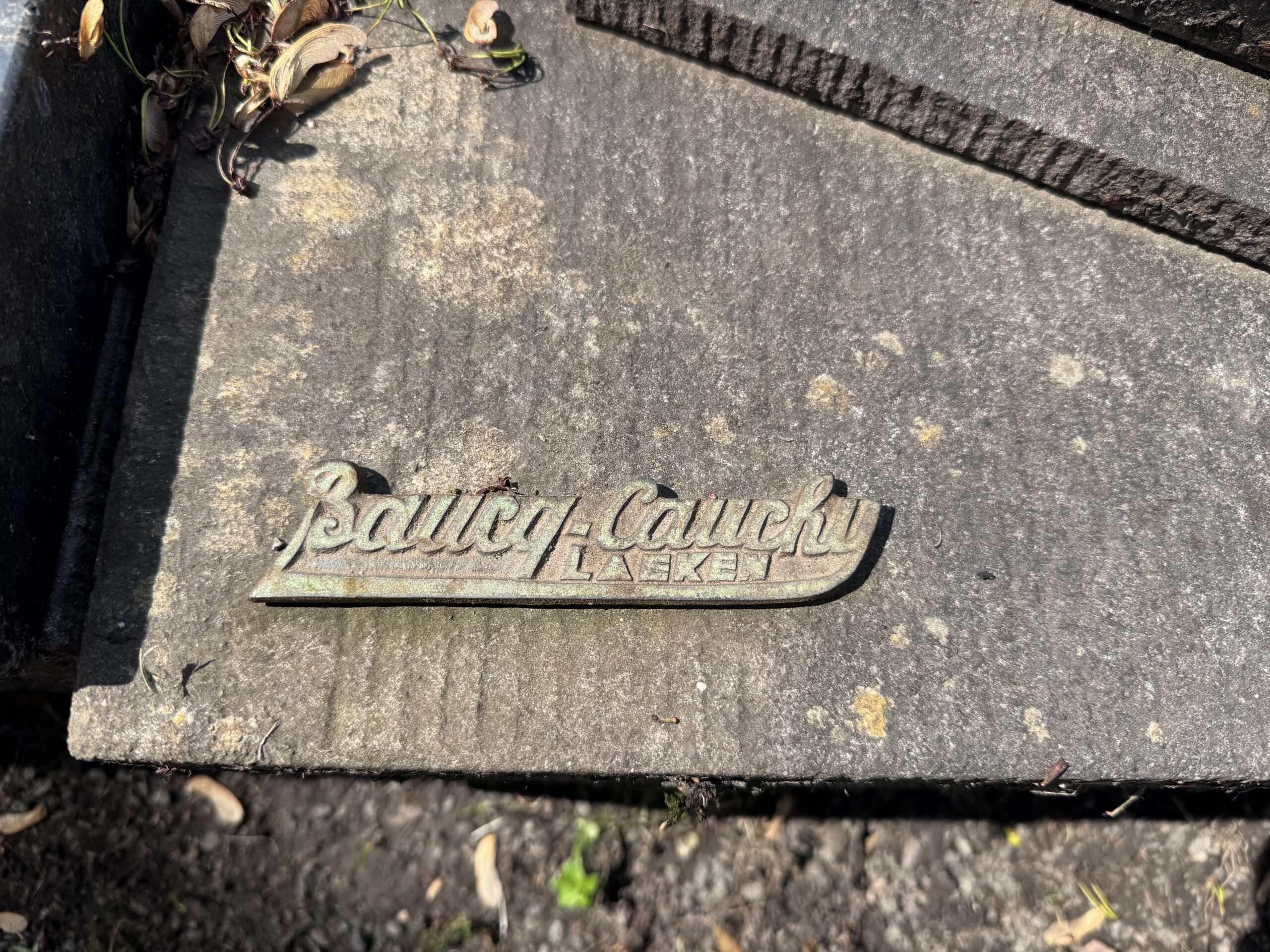
Our tour continues, with the guide pointing out the logos of the local funerary homes on the corners of some of the graves – discreet marketing, like the stickers of car dealerships around number plates.
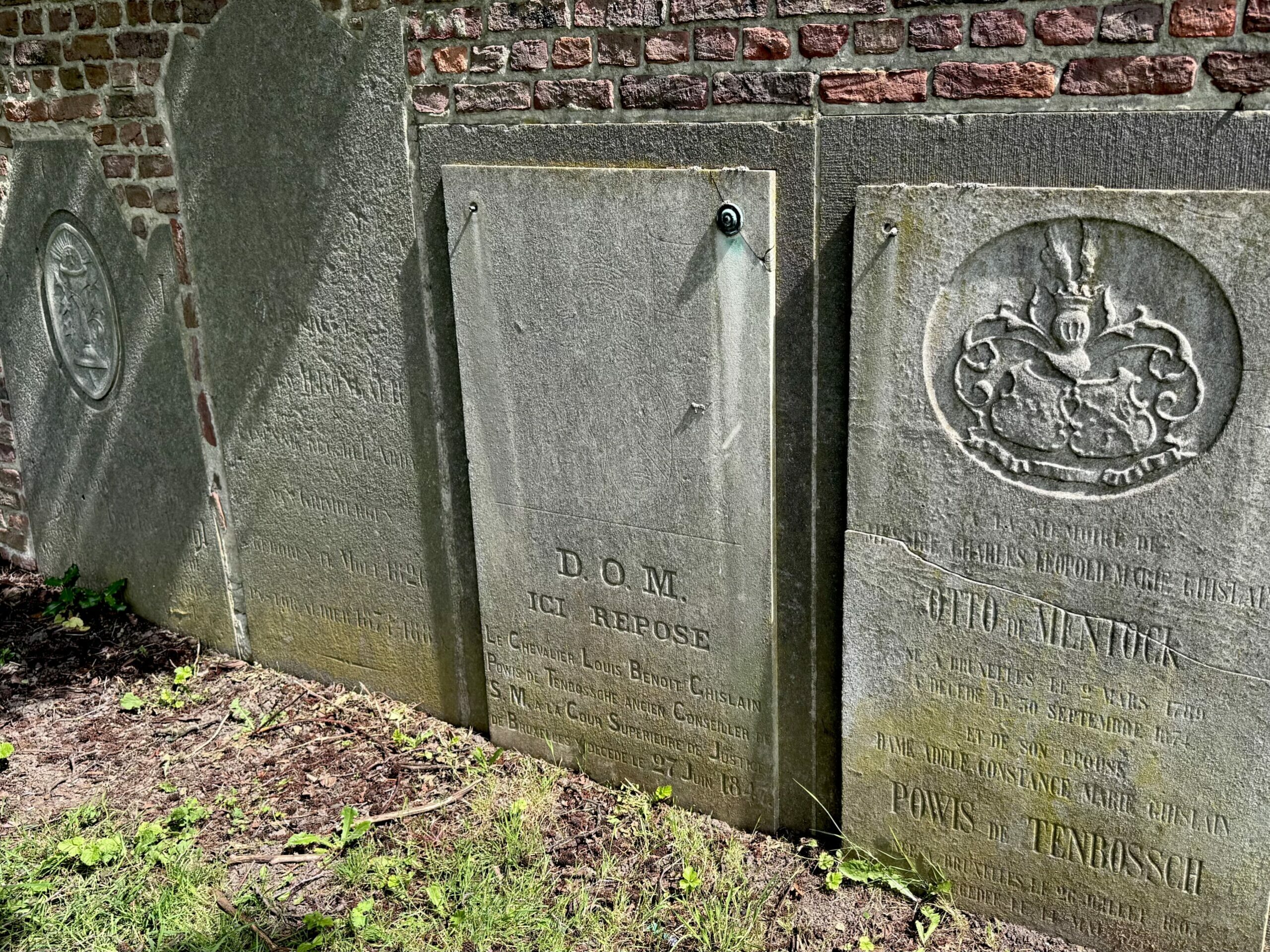
In the north-eastern corner of the cemetery, we are directed to some older gravestones which were built into the fabric of the red-brick wall. These had been carted up, or down, the hill from the two parish churches when the graveyards around them were deconsecrated.
One is dedicated to a certain Révérend Eugène Charles Kuyt of indeterminate date. I found myself wondering whether he preached in Dutch, which his parishioners would have understood, or French, which they would not. Belgium’s linguistic convolutions predate the nation itself. I also wondered why the ivy, carved on the reverend’s tombstone and emerging from a chalice, is seen as a symbol of eternal love rather than eternal strangulation. Either way, a stone cup at the foot of the gravestone denoted that the incumbent was a priest or a member of the clergy. Communion wine!
Credit: The Brussels Times / Leo Cendrowicz
Another of the wall gravestones is for Le Chevalier Louis Benoit Ghislain, who was an adviser to King Leopold I. And to Adolphe Otto de Mentock, a former cavalry officer, who was mayor of the Bruges suburb of Sint-Andries for 32 years. They were related, as were both part of the aristocratic Powis de Tenbossche family.
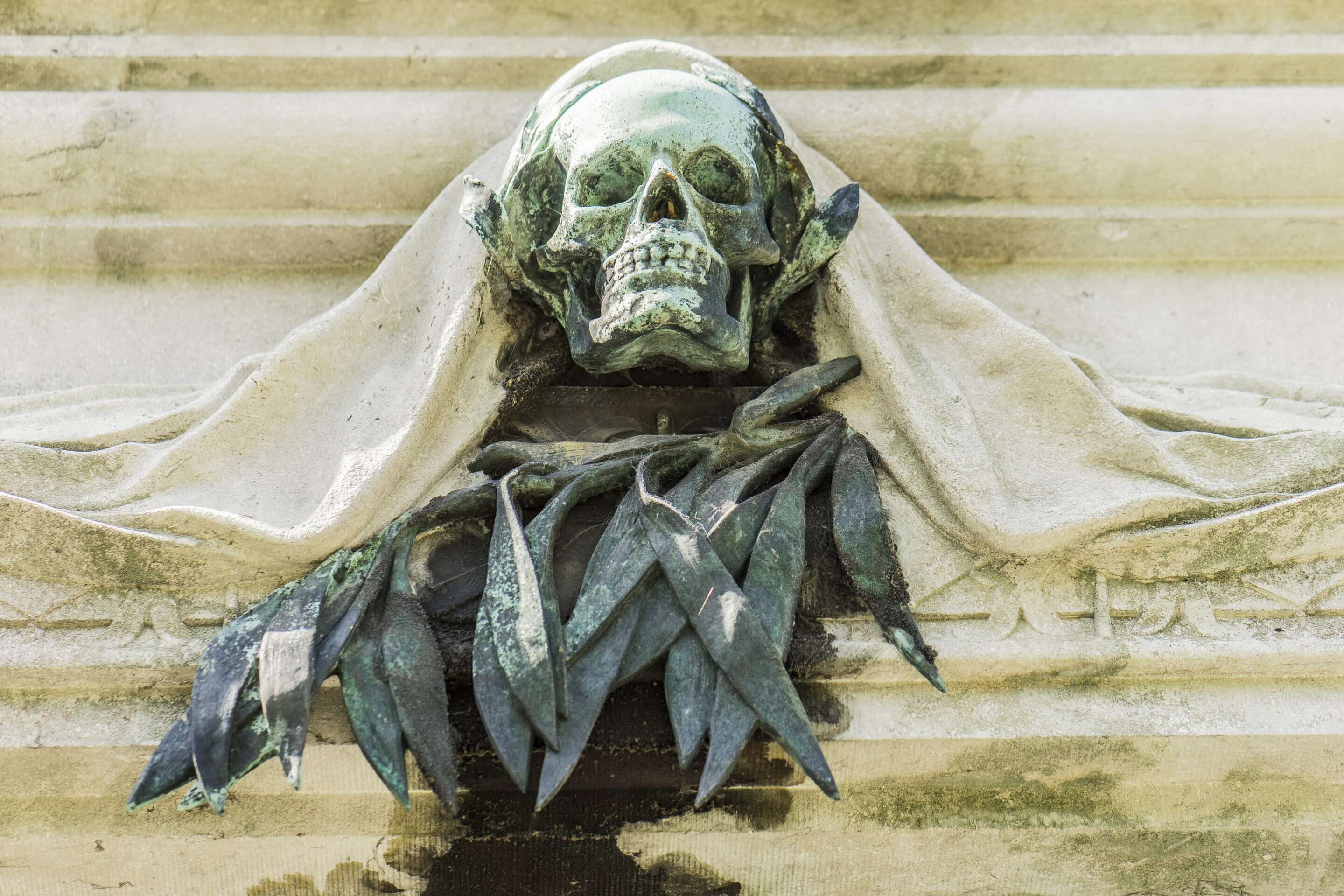
At the north-western corner, there is a fairly large mausoleum. In the quite handsomely produced brochure about the graveyard they have this to say about it: “Be careful. Do not cross the barriers. Bits may fall off.” The area is indeed fenced, though the edifice looks most imposing to my inexpert eye.
The imposing de Ro family memorial rises almost like a private chapel among the graves – a reminder of the influence once wielded by this dynasty of Brussels notaries, lawyers and politicians. Built in 1918 in an eclectic style, the mausoleum is crowned with a marble bas-relief depicting the three theological virtues – faith, hope and charity – beneath the inscription In te Domine speravi (“In you, Lord, I have placed my hope”).
Credit: The Brussels Times / Leo Cendrowicz
Curiously, the family’s most prominent figure, Georges de Ro, is not buried here at all, but at the cemetery of Laeken (where his monumental tomb features a striking sculptural group by Isidore De Rudder representing the stages of human life). A senator, mayor of Neder-Over-Heembeek and influential lawyer who once defended the controversial soldier Gustave Vandersmissen in a sensational 1886 trial, de Ro embodied the self-confident Brussels bourgeoisie of the late 19th century, a world of legal power, civic ambition and grand suburban residences such as the nearby Château de Meudon, which the family owned for decades.
Right opposite this mausoleum is a simple yet imposing tomb where lie the mortal remains of one Louis Heymbeek – the name redolent of a long-established local, working-class family. The inscription is hard to read, but the brochure makes clear that Louis was a faithful, beloved and loyal servant of the De Ro family of 50 years standing. He didn’t quite make it to the mausoleum, but certainly got a much grander tomb than he might otherwise have spent eternity under.
The last mayor
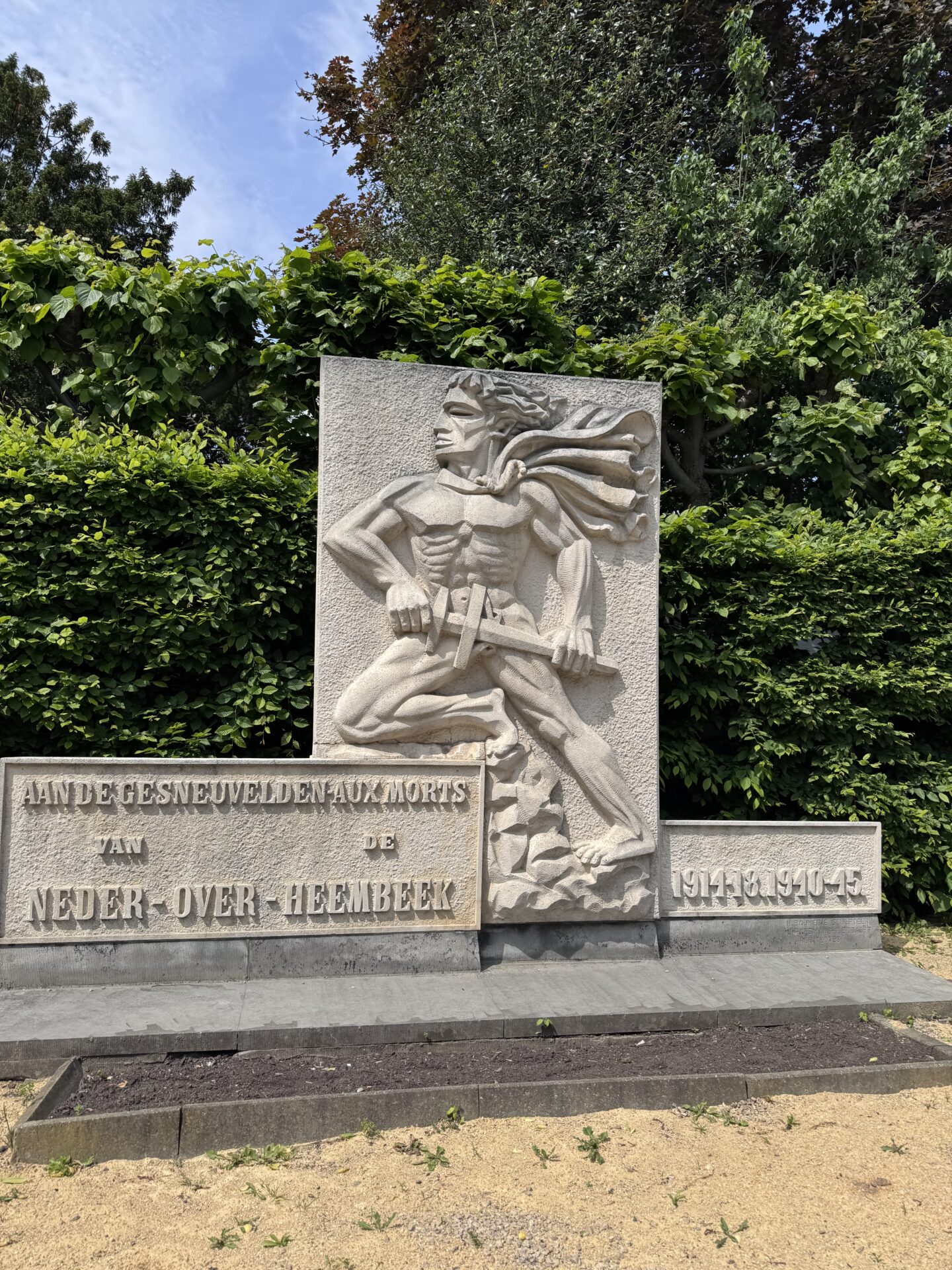
A few yards further on, beside a large tomb, the actor now stood before us once more – this time in the uniform of a Belgian infantryman of the First World War. The “monument” (the word used in French) contained the remains of ten soldiers from both Heembeeks who died in battle in both World War I and World War II. The inscription is in Dutch and reads “Zij streden voor recht en vrijheid. Hun offer brengt ons zege en vrede”. “They fell for justice and freedom. Their sacrifice brings us victory and peace.” Such memorials never fail to move one.
Neder-Over-Heembeek cemetery. Credit: Fiftyfifty
Near this is the tombs of one of the cemetery’s more quietly consequential residents, General Antonin de Selliers de Moranville, an officer who found himself at the centre of Belgium’s greatest national crisis. Appointed Chief of Staff just weeks before the German invasion in August 1914, de Selliers became embroiled in bitter rivalries within the army command and was ultimately sidelined by King Albert I, who increasingly took direct control of military strategy.
The humiliation lingered. Removed from his post after only a few weeks of war, de Selliers spent much of the rest of his long life writing and reflecting on military command, constitutional power and the monarchy’s wartime role – arguments that would echo ominously during Belgium’s later “Royal Question” crisis surrounding Leopold III. Even in death, his grave carries the air of an unresolved chapter in Belgian history.
Credit: The Brussels Times / Leo Cendrowicz
Next to him is the grave of the last mayor of NOH, before it was incorporated into the City of Brussels in 1921: Victor Brion.
Part of the reason this article is somewhat shorter than usual, aside from the cemetery's size, is the simple fact that few famous people are buried there. And that in its turn is not because NOH failed to produce its share of the great and the good. I’m sure it did. But the family of anyone who was an achiever – business, the arts, politics, sports – will likely aspire to nearby Laeken where the royal family is laid to rest. “In death we are all equal”. Well, not quite.
The tour now concluded, we forgathered for a chat, a sandwich and a beer. I am pretty sure that a local government-organised tour of a graveyard in my Anglo-Saxon world would not include alcoholic libations. That would be to incur the wrath of the Almighty; or at least social opprobrium. But not in cheerful little Belgium! I did not indulge, but it is one of the many eccentricities of my adopted country that I like about it.
