
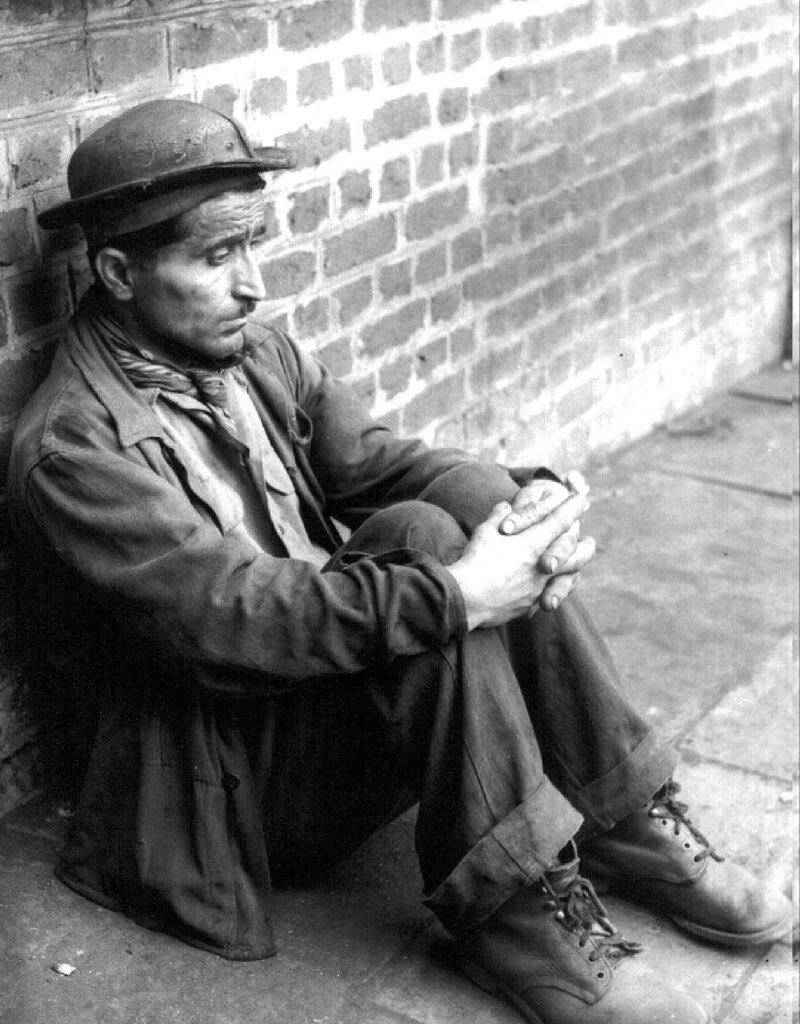
Italy has never forgotten the Marcinelle tragedy, its ambassador to Belgium said ahead of Saturday’s 70th anniversary commemorations of the Bois du Cazier mining disaster, which she said forged an unbreakable bond between the two countries.
In an interview with Belga, Ambassador Federica Favi said the disaster played a major role in shaping the uniquely close relationship between Belgium and Italy. She also said it helped accelerate the integration of Italian immigrants, who had previously faced discrimination.
The scale of the disaster remains searing. On the morning of 8 August 1956, nearly 300 men descended into the Bois du Cazier mine to extract coal. At about 8:00, human error triggered a chain reaction that caused a fire, which spread rapidly through the mine and left many with no chance of escape.
The death toll eventually reached 262, including 136 Italians and 95 Belgians. Two weeks later, an Italian rescuer who went down into the mine reportedly emerged with the verdict: “Tutti cadaveri” — all corpses.
Italian workers had become the largest group in Belgium’s mines after a 1946 coal agreement between the two countries. Under the deal, Belgium received 50,000 Italian miners, while Italy, still economically devastated after the Second World War, received several tonnes of coal each year at a low price.
Favi said Saturday’s commemoration would be a moment of remembrance and recognition for the miners who helped Italy recover some of the resources it needed to rebuild its war-shattered economy.
She described the disaster as an open wound and a shared, enduring memory for both countries. The younger generations in Belgium, she said, especially descendants of immigrants, are living proof that the tragedy must not be forgotten.
The embassy has worked in recent years to keep that memory alive. Among other initiatives, it reached an agreement with the French Community under which Italian pupils visited the Marcinelle site.
According to Favi, the disaster strongly contributed to what she called the absolutely special and unique relationship between Belgium and Italy. She said the tragedy at Bois du Cazier led to the full integration of two peoples.
When they first arrived in Belgium, Italian miners were treated somewhat as outsiders and were subjected to discrimination, she said. But after the disaster, Belgians began to see them as one of their own, according to accounts she has heard from Italians in the country.
That deep sense of shared history, she said, later became the foundation of bilateral ties and helped shape a community of around 300,000 Italians in Belgium, which she described as large, rich and beneficial to both countries.
That social integration gradually also took on a political and economic dimension. Trade in goods between Belgium and Italy now amounts to about €46.5 billion a year, almost as much as trade between Italy and China.
“It is an unbreakable bond,” the ambassador said. “Honestly, without that integration, which has its roots in Marcinelle and grew out of the post-war waves of migration, I do not know whether history would have unfolded in the same way.”
