
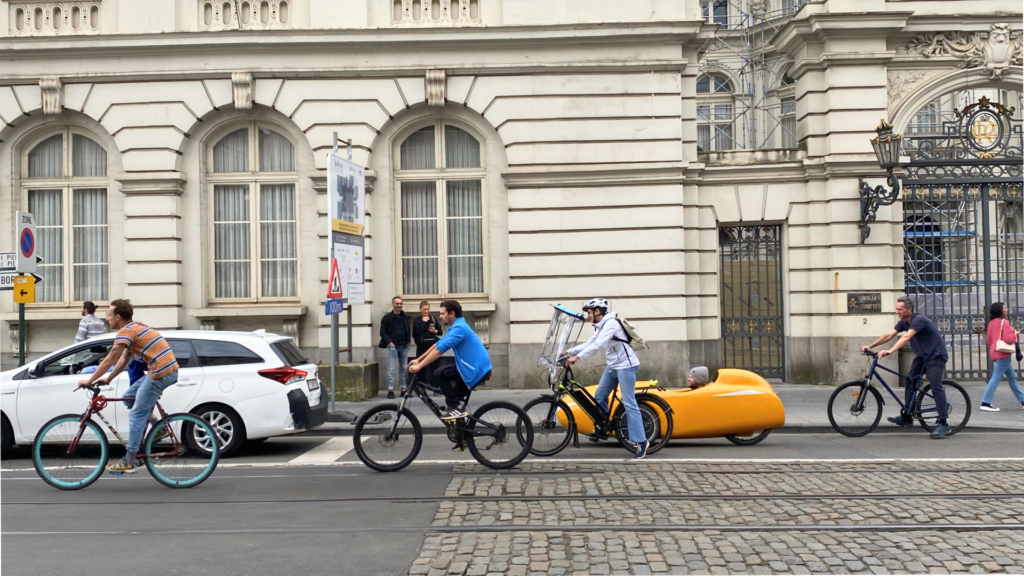
Cycling continues to gain ground in Brussels, with more bicycles counted in the region this July than in any previous July. However, despite major improvements to the city's cycling infrastructure, getting around on two wheels still requires some know-how.
With its hilly streets, heavy traffic and once-scarce cycle lanes, Brussels has not always been an obvious city for cyclists. That is changing fast. Figures from Bike Count Brussels show that this July was the busiest July for cycling since records began, and one of the strongest months overall. That is particularly striking given that summer is traditionally a quieter period.
For Steven Fierens, spokesperson for Brussels Mobility, the figures are part of a much broader trend.
"We are seeing a clear upward trend in recent years," he told The Brussels Times. "Pro Velo's Cycling Observatory recorded a 15.3% increase in cyclists during the morning rush hour. That exceeds the historical average annual growth rate of 12.2% recorded since 2010."
Credit: Helen Lyons/The Brussels Times
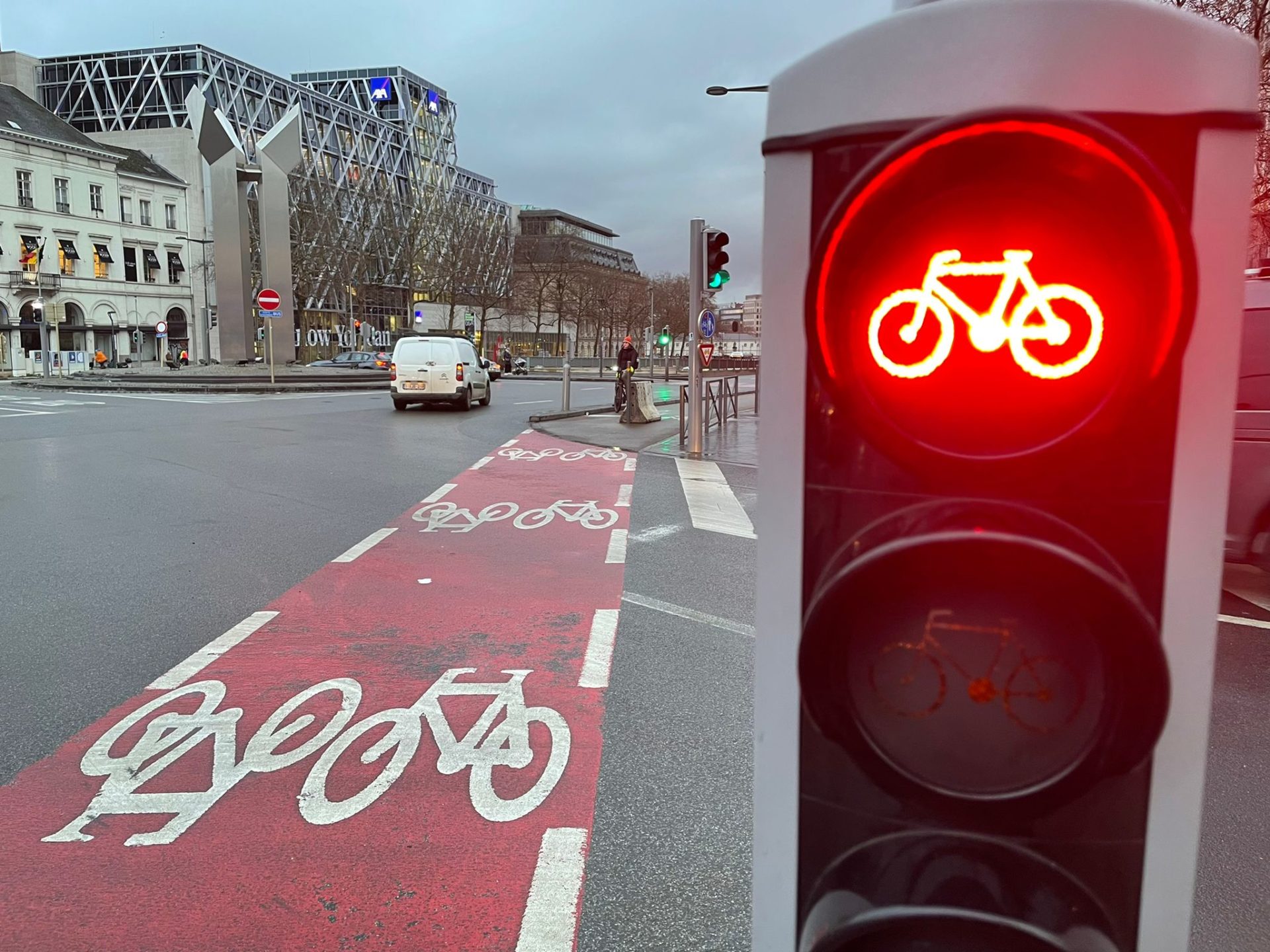
Improved infrastructure is one of the main reasons for the increase, according to Fierens. More separated and marked cycle lanes have been installed, a general 30 km/h speed limit has been introduced for cars across the Brussels-Capital Region, and measures have been taken to reduce through-traffic in the Pentagon.
The Brussels cycling network now comprises more than 1,090 kilometres of cycling facilities. As conditions have improved, the profile of cyclists has broadened too.
"In the past, it was mainly men in their thirties. Now other groups are better represented," Fierens said. "We are seeing more parents getting around the capital by bike. Some 22% of the bikes on Brussels' streets are adapted for carrying children."
Electric bikes have also made cycling more accessible in a city known for its hills. According to Pro Velo, almost half of the bicycles observed in Brussels (48%) are now electric. Bike-sharing schemes are contributing to the increase as well, Fierens believes, although exact figures are unavailable because operators do not disclose them.
The future of shared bikes in the capital is also under discussion, with the regional authorities due to hold talks with operators this month.
Faster than driving
Brussels resident Tim Gatzios started cycling regularly after the March 2016 terrorist attacks disrupted public transport. He soon discovered that travelling by bike was often the easiest way to cross the capital.
"Cycling in Brussels is generally very quick compared with the car or public transport," he said. "I am in favour of public transport, but it is not always fast. Neither is the car – especially since you also have to find a parking space."
He has also seen a significant improvement in cycling conditions over the past decade. "The Brussels authorities know better than they did ten years ago how to design a good cycle path. It has also become safer because drivers have grown more used to cyclists being around."
Still, vigilance remains necessary. "In the past, when drivers turned right, they would barely check for cyclists. You see that less now, although you still have to stay alert. There are still drivers, for instance, who open their car door without looking."
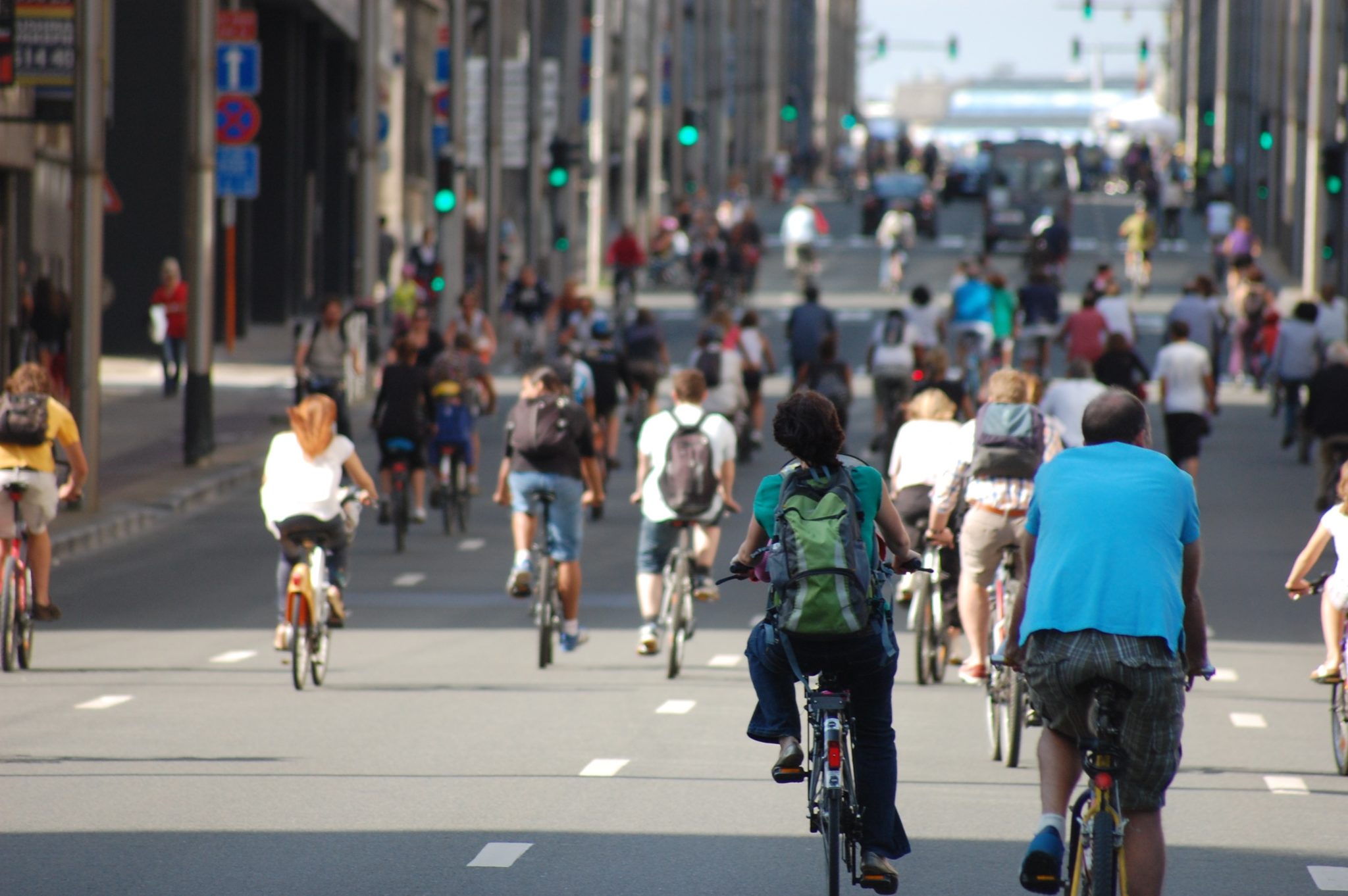
People cycling through Brussels on Car-free Sunday. Credit: Belga
"Within the small ring, cycling is generally fine," Gatzios said. "The opposite example is the wider area around the Basilica of Koekelberg. You have got a very busy road there – two lanes for cars in each direction – without any cycling infrastructure whatsoever."
Fierens acknowledges that significant gaps remain. "No municipality has yet completed a fully developed network across its territory. How quickly those gaps can be addressed partly depends on individual municipalities, their resources and their policies."
Brussels Mobility provides support for separated cycle paths, road markings and cycle zones, "but projects can be costly and require staff that less wealthy municipalities may not have", he said.
Further improvements are planned in Ganshoren, Saint-Gilles and Molenbeek, among other areas. Work is also continuing on the cycle highway connecting Anderlecht and Laeken via Molenbeek, Koekelberg and Jette. "We have come a long way, but we are still making steady progress," Fierens said.
How to cycle more safely in Brussels
For people new to cycling in the capital, Gatzios' first piece of advice is simple: plan your route. "It can be worth adjusting your route depending on the cycling infrastructure available," he said. "You can also choose streets with fewer facilities if there are fewer cars and they make for calmer cycling."
Cyclists should also avoid riding too close to parked cars, where an opening door can cause a serious collision. "Beginner cyclists tend to ride very close to the right-hand side of the road," Gatzios said. "That is a dangerous position – you risk car doors opening on you, and it also invites drivers to overtake you. It is safer if they stay behind you."
Fierens said this is also stressed in Brussels Mobility's awareness campaigns. "We always teach cyclists not to ride too close to parked cars. When we paint cycle markings, we make sure they keep a certain distance from parked vehicles."
Tram tracks are another particular hazard in Brussels. Cyclists should cross the rails at as wide an angle as possible, ideally close to perpendicular, to prevent a wheel becoming trapped in the groove.
Gatzios also recommends wearing a helmet. "I know there is a lot of debate among cyclists about whether or not to wear one. If you get hit – or even if you simply fall and land badly – I genuinely think it is advisable."
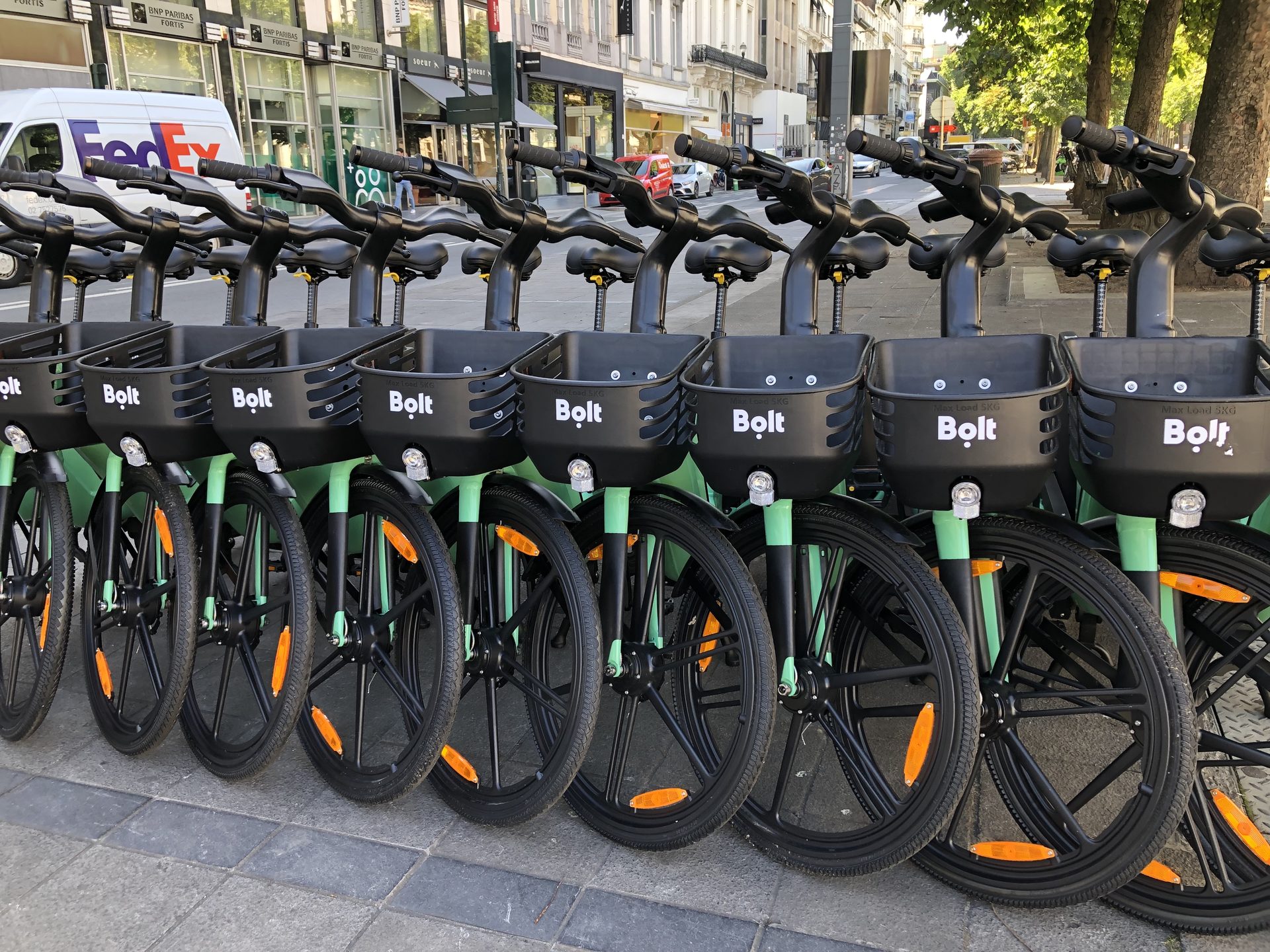
Bolt e-bikes. Credit: The Brussels Times / Ugo Realfonzo
The final consideration is theft. Police figures show that reported bicycle thefts are declining: around 3,700 cases were registered last year, the lowest number since 2017. But Gatzios says cyclists should not become complacent.
"I have never had a bike stolen on the street, but a lot of my friends have," he said. "Not just bikes, but e-bike batteries too. One friend of mine has had her bike battery stolen five times."
A sturdy lock is therefore essential, while owners of electric bikes may want to take removable batteries with them when leaving their bicycle unattended.
Despite the remaining risks, Gatzios says cycling has transformed the way he experiences Brussels. "I now use my bike for longer journeys too, out to the suburbs, for example. What's so nice about it is that you are really close to your surroundings – you experience the city in a completely different way."
