
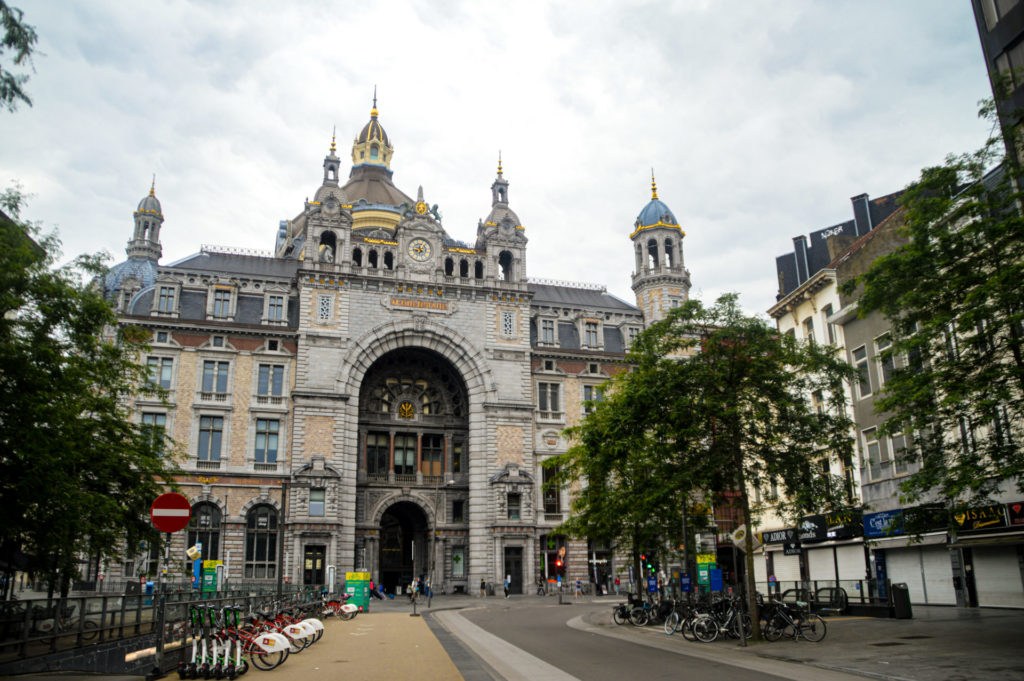
The Antwerpen-Centraal station consistently ranks among the most beautiful train stations in the world. Thousands of daily commuters and tourists photograph the sprawling domes and iron vaults. Yet, this beloved "railway cathedral" was almost wiped off the map.
Perhaps the first person to doubt the famous railway station was Belgian King Leopold II, who attended its opening in 1905.
The monarch, notorious for his building projects across Belgium, was reportedly underwhelmed by the scale of the design and engineering, and was quoted as saying, "C'est une petite belle gare" (It's a nice little station).
Today, historians view that "little" station as a colossal masterpiece.
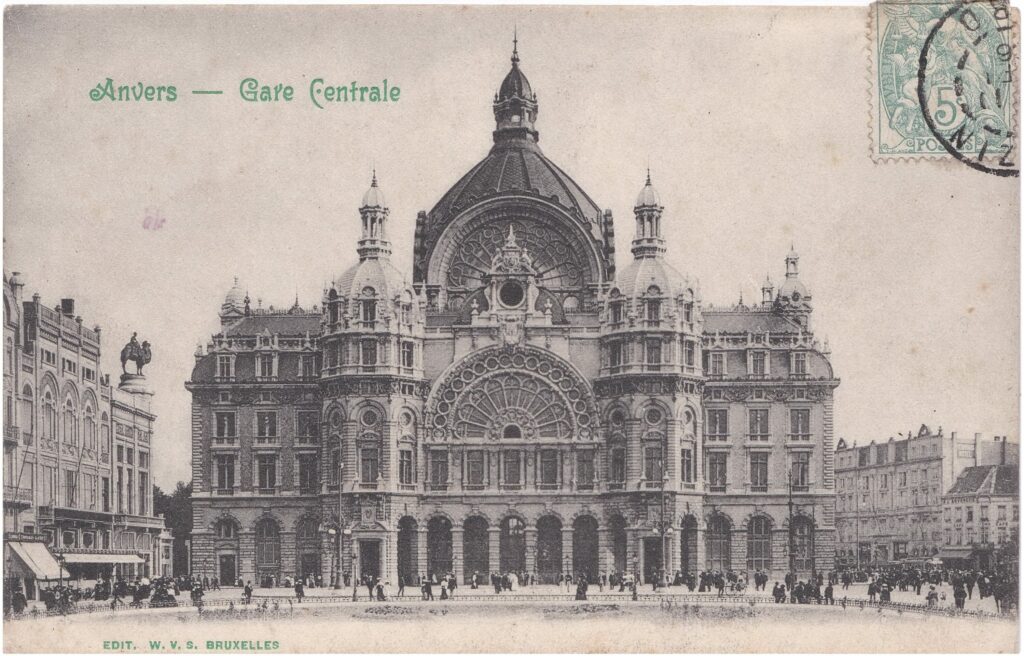
Archival photo of the station in 1905. Credit: Wikimedia Commons
While modern architectural history often highlights the visionary designers, the actual construction relied on gruelling physical labour: workers hauled massive blocks of heavy marble into place by hand, working under punishing conditions.
The station's godfather was Louis Delacenserie, a renowned architect from Bruges who dubbed the station's style as "baroque-medieval eclecticism".
The design incorporated a mash-up of Neo-Renaissance, Neo-Baroque, and early Art Nouveau. Unlike Leopold II, most Antwerp residents and Belgians were impressed by the construction, quickly earning it the status of the most beautiful railway station in the country.
In 1920, Antwerp hosted the Summer Olympics, but at the time, the recent end of the First World War overshadowed the station's appeal to foreigners.
Later, the hostility towards Antwerpen-Centraal began building up again towards the 1930s, when Antwerp's socialist mayor Camille Huysmans – who viewed the station's eclecticism as a grotesque relic of the past – campaigned to level the site. In its place, he wanted his friend, the prominent architect Henry van de Velde, to construct a sleek, functionalist terminal.
With the outbreak of the Second World War in September 1939, however, the debate was quickly sidelined. Towards the end of the war, Antwerp and its port were targeted by a German terror bombing campaign. The predecessors of modern cruiser and ballistic missiles, the infamous V-1 and V-2 bombs were dropped over the city.
As a result, the station's monumental glass roof was entirely shattered, leaving panes and iron framework exposed to the harsh Belgian weather. By the late 20th century, this deterioration became a daily public hazard.
That's when the push for demolition – as much financial as ideological – gained most traction. The post-war era in Belgium was marked by 'Brusselization' and functional modernism and cars were favoured over 19th-century eclecticism.
In the 1960s and 70s, the national railway company SNCB-NMBS actively planned to bulldoze the entire complex, as the structure was rotting from the inside out. Decades of coal soot and acid rain had caused what engineers termed "zieke steen" – diseased stone. The toxic atmosphere chemically altered the structural integrity of building.
The crisis peaked in January 1986. Falling stones made the platforms too dangerous for passengers, forcing authorities to temporarily close the tracks. The building was literally collapsing under its own weight.
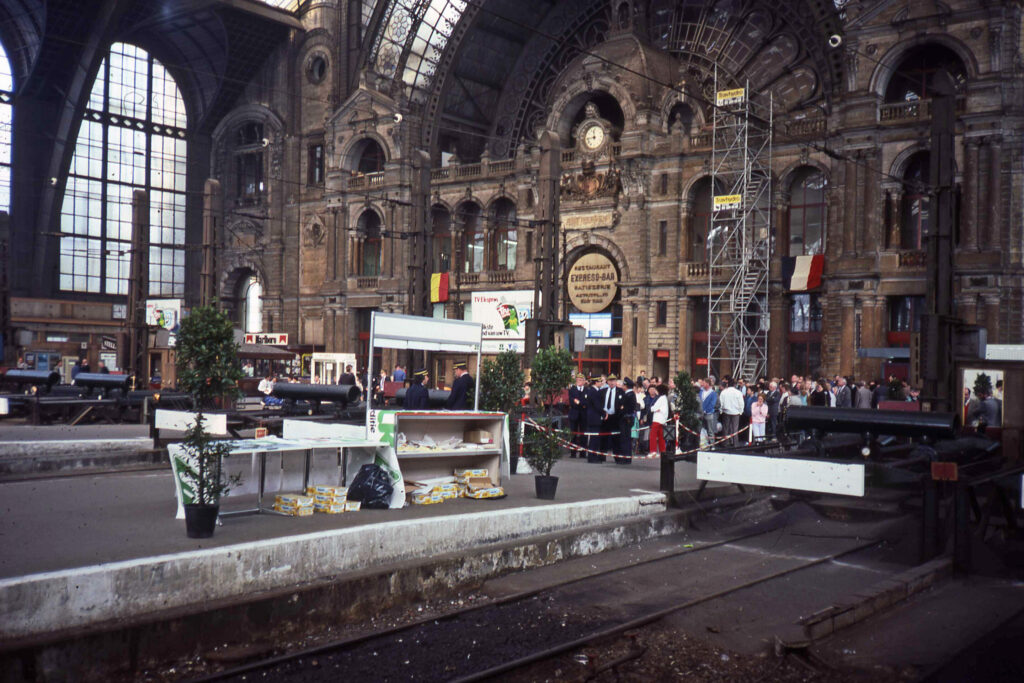
Antwerpen Centraal in 1986 during opening of first route to French Lille. Credit: Wikimedia Commons
By the 1970s, SNCB-NMBS executives argued that saving a decaying transit hub was an unjustifiable waste of taxpayer money, they demanded a clean new slate. Commuters, especially from other cities were also not very happy with the grittiness and dangers of the station.
But not everyone has agreed with such an assessment, and many grassroots neighbourhood action groups were formed. The preservation fight achieved a notable victory on 12 March 1975, when the Culture Minister Rika De Backer-Van Ocken (Christian Democrat from CVP, the predecessor of CD&V) legally protected the building.
SNCB-NMBS officials were furious, and the railway company filed multiple formal appeals in a desperate attempt to overturn the monument status, but every single appeal failed.
This legal defeat soon forced the railway company to pivot, leading to the massive 1998–2007 engineering project. The company that wanted to destroy the station was the instrument of its salvation. Workers dug high-speed rail tunnels directly underneath the fragile heritage site.
Simultaneously, they restored the war-stressed roof using lighter polycarbonate materials.
Cleaning a century of diesel soot out of the delicate marble presented a unique chemical challenge.Restorers had to invent a special, pH-neutral paste made from Chinese clay and a mild detergent to suck the embedded grime out of the soft stone without destroying it.
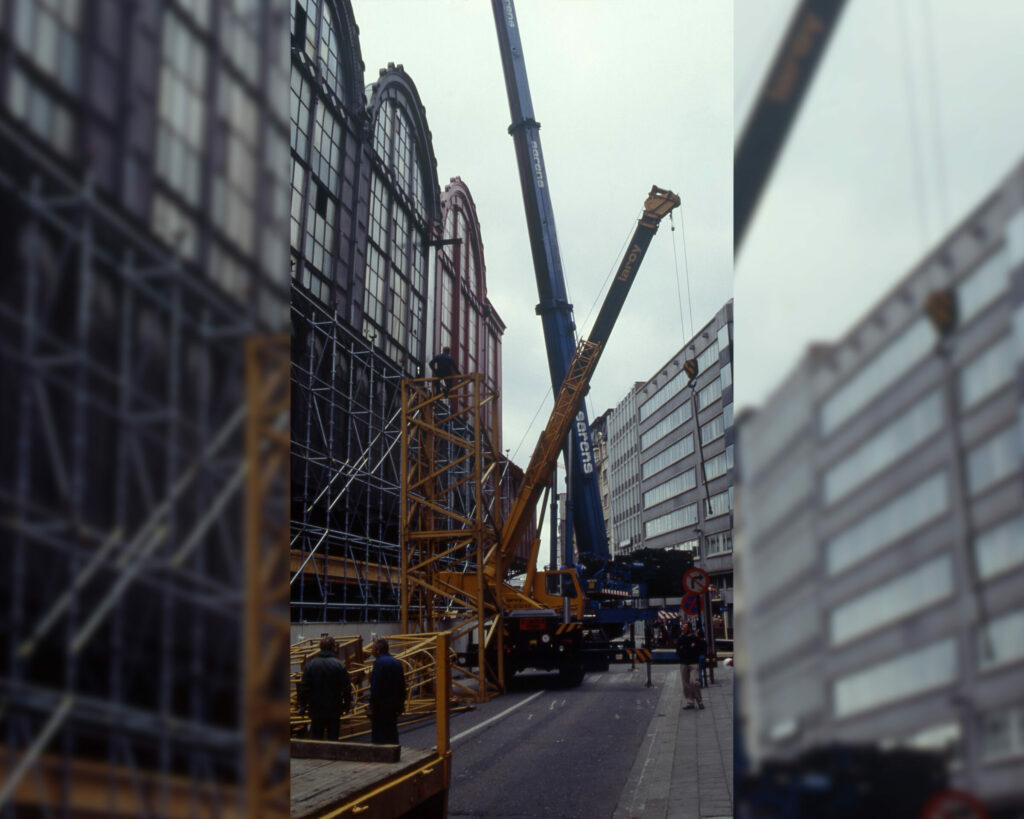
Antwerpen-Centraal renovation works in 1993. Credit: Wikimedia Commons
Flemish author Raf Vandecasteele, who wrote a book on the station's near demolition titled "Antwerp Central, the railway cathedral that stands by accident", concluded that the preservation of the beloved station was anything but given.
Perhaps in another timeline, in its place something entirely different could be standing.
