
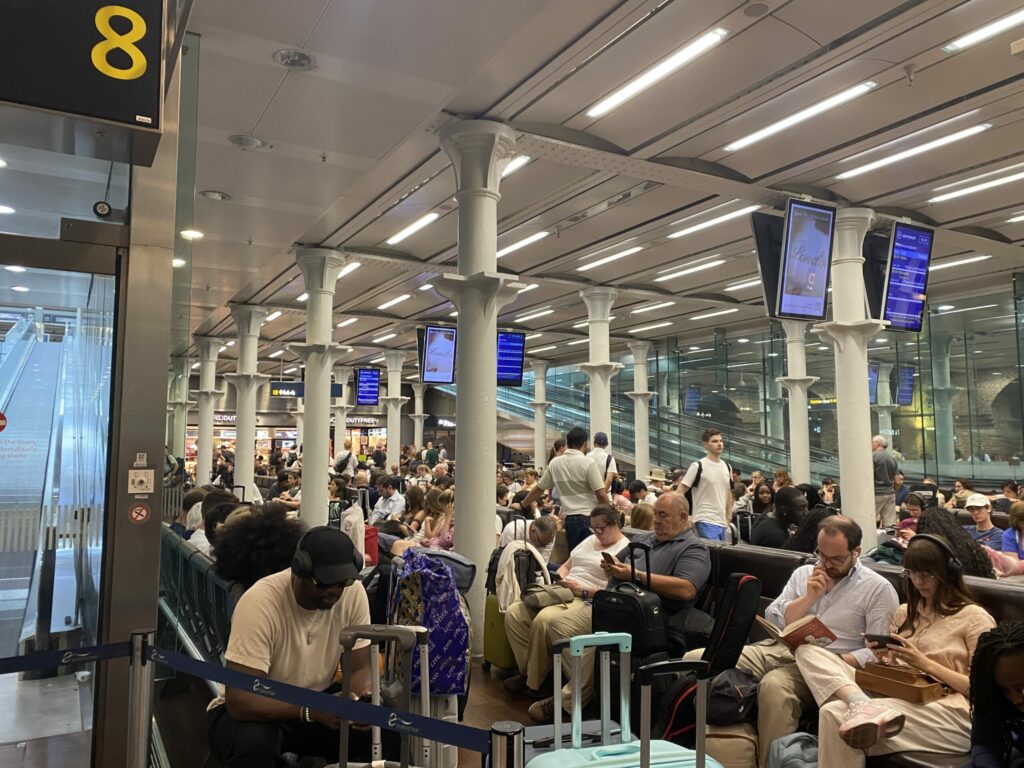
Eurostar's terminals are well known among passengers for their lack of seating and packed crowds awaiting their high-speed trains. But is the situation deteriorating, and what is Eurostar doing to resolve the issue?
Some 45,000 passengers pass through security checks and passport control every day at Eurostar's London St. Pancras terminal, accumulating in the waiting room ready to board their trains to Paris and Brussels. But with overlapping train times and too few seats for the number of passengers, many are forced to stand for an hour or more. A major expansion of the station is on the cards, but not before further boosting passenger numbers, meaning the situation is unlikely to improve anytime soon.
Last year, Eurostar and London St. Pancras Highspeed, which owns and operates the UK's only international high-speed rail link and the stations along the route, signed a letter of intent to more than double capacity at St. Pancras International, according to a press release from 26 June 2025.
"The project aims to futureproof one of Europe's busiest international rail hubs and support growing demand for sustainable cross-border travel," the press release read.
Demand for international rail travel is set to triple by 2040, from 11 million to 35 million passengers per year, and Eurostar is planning to expand its destinations to include cities such as Geneva and Frankfurt.
As well as growing demand for international rail travel, additional capacity is needed at the station due to new border requirements and the EU's Entry/Exit System.
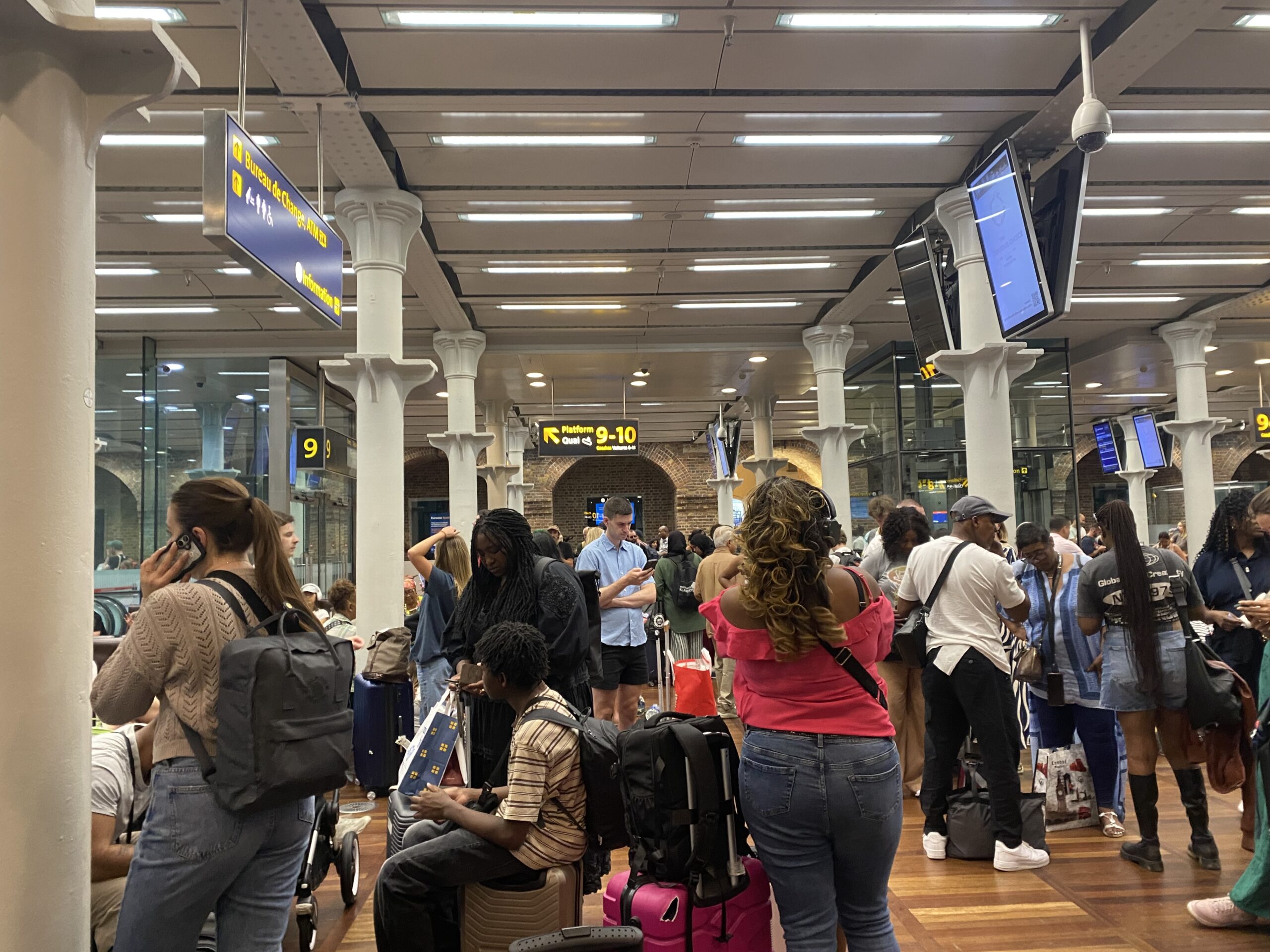
Passengers waiting to board trains to Paris and Brussels. Credit: Isabella Vivian / The Brussels Times
Last year's announcement followed an independent study commissioned in late 2024 to explore how the overcrowded station could evolve to accommodate more passengers, enhance the customer experience and operate more efficiently.
Leading architecture practice Hawkins\Brown was appointed to reimagine the ground-floor layout of the international zone to more than double the station's current capacity, while avoiding major structural changes to respect the station's heritage.
Three-part plan
Eurostar and London St. Pancras Highspeed developed a three-part plan last June to improve the station.
Phase one, from 2025 to 2028, aims to boost capacity from 2,000 to 2,700 passengers an hour. Phase two, expected to be completed by 2028, will improve the international terminal area and passenger flows. Lastly, phase three will explore further growth by moving arrivals to the upper floor in the 2030s. The timing of the final phase will depend on fleet and route roll-outs.
In 2024, 1,800 travellers passed through the station's doors per hour. This has now grown to 2,000 per hour and is projected to reach nearly 5,000 following phase two.
However, one year into the three-part plan, passengers have not observed any notable improvements; if anything, overcrowding in the station has worsened.
The Brussels Times has learnt that, although not yet visible to customers, work is progressing on the capacity expansion programme at St. Pancras International.
However, proposals must undergo a rigorous design, consultation and approval process, requiring close engagement with a range of stakeholders, due to the station's historic significance and the fact it is a Grade I listed building.
Train timetabling
Overcrowding in the station is also due to departures not being evenly spaced apart, resulting in passengers from two, or sometimes three, trains in the terminal at once.
For example, today, Monday 17 August, there is a train from London to Paris at 10:31, and one to Brussels three minutes later at 10:34. This evening, there is a train to Paris at 20:01, and one to Brussels at 20:04, again just three minutes apart.
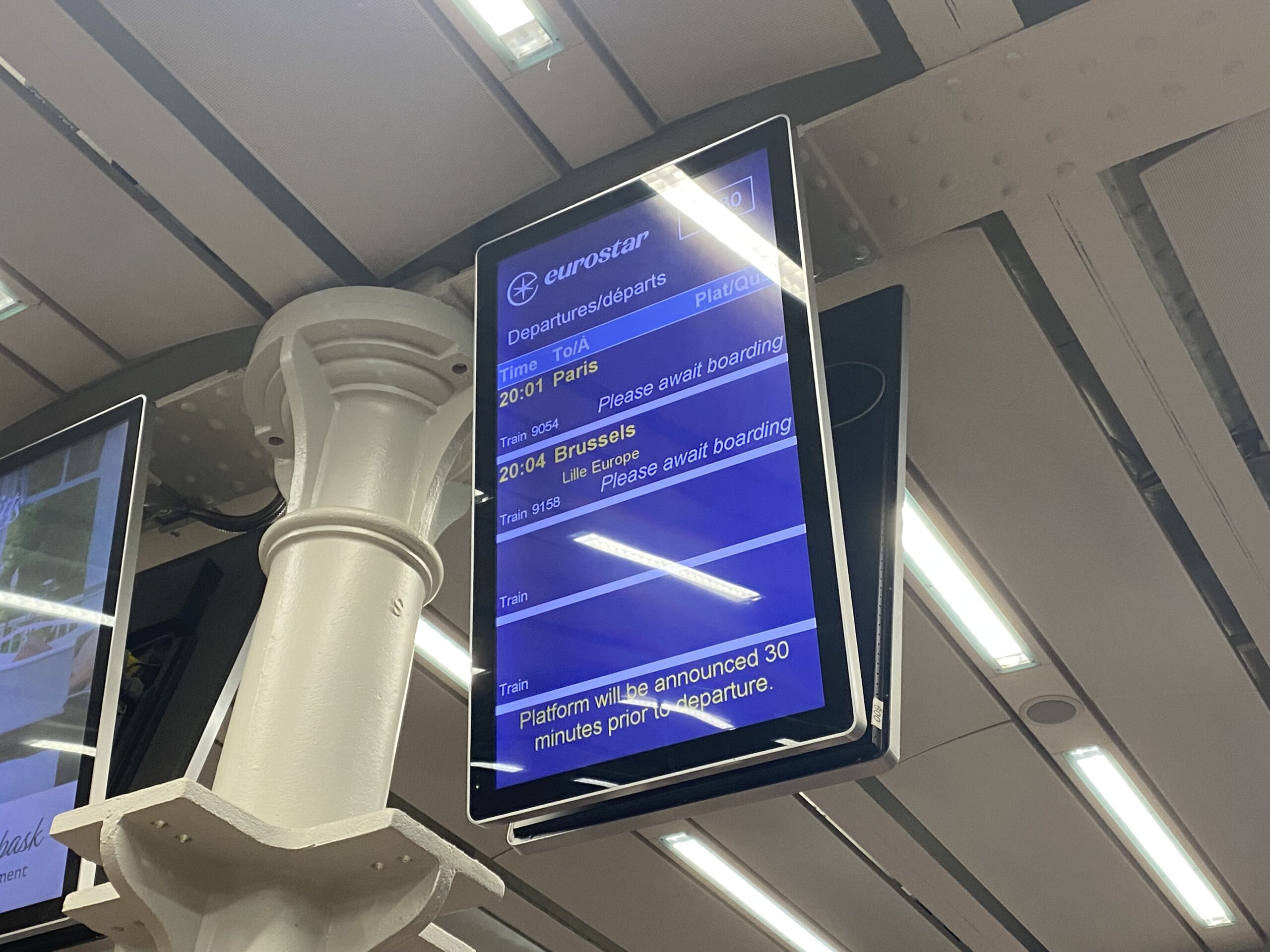
Overlapping train times on Monday 10 August. Credit: Isabella Vivian / The Brussels Times
"Generally speaking, it is not unusual to have trains following one another within a few minutes of each other," Eurostar spokesperson Céline Ronquetti told The Brussels Times. "We see the same thing at Brussels-Midi with the TGV Inoui and all Eurostar, for example, and on the domestic market as well."
Ronquetti added that this was the responsibility of infrastructure managers which allocate the times Eurostar trains are permitted to run. "We have little or no influence over these decisions, as they manage traffic," she said.
