
Several high-speed trains to and from Brussels will be diverted until late August, leading to slightly longer train journeys, according to the rail infrastructure group Infrabel.
Due to a major overhaul of the high-speed rail line between Brussels and the French border, Eurostar services running between Paris, London and Brussels, as well as TGV Inoui services, are being diverted onto the conventional rail line.
The route change is expected to make each train journey around 15 minutes longer.
The engineering work is also set to affect several SNCB/NMBS trains running between Hainaut and Brussels via Hal, where maintenance work is also underway.
The full rail infrastructure is expected to be available again from 24 August.
Infrabel is currently renewing 19 kilometres of track between Halle and Silly. The Halle–French border route is Belgium’s oldest high-speed line and has been in service since 1997.
According to Infrabel spokesperson Frédéric Petit, the tracks are now showing the first signs of ageing.
Infrabel is therefore carrying out a full renewal of the infrastructure to maintain safety and quality standards and to ensure that the roughly 100 trains using the line each day can continue to run at 300 km/h.
Over the coming years, the rails, sleepers and ballast will all be replaced. The wider project is due to run until 2035 and has a total cost of €310 million.
In this phase alone, workers are replacing 38.5 kilometres of rails, 32,150 concrete sleepers and 6,750 tonnes of ballast. The work is being carried out day and night and, despite the high temperatures, Infrabel said it is on schedule and slightly ahead of plan.
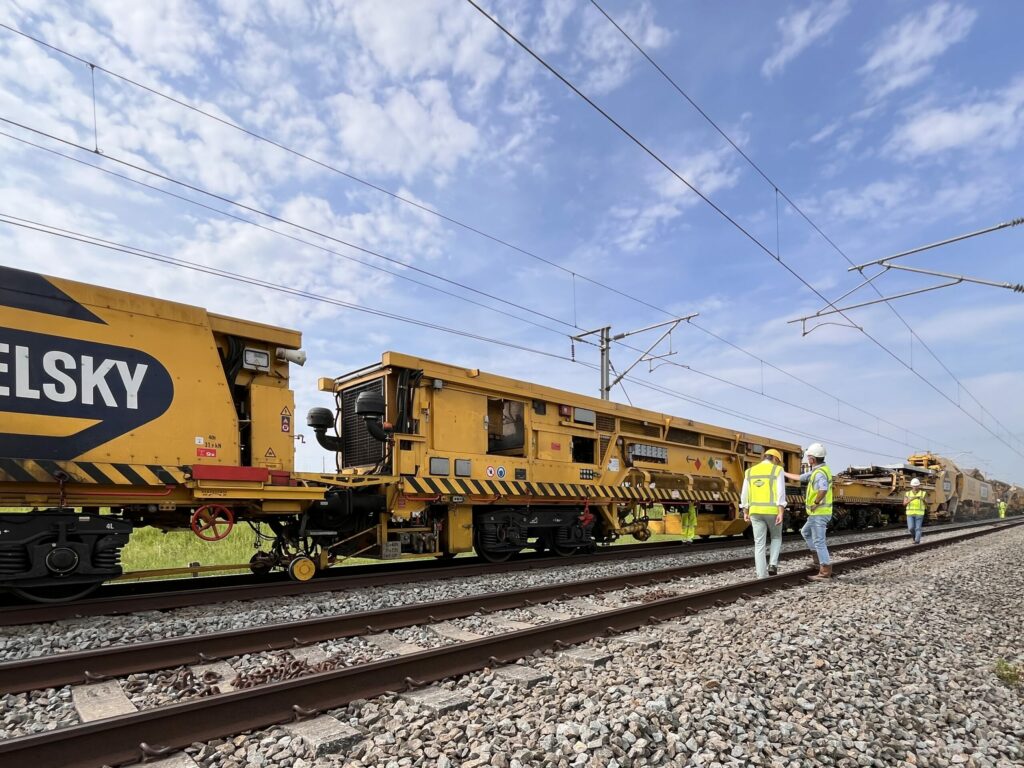
A 700-metre Austrian maintenance train, operated by Swietelsky, is the centrepiece of the operation. Weighing 1,600 tonnes, it is able to renew multiple parts of the track in a largely continuous process.
The train can replace around 180 to 200 metres of track per hour and is used for up to 12 hours a day.
While the current phase of works is scheduled to end on 23 August, the whole project, which began in the summer of 2024, is due to be completed in 2035.
