
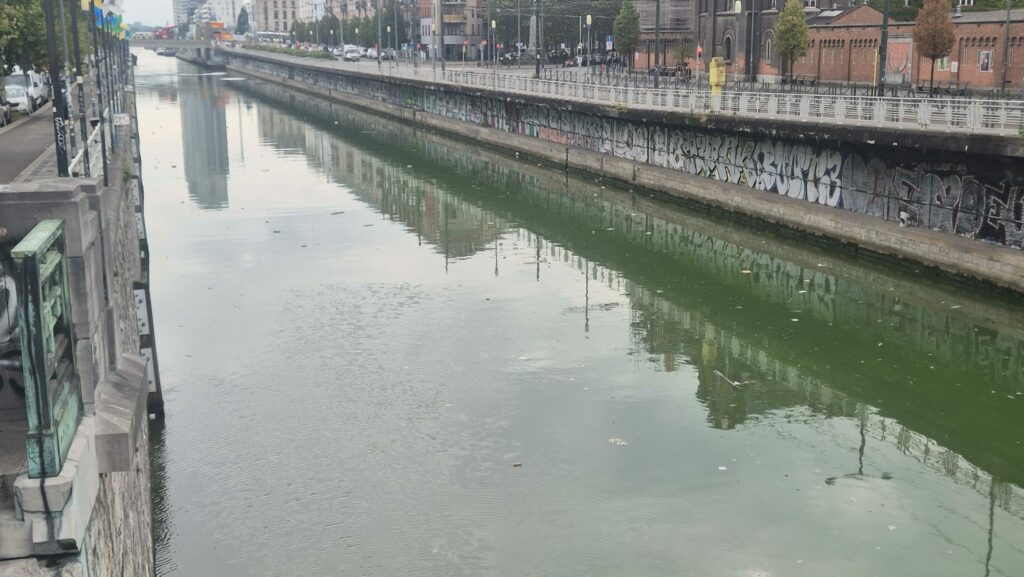
The Brussels Canal has been in a particularly poor state for the past week, with a greenish tinge caused by green algae, dead fish due to low oxygen levels, and widespread pollution, as observed on site by the Belga News Agency.
Brussels Environment confirmed the presence of green algae and said it would send a team to the site as soon as possible to examine the situation.
According to Pieter Elsen, founder of advocacy group City to Ocean, while it is not yet clear why the algae have become so widespread, the problem is linked to fertiliser and organic matter present in the canal’s sediment, which can help algae reproduce and reduce oxygen levels for fish.
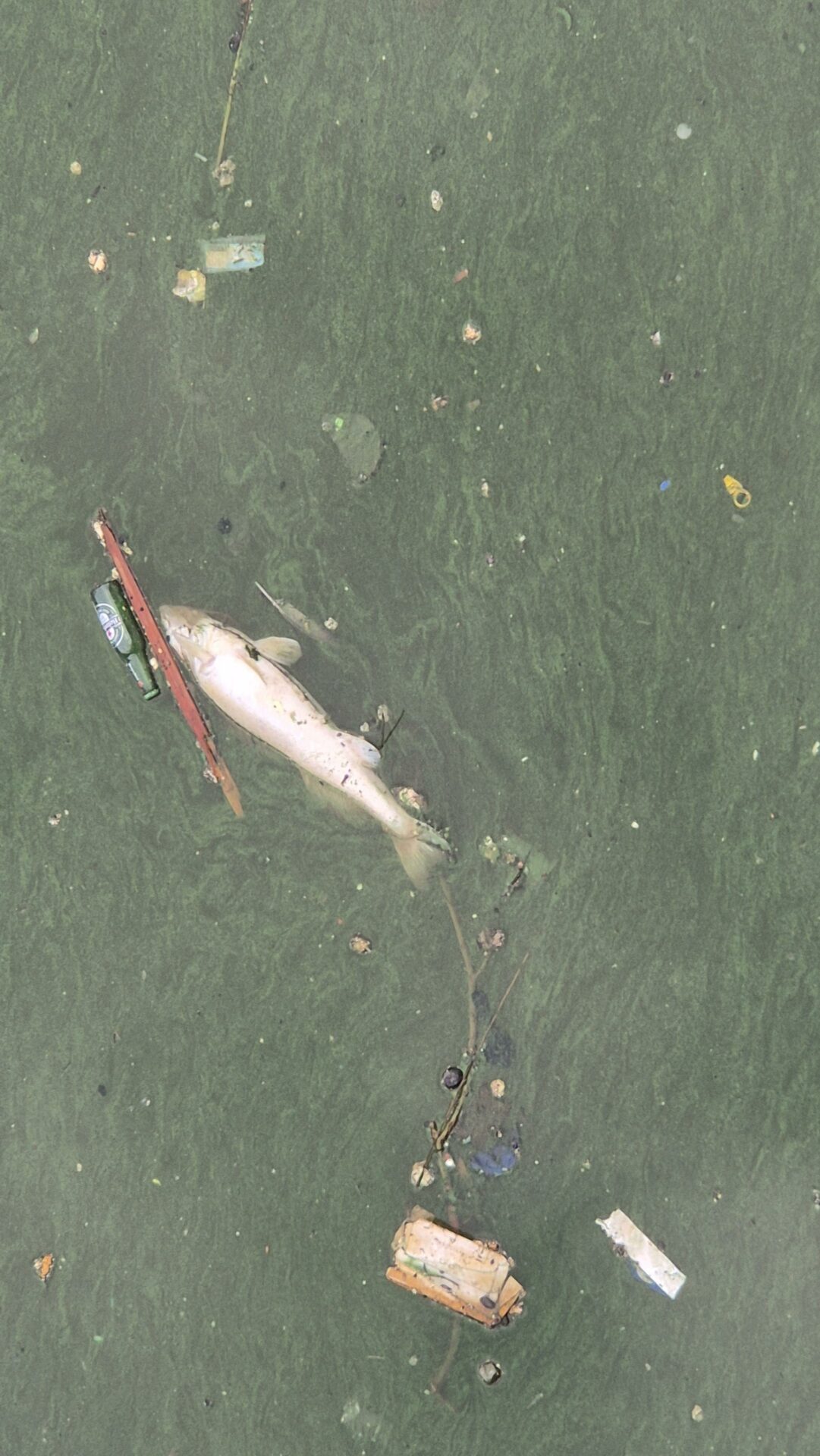
Pollution, waste and dead fish are pictured in the Brussels Canal in Brussels, on Monday 17 August 2026. Credit: Belga/Timon Ramboer
He explained that, under "normal conditions" and when it rains regularly, Brussels’ sewers overflow one to three times a month. During those events, sewage mixes with rainwater before spilling into the Senne and the canal.
While the last overflow happened at the end of July, according to Elsen, large amounts of organic matter remain in the sediment.
Although Elsen said it is too early to say whether sewer overflows are the main source of the green algae, for him a solution is to keep as much rainwater as possible out of the sewer system.
City to Ocean hopes to disconnect as much rainwater as possible from the sewer network through its new 'Disconnect your Roof' campaign.
As part of the initiative, the organisation visits people at home to renovate cisterns or install wadis in gardens, allowing rainwater to drain and infiltrate into the ground rather than flow into the canal.
