
Europe's continuing drought has exposed the fragility of supply chain networks. How much of a risk does this pose for Belgium's economy both now and in the future?
The largest dent to eurozone activity from the summer heatwave "is likely to come from low water levels", warned the leading global economic advisory firm Oxford Economics in an updated forecast last week.
The lasting drought could cost the German economy growth of 0.2 percentage points in the third quarter of the year. In the second quarter, the Germany economy grew by 0.2%.
For Belgium, independent forecasts of the impact do not exist. However, a risk can be expected given the country's integration into German supply chains. While the size of this risk is currently unknowable, which way the risk falls depends on what breaks first: port storage capacity, or the rain.
Stockpiling would minimise the impact of supply chain constraints, but "some companies are saying they are seeing transport and logistical problems," Iain Simmons, an economist with Oxford Economics, told The Brussels Times.
"The main knock-on effect is in the chemicals industry. We expect some reduction of production levels in Germany, which we expect would cause some increase in prices," he said.
While the effect of higher input costs and reduced supply would be a reduction in industrial production in Belgium, Simmons cautioned that this is "more a risk than a quantifiable amount at the moment".
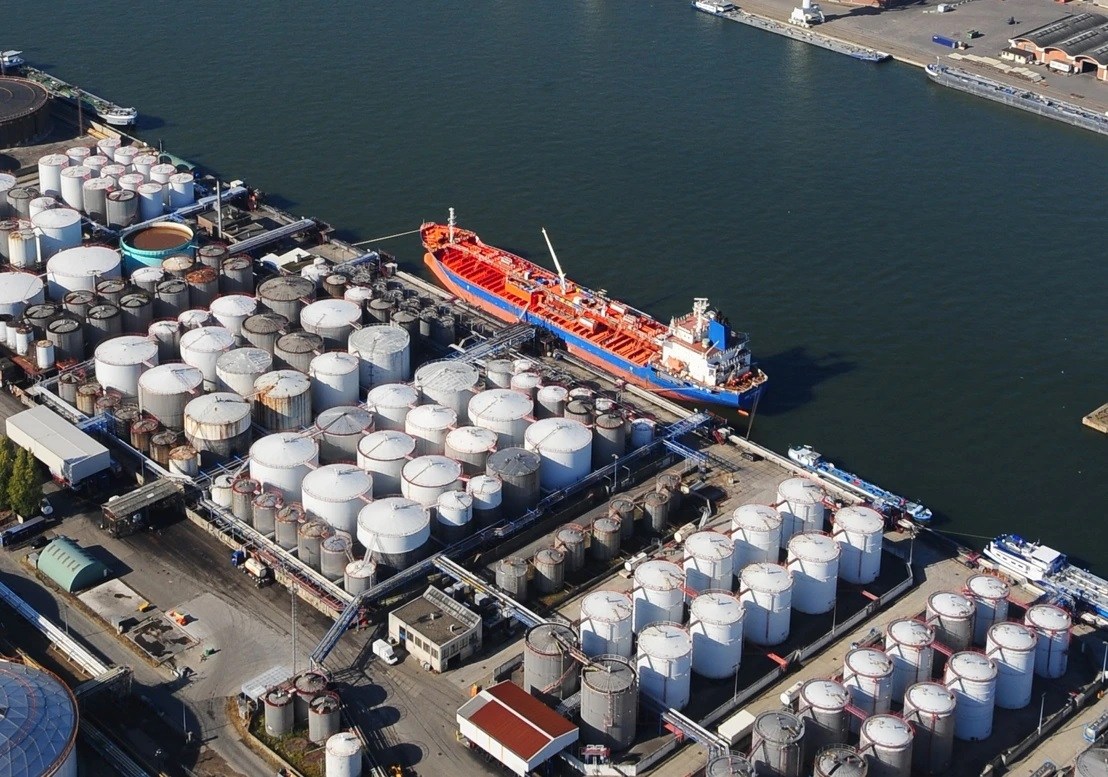
The Port of Antwerp-Bruges has Europe's largest chemicals cluster. Credit: Port of Antwerp-Bruges.
Belgium is integrated into Germany's inland waterway network
Through the Port of Antwerp-Bruges, Belgium serves as a hub for Europe's inland waterway network and chemicals industry. The port has Europe's largest chemicals cluster operating within and around it.
Just over half of all maritime traffic at its Antwerp site is inland waterway traffic, with connections to cities deep within industrial Germany and beyond along the Rhine, including Basel and Stuttgart.
These connections and associated industry contribute to making the port one of Belgium's leading economic contributors, accounting for 4.5% of total economic output alone.
But some of these connections have literally started to dry up. Water levels on parts of the Rhine have reached their lowest levels since records began in 1880 and could fall further, with rain unlikely to restore levels until this autumn.
If these water levels continue to fall, access to some ports within Germany from Antwerp would continue. However, beyond the Rhine's shallowest point at Kaub, access may become restricted to cities further upstream such as Stuttgart and Basel.
The low water levels have already impacted shipping and supply chains with some vessels being forced to carry reduced loads to compensate for shallower depths. This could have knock-on consequences at ports such as Antwerp, as storage capacity is used up.
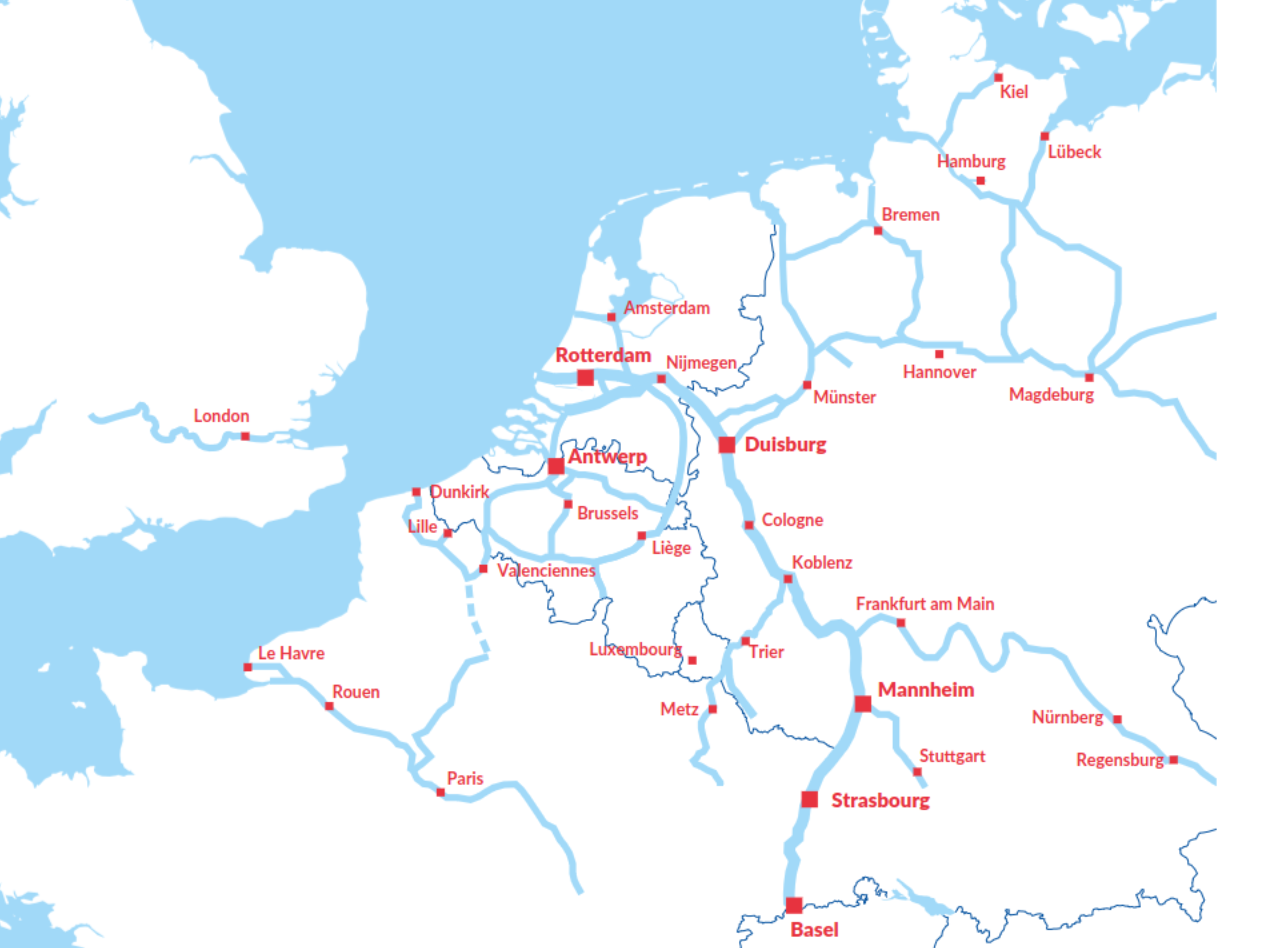
Antwerp is a key port connected to the Rhine. Credit: Central Commission for the Navigation of the Rhine
Belgium's waterways have not escaped the impact of drought
The drought challenge is not only limited to the Rhine, in Belgium those responsible for rivers and canals have also had to take action.
De Vlaamse Waterweg, the body that manages and operates the waterway network in Flanders, has stepped up efforts to protect Belgium's stressed water resources.
Measures have included shutting down hydropower plants, grouping vessels at canal locks, and at some locations introducing restrictions on the allowed depth of vessels – which will have the effect of lowering available freight capacity.
"These measures are aimed at minimising water losses, in other words, retaining the available water for as long as possible, while keeping commercial shipping operational for as long and as safely as possible," Liliane Stinissen, a spokesperson for the operator, told The Brussels Times.
"As far as shipping volumes are concerned, we do not currently see a clear domino effect across Belgium as a direct result of drought elsewhere," Stinissen said. "At this stage, it is therefore premature to speak of a general domino effect across Belgium, although local operational disruption or shifts cannot be ruled out if the drought continues."
Whether Belgium's economy dodges the risk this year may be unknowable, but long-term, the risk to Belgium's waterways caused by climate change will require a rethink in how inland waterways are managed as drought conditions reoccur each summer.
A study from the VUB on the impact of climate change on Europe's main transport networks suggests that, by 2050, "40% of inland waterways are projected to face drought conditions, increasing to over 70% of the inland waterways network by the end of the century under current policies. This implies that even low-risk regions today will be impacted in the coming decades."
"If you quantify the impact at the end of the century compared to this decade, then you would be having up to 30 times more drought events impacting inland waterways," Dr. Marie Cavitte, part of the research group at the VUB, told The Brussels Times.
According to Stinissen, De Vlaamse Waterweg is already preparing. "Climate change is forcing us to further strengthen water management. Dry periods are expected to occur more often, last longer and become more intense, while rainfall will increasingly occur in peaks."
The operator is investing in measures to reduce water loss, increase water pumping capacity, and allow for closer monitoring of available water and its use. This is all in an effort to future-proof Belgium's waterways, which serve as key economic arteries, from future climate hazards.
