
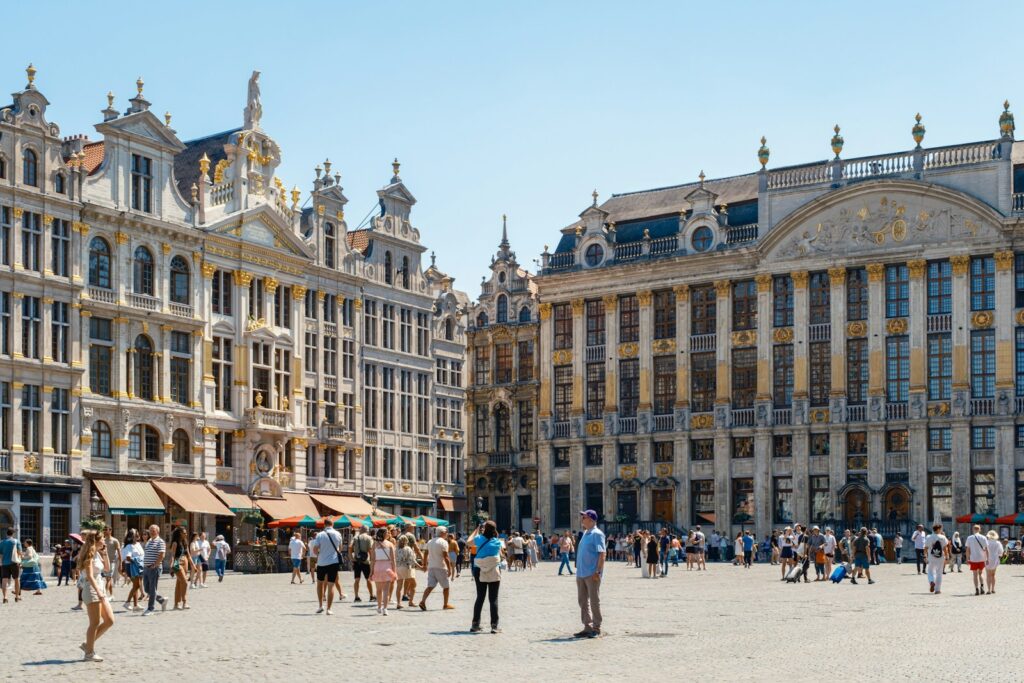
As part of a tax reform, the City of Brussels will require live-out landlords to pay around €360 more in property taxes per year. For owner-occupiers, however, this increase will be automatically offset.
Homeowners in the City of Brussels will receive their property tax assessment notices in the coming days. This tax is charged to owners of real estate, and is calculated based on the rental value of the property in 1975 with an index to reflect current values – the so-called cadastral income.
Belgium's regions apply a base rate (which, in the Brussels-Capital Region, amounts to 1.25%) and provinces and municipalities, such as the City of Brussels, then apply their own surcharge expressed in cents on the base rate.
The City of Brussels, which has around one in six of the Brussels-Capital Region's overall population, will increase its share of the indexed value by 17% for the 2026 tax year in a bid to raise additional finances for its budget.
In absolute figures, this moves the surcharge from 2,950 to 3,457 cents on the précompte immobilier.
'Deliberate choice'
In addition to this increase in the surcharge and the associated compensation for owners who live in their own house or flat, there is also a flat-rate discount of €100, as well as the regional Be-Home grant of €164. That allowance will be doubled next year to €328.
According to the city, owner-occupiers will therefore pay less in practice than last year, despite the higher surcharges.
However, owners with multiple properties will feel the impact on their wallets. On average, they will pay around €30 more per month in property tax to the City of Brussels – amounting to some €360 in extra fees per year.
The stated aim of the tax change is to reduce the tax burden on homeowners who live in their property, as well as balancing the budget.
According to the City of Brussels' councillor for Finance, Anas Ben Abdelmoumen (PS), this is a deliberate choice to ensure that taxpayers with greater financial means contribute more. This often concerns owners who receive substantial rental income from property in Brussels.
"We are asking the so-called 'large property owners' to make an extra effort in the spirit of solidarity," said Ben Abdelmoumen. "They often live outside Brussels, but derive substantial income from letting property in Brussels, thanks to the appeal of our capital."
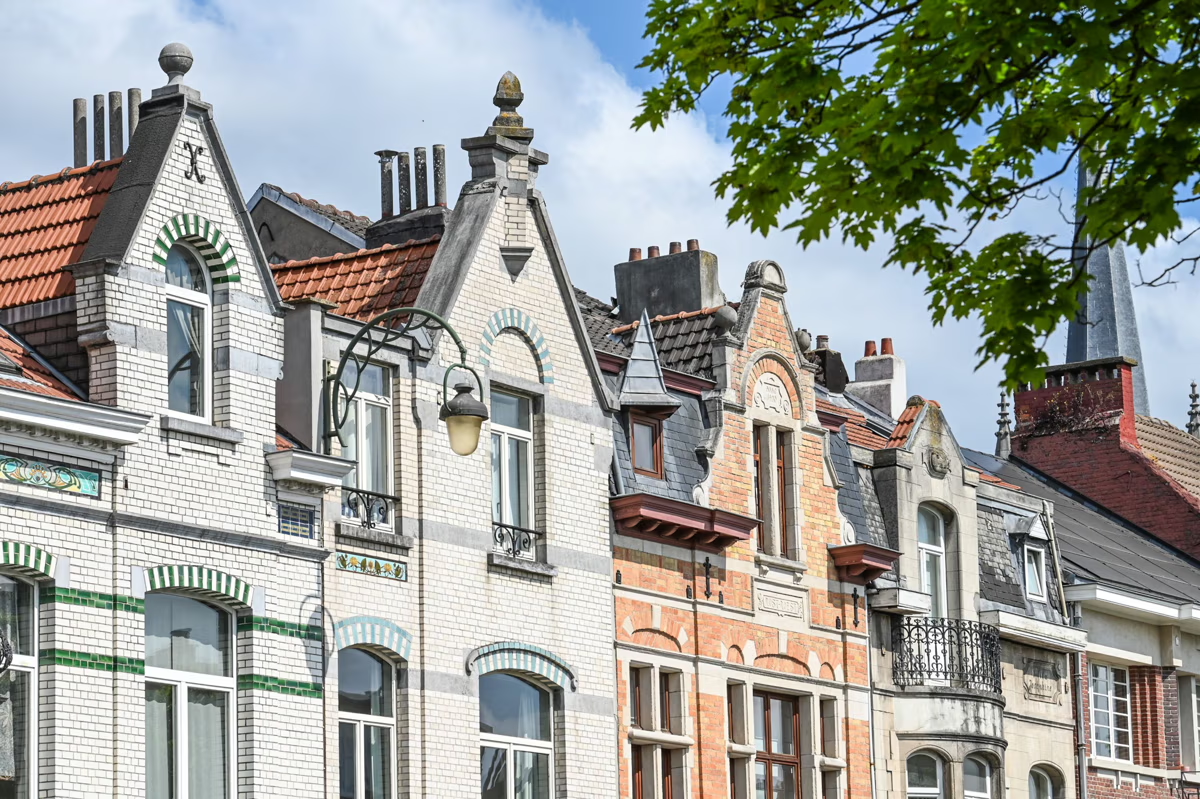
Houses in Brussels. Credit: Belga
At the same time, the reform is intended to create scope for a substantial reduction in municipal personal income tax. This will fall from 6% to 4.9% for residents of the City of Brussels.
According to Ben Abdelmoumen, the reform should boost residents’ purchasing power whilst ensuring greater tax fairness. "We have chosen to boost our residents' purchasing power."
The City of Brussels is not the only municipality in the region where property tax is rising. The sharp increase will be most felt in seven other communes, namely Auderghem, Saint-Josse-ten-Noode, Ganshoren, Etterbeek, Watermael-Boitsfort, Woluwe-Saint-Lambert and Uccle.
Uccle is expected to generate €10 million in additional revenue, as it had not adjusted its property tax surcharges for ten years, but is raising them from 2,940 to 3,400 this year.
Like the City of Brussels, Forest, Uccle and Ixelles are also granting allowances to owner-occupiers. In addition, there is a 10% reduction per child from the second child onwards.
Who has the highest property tax?
Recent analysis shows that Auderghem remains the municipality with the lowest property tax in the Brussels-Capital Region, even though it recently increased the surcharges from 1,990 to 2,440.
Woluwe-Saint-Pierre is in second place and maintains its levy at 2,700 after an increase last year.
The municipality with the highest property tax is Schaerbeek, with an additional 4,191 centimes. It is now closely followed by Saint-Josse, which is doubling its rate from 2,980 to 4,090.
The other top municipalities include Jette (3,990), Forest (3,990), Evere (3,990), Molenbeek (3,890) and Koekelberg (3,890).
Koekelberg has significantly increased its property tax rate, as well as its personal income tax (from 6% to 7%).
