
The High Fens wildfire has not yet been extinguished, but it is already among the largest Belgium has ever experienced – raising concerns that climate change might reshape the country's growing wildfire risk.
Some might not know this about wildfires, but 95% are ignited by humans, whether through carelessness, intent, or accident, says Jan Baetens, UGent researcher and wildfire expert, in an interview with The Brussels Times.
His team has been monitoring wildfires in the country and found that, up to 13 August, Belgium had recorded 234 wildfires in 2026 – that is more than double the 115 recorded in 2025, and 3.8 times the long-term annual average of 62 fires between 2010 and 2025. And that does not include the current High Fens fire.
Traditionally, Belgium experiences a relatively small wildfire peak in spring. This year, however, 180 of the 234 recorded fires (77%) occurred during the meteorological summer.
Not to mention, there are caveats to the wildfire increase. Of the 117 additional fires added to the database since the previous update on 29 July, around half occurred before 28 July but were only confirmed during the following two weeks.
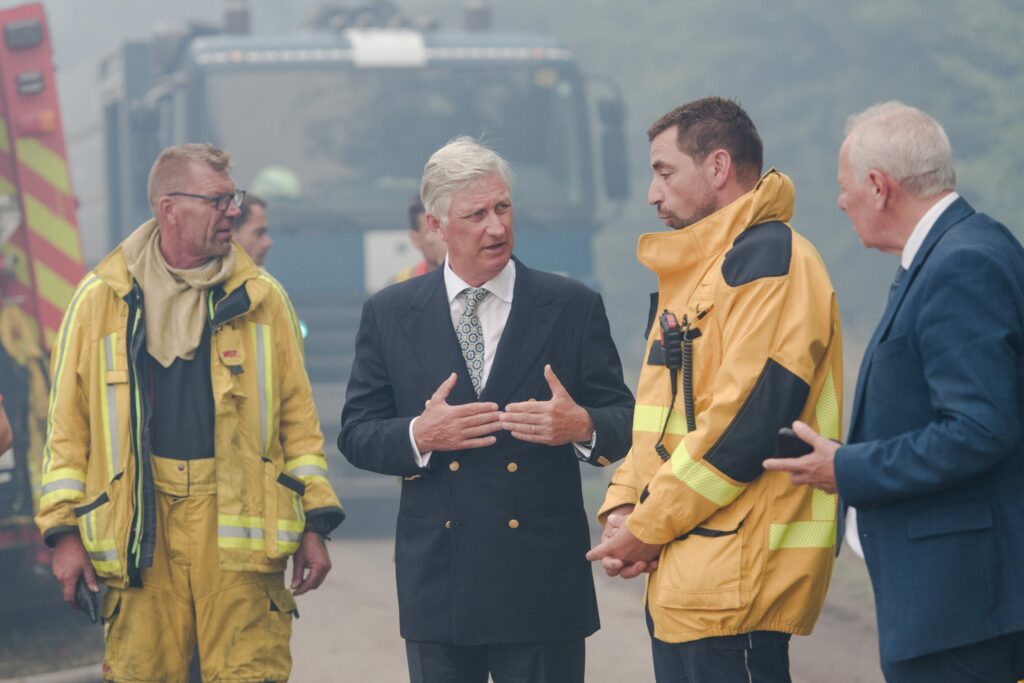
In the High Fens, the blaze has burned around 3,000 hectares since last Friday, leading Belgium's King Philippe to pay a visit and causing considerable evacuations requiring firefighters, the army, farmers and international reinforcements to bring it under control.
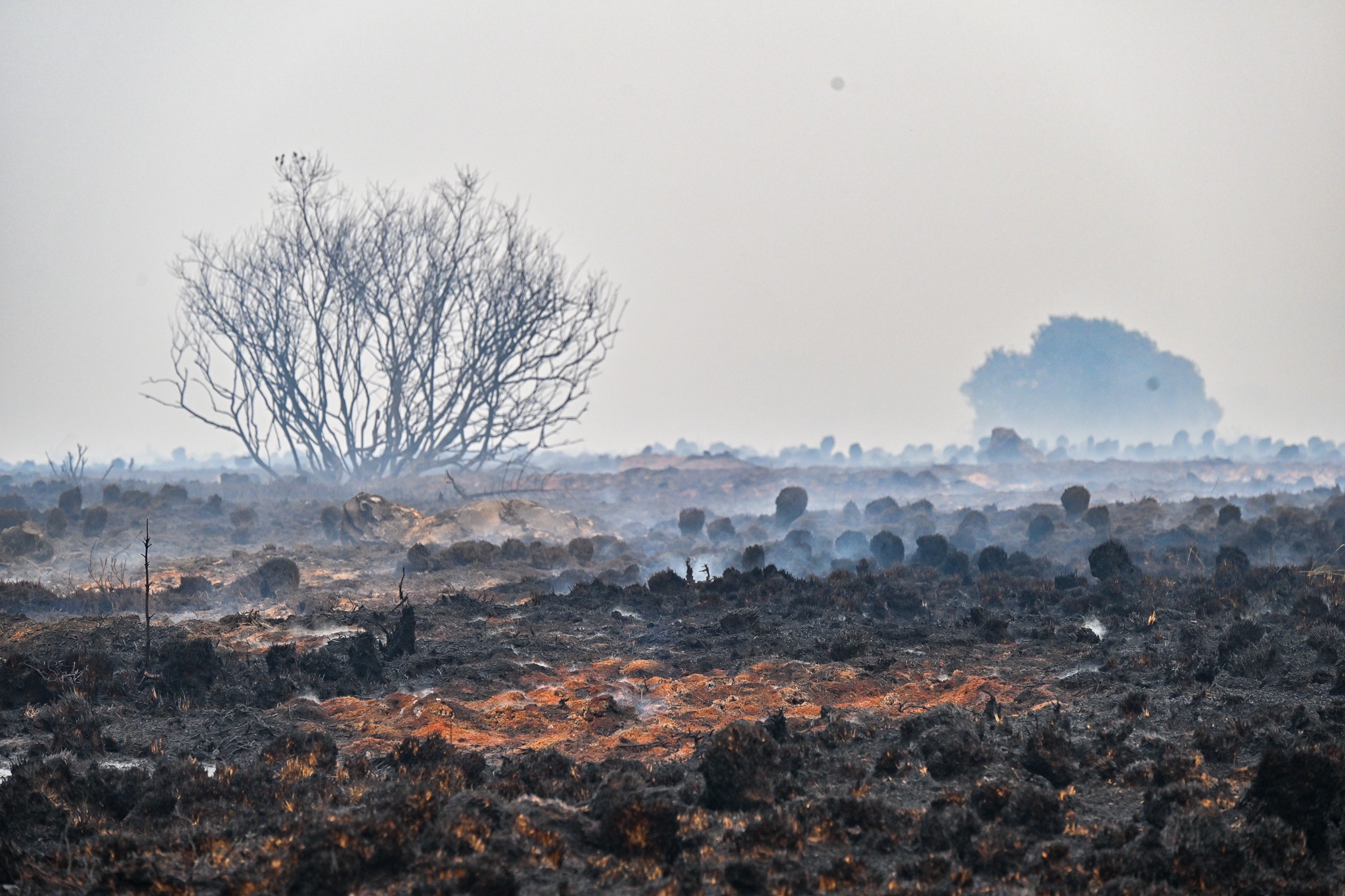
A burned out landscape pictured as a fire rages in the Hautes Fagnes (High Fens) nature reserve, on Sunday 16 August 2026 in Waimes. The fire started on August 14th and 2700 hectares (on a total of 4500) are impacted. Credit: Belga/Romain Rixhon
Climate change, the catalyst ?
Nicolas Ghilain, a climatologist at the Royal Meteorological Institute (RMI) and the University of Liège, says the country's average annual temperature has already risen by approximately 2.5°C since the pre-industrial period.
Belgium's annual rainfall has not shown an abnormal trend, but what is changing is noticeably "when the rain falls", he said.
Spring, historically already a relatively dry season, is becoming drier on average, and summers are showing larger differences between extremely wet and extremely dry years. That matters for wildfires because prolonged heat and drought dry out both soils and vegetation.
UGent researcher Jan Baetens says these increasingly extreme meteorological conditions make it easier for an ignition to develop into a wildfire.
"What we see is, of course, due to the extreme meteorological conditions, that we have way more wildfires than in normal years," he said.
Climate change contributes to longer periods of persistent drought and high temperatures, he said. Combined with low relative humidity, these conditions can make vegetation particularly vulnerable to fire.
Ghilain, however, is more cautious about attributing one particular summer (or one particular wildfire) directly to climate change.
"You can never say that an extreme weather event that has occurred is completely attributable to global warming," he said, unless there is clear evidence of a physical mechanism allowing such a conclusion.
Attribution studies are generally carried out afterwards to establish whether climate change made an event more likely. The RMI has yet to carry out such an analysis of the recent heat and drought events.
"The only thing that influences it is that global warming creates conditions that are increasingly favourable to this type of event," Ghilain said.
Hot and dry conditions can reinforce one another. Higher temperatures increase evaporation and transpiration from plants, which in turn dries soils and vegetation more quickly.
"Global warming is a sort of catalyst for natural phenomena," he explained. This means that extreme events can ultimately become "more extreme or more frequent".
A wildfire country?
The shift towards summer fires raises the question of whether Belgium could eventually develop a wildfire regime more commonly associated with countries further south.
"If our climatological conditions change and become more similar to those of the southern region, it makes sense that we will also get the wildfire regime they have over there," Baetens said.
Some 57% of recorded fires occurred in Flanders and 43% in Wallonia. Historically, the split is around 80% in Flanders and 20% in Wallonia.
This year, the province of Limburg accounts for the largest share, at 26%, followed by Namur at 15%. West Flanders and Luxembourg both recorded 12% of the fires, Liège and Antwerp 9% each, East Flanders 7%, Hainaut 4%, and Flemish and Walloon Brabant 3% each.
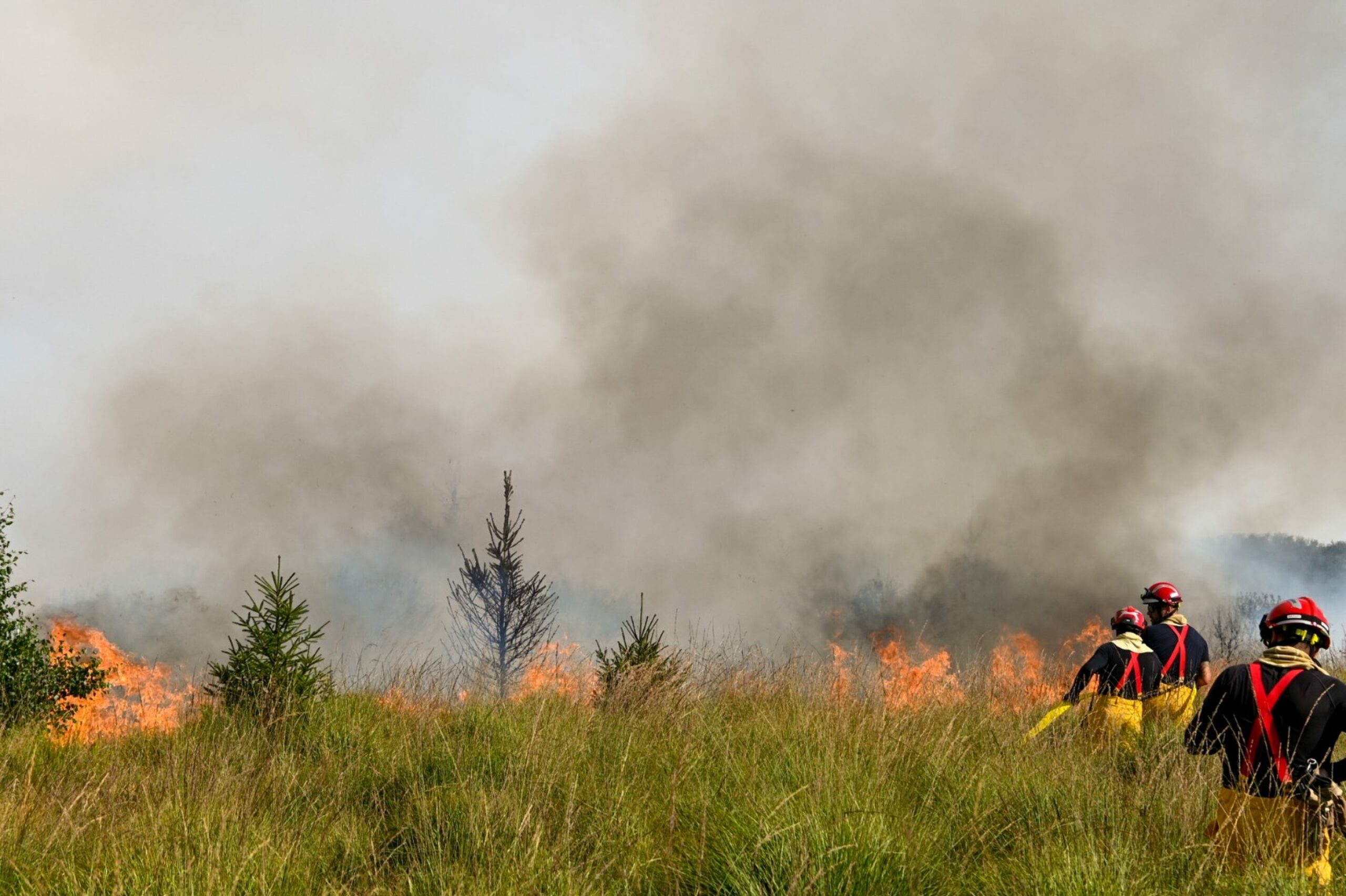
Firemen in action as a fire rages in the Hautes Fagnes (High Fens) nature reserve. Credit: Belga/Images VHP
Researchers are using "three different climate models" as part of a national programme projecting Belgium's climate up to 2100, including drought and extreme precipitation, Ghilain said. By the end of the century, Belgium could be around 4°C warmer than during the pre-industrial period.
"When we translate that into extreme temperatures, perhaps by the end of the century we could easily add five degrees to extreme temperatures," he said.
He also pointed to projections under which heatwaves in Belgium could eventually last for as long as two months later this century.
Are Belgian firefighters ready?
Philippe Filleul, commander of the Walloon Brabant emergency zone and vice-president of the representative body for Belgium's emergency zones and fire services (BBSP) said specialist wildfire training already exists, particularly in provinces such as Liège and Luxembourg. Belgian firefighters, including Dutch-speaking crews, also travel to France for specialist training.
"There are quite a few trained officers who are capable of deploying personnel in a structured way," Filleul told The Brussels Times. But "not everyone is trained. There is still some way to go."
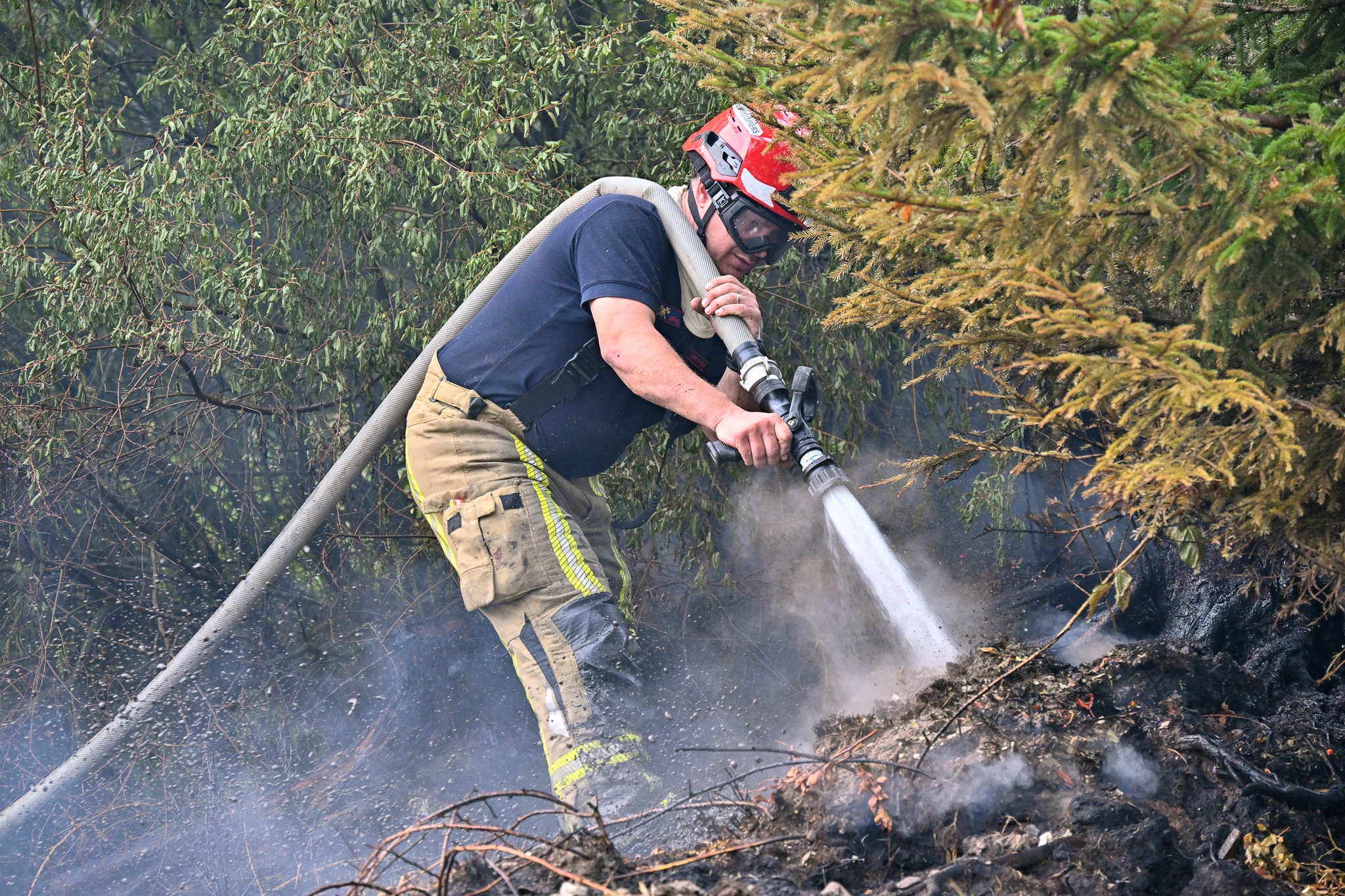
Firefighters in action on the scene of a fire rages in the Hautes Fagnes (High Fens) nature reserve. Credit: Belga/Romain Rixhon
The High Fens fire itself could provide further impetus to expand that training, he added. Belgian emergency zones also have off-road forest-fire tankers designed for vegetation fires, but their equipment depends on the risks present within each zone.
Walloon Brabant, for example, mainly has smaller wooded areas broken up by urbanised zones. The High Fens and Luxembourg province, meanwhile, contain much larger continuous areas of vegetation.
Wildfires also behave very differently from the building fires crews encounter more routinely.
"When I arrive at a building fire, I arrive by road, walk four metres, and I'm in the building," Filleul explained.
With a wildfire, however, crews instead have to consider the possibility of being overtaken by a fire whose direction can suddenly change. The High Fens pose another challenge because peat can continue burning below the surface.
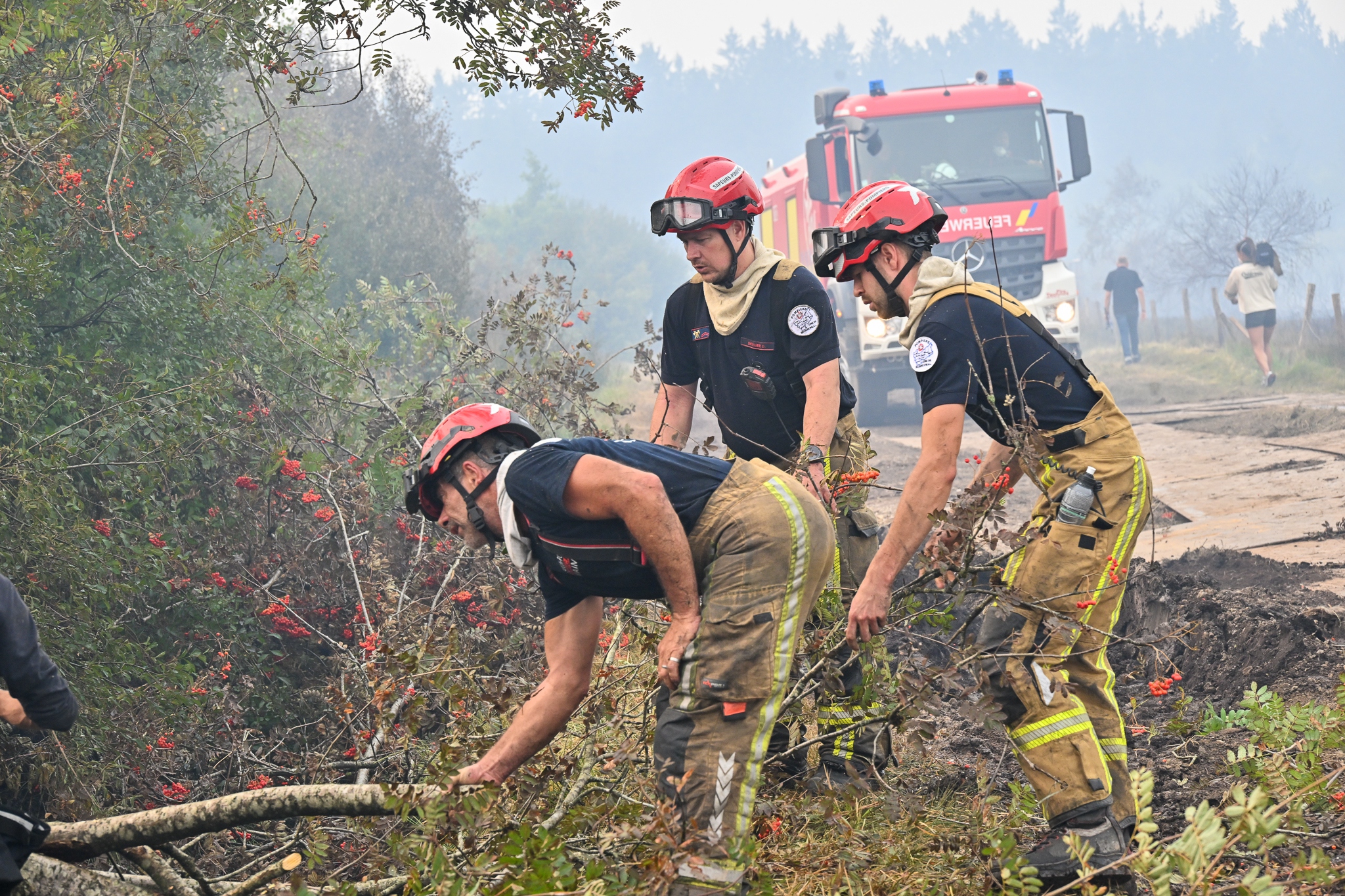
Credit: Belga.
Rain will "certainly" help stop its spread, climatologist Ghilain explained, but in peatlands such as the High Fens, fire can continue underground long after surface flames have disappeared.
According to Filleul, Belgium does not have its own dedicated firefighting helicopters or water-bombing aircraft. Federal police helicopters can be fitted with equipment to drop water, but there is no dedicated Belgian aerial firefighting fleet.
"Aircraft resources, Canadair planes (amphibious aircraft) or helicopters, will probably be things that will have to be considered in the future depending on how the risk evolves," Filleul said.
If the wildfire risk continues to increase, Belgium's needs could look different within the next decade, he stressed.
Training will also need to become more widespread so crews from different parts of Belgium can reinforce each other when a major fire breaks out.
