
From Grindr to chemsex, two gay men spoke to The Brussels Times about the challenges they have faced when dating in the Belgian capital, and the misconceptions people hold about the gay community.
This article is part of The Brussels Times' dating series, which includes columns and interviews with experts and members of the public on all matters of the heart.
Modern dating isn’t for the faint of heart, with ghosting and other behaviours becoming increasingly common. But dating as a gay man poses a particular set of challenges.
While Sébastien*, 46, has had the same “soul-destroying” experience on dating apps like Tinder and Bumble as anyone else, he says Grindr is a whole other ballgame.
When he was younger, Sébastien – who is from France but has lived in Brussels for six years – found Grindr “thrilling”, but it’s not for him anymore.
“For me, Grindr is not dating; Grindr is for hook-ups. I have used it in the past, and I don't really use it anymore, because it doesn't really suit my needs,” he tells The Brussels Times.
Italian-born Vincenzo*, 27, doesn’t see much of a difference between Tinder and Grindr in Brussels, however. In his experience, men have made more sexual advances on Tinder than Grindr.
“I've had many people approach me on Grindr to ask me out for a drink or something like that. And on Tinder, many people go straight to sex within the first few messages. In actual usage, I haven't felt that big of a difference,” Vincenzo says.
“In Italy, when you open Grindr, everyone looks for sex. There is hardly any exception.”
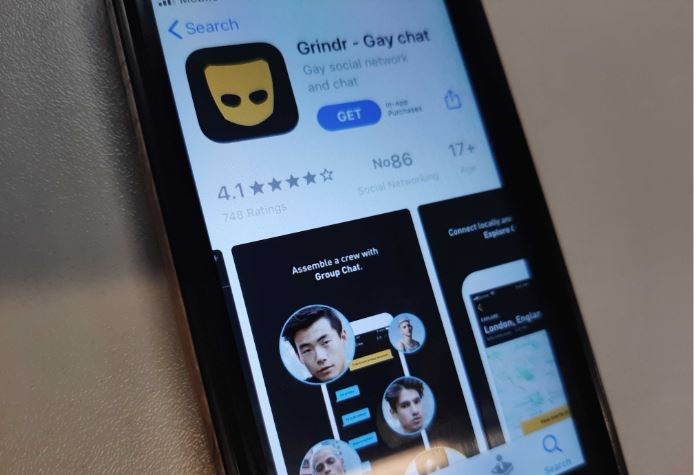
Gay dating app Grindr. Credit: The Brussels Times
Both say the gay dating app has become overly commercial and that many features have become monetised. Neither of them is willing to pay for the app.
“It keeps trying to push its paid functions; there are constantly ads, and there's barely any moderation,” Vincenzo says.
Grindr functions differently from other dating apps, displaying a grid of user profiles sorted by geographic distance. Users can tap on someone nearby, view their details, and chat directly without needing a mutual match.
Its design also appears to be more geared towards sex and hook-ups: users can state their preferred sex position on their profiles (e.g. top, bottom, versatile, side) – a feature which isn’t available on other apps.
Pills and chills
Both men have seen chemsex – sexual activity while under the influence of stimulant drugs, such as methamphetamine or mephedrone – widely talked about on Grindr, but this has never appealed to either of them.
“I've had many people ask me to join a chem sex party, which wasn't my experience elsewhere,” says Vincenzo, adding that they are often referred to as ‘chills’ in Brussels. “I feel like that happens more often here, maybe, or at least more openly.”
Sébastien describes many of his previous interactions on Grindr as “brutal”.
“I'm not prudish or anything, and hook-up culture is part of gay culture, and I've participated in it. But it can be quite aggressive,” he says.
“It's all just about sending dick pics, and you get blocked very easily. It's just very frustrating. I think maybe it's just me getting old as well. I’m not willing to put up with that kind of stuff anymore.”
Sébastien says Grindr can also be “unhealthy” in how much people depend on it to connect nowadays.
“I've had friends tell me they see a guy that they like on the street, but rather than go and speak with them, they just immediately go on their phone and check if he's on Grindr when it's clear that the other guy is also gay,” he says.
There is an immediacy to Grindr, which isn’t the case with other apps. “People want to hook up, and they want to hook up now,” he says.
Hooked on hook-ups
In Sébastien's view, apps such as Grindr feed into a wider hook-up culture and general stereotype that gay men are promiscuous.
“A lot of gay people are very happy to hook up because of the availability of apps […] I think it's always been something that existed before the internet. There were things like cruising, but I think it made it even more freely available to guys.”
He believes there is some truth behind this stereotype, and that gay men are “more liberal when it comes to sex and sexuality [than straight people]”, but this is an over-generalisation.
“Sex and sexuality obviously play a part, but you're attracted romantically to someone of the same gender,” he says, adding that he is looking for a long-term relationship and someone to build a life with.
Vincenzo adds that pushing for sex is normalised in the gay community. “A lot of the interactions are very sexual in nature, based on sex, or with the aim of having sex at some point.” He feels this makes it harder to find a long-term partner.
“There is less wooing. They reveal their cards in the first 30 seconds of a conversation, and that has happened more than once. At the very least, try and show some more interest in the other person beyond the sexual sphere,” he says.
The Italian national also believes the general population views gay men as promiscuous, when this isn’t necessarily the case. The gay community, he says, is often viewed as a “monolith”.
“There is quite a lot of diversity among gay people. Some people are very sexual; some people are not sexual at all,” he says. “Some people might think that we're all exactly the same with the same interests, and that really isn't the case.”
Liberal Brussels?
In Brussels specifically, the pair’s experiences differ significantly.
Having lived in London previously, Sébastien has struggled to connect with men he is interested in in the Belgian capital due to the smaller dating pool and the fact he moved here when he was 40.
However, he feels Brussels is also not as accepting of gay people as it appears to be and describes it as a “totally different experience” to London.
“Obviously on the surface, it's fairly accepting, but I feel like there are a lot more people here that are discreet, or even closeted, and I feel like it's definitely less liberal than a bigger place,” he says, adding that he rarely sees gay couples holding hands in the city.
“There's homophobia everywhere, but I feel it's probably a little bit more under the surface here.”
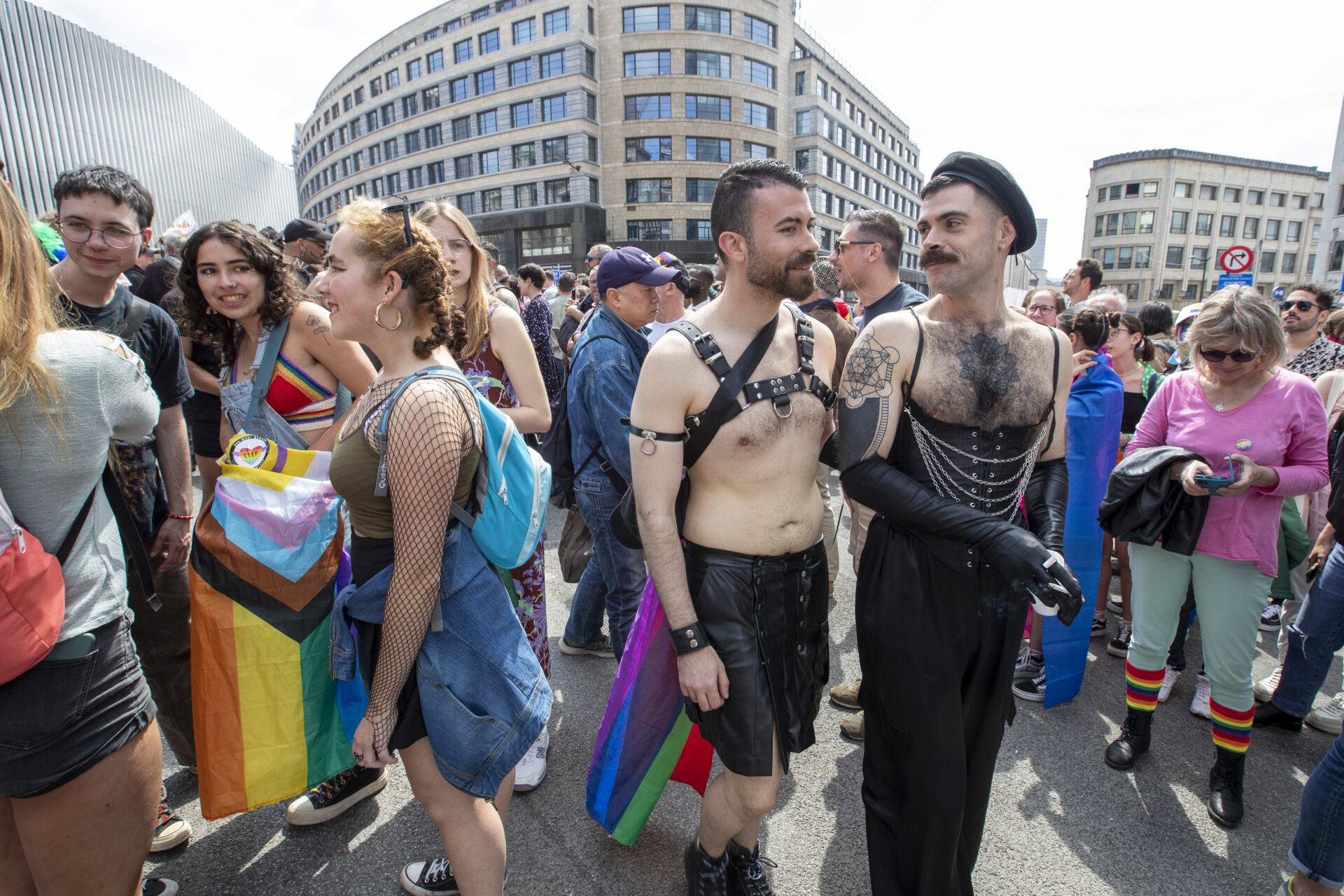
Brussels Pride 2023. Credit: Belga / Nicolas Maeterlinck
The first time he experienced homophobia was also in Brussels, while walking past a man in the centre. “He looked at me, and I looked at him, and he said, ‘Qu’est-ce que tu regardes, pédé?’” (What are you looking at, f*ggot?)
Vincenzo, in turn, has found Brussels to be much more liberal than his home country of Italy. He has felt “very safe” living in the city as a gay man, and particularly praises the support infrastructure for gay and queer people as a whole when it comes to sexual health.
The North–South divide
Growing up in Italy as a gay man was tough, he says, and he faced social exclusion, with friend groups and at school, but also from society in general.
“It's not personal to you as a gay person, but it's towards all gay people. When I was still an adolescent, it really felt like I was never going to be accepted by society as a whole.”
Both Sébastien and Vincenzo feel gay men are only able to discover their sexuality later in life, and they miss out on milestones when they’re younger, such as having a relationship while at school. “For a straight person, that's very normal; for a gay person, it's almost impossible,” says Vincenzo.
He says he has felt this elsewhere in southern Europe, having lived in Greece too. But the further north you go, the more accepting society becomes, he says.
Related News
- I went on eight dates in Brussels in one weekend – here's how it went
- A roof in exchange for sex: The hidden cost of trying to stay off the streets in Belgium
- 'Women ask me to order them taxis and buy them flowers': A man's perspective of dating in Brussels
In Brussels, he says there are fewer barriers to sex and he feels less embarrassment and shame. Men have even approached him on the street – something he had never experienced in Italy.
One time, Vincenzo was walking a dog and so was another man. The pair looked at each other and then the man approached him. “We started talking and within three sentences, he said, ‘so can I come over?’” It caught Vincenzo off guard, and he didn’t feel comfortable saying yes in the moment.
A few days ago, he was walking home and passed a man sitting on a bench in a park. Again, they briefly looked at each other, but Vincenzo kept walking. The man reappeared at the end of the street, having followed him on his bike.
“He was super nice, super sweet, and I did give him my number. But I don't think I would have ever had the courage to do something like that just based on a couple of quick glances that we had exchanged. It takes a lot of confidence,” he says.
Vincenzo describes it as “one of the healthiest interactions” he’s had in Brussels, which showed interest “in a nice way” and put him at ease. “It also didn't feel like he was pressuring me into anything, and I really appreciated that. So I'd be very open to meeting up with him.”
He says it’ll be a long time before he can pluck up the courage to approach a man on the streets of Brussels, however, as it was never an option growing up in Italy.
“In a more liberal context – which Brussels, to me, is – I see people do that, and I would love to learn how to do that, too. But it does take time to get rid of the self-imposed barriers that you learn to build for yourself,” he says.
*Name has been changed to protect the speaker's identity
