

Belgian firms could historically afford high pay compared to other countries due to higher productivity levels. But with productivity growth flatlining in recent decades, this ability is coming under strain.
In an interview with The Brussels Times, BNP Paribas Fortis' Chief Economist Koen De Leus shared his concerns about Belgium's economy.
According to him, politicians need to focus more on supporting businesses to boost productivity to maintain wage levels, drive economic growth and in turn reduce the Federal Government's budget deficit.
"We need to further increase our productivity in order to attract foreign companies," De Leus said. This, he argued, would allow Belgian companies to say "okay, we have higher salaries, but we have higher productivity as well."
Belgians earn more on average than the rest of the EU
Across the EU, Belgium had the third highest gross hourly earnings level at €23.80 an hour. This is using data from 2022, the most recently available from Eurostat.
This high earnings level for Belgium goes back historically, noted De Leus, as Belgium's productivity could traditionally support it.
"Going back to 1996, you see that at that point in time, salary costs were around 10% higher than in the other countries [in the eurozone]. Of course, we had bigger and higher productivity, and of course that compensated for the higher salaries."
Since 2022, wages in Belgium have continued to grow strongly as the system of automatic wage indexation used in the country boosted salaries compared to other countries.
In their 2024 economic review on wage-price dynamics, the National Bank of Belgium outlined just how wide the gap had become, noting that across the eurozone "wages had not, by the end of 2023, picked up 'enough' to compensate for the spike in inflation, while in Belgium they had already done so by [the start of] 2023."
More recently, this growth has stabilised as Belgium's increases have been capped while other countries catch up, a requirement of the 1996 Wage Law, which is designed to maintain economic competitiveness compared to other countries.
However, even with the cap, these increases may no longer be sustainable for businesses to pay, as productivity growth has slowed considerably in recent decades.
Belgium has a productivity, and therefore a wage, problem
Belgium's Federal Planning Bureau showed in April 2026 just how far Belgium has slipped. In a paper on labour productivity, the Bureau explained that before 2008, labour productivity per hour averaged 1.3% annually.
Between 2007 and 2012, it fell to 0.1% but has since been recovering. The current rate sits at 0.8% for the period between 2019 and 2024.
While productivity growth has been slowing down across the EU, Belgium has a more pressing need to address the issue to maintain its higher wage levels.
The Bureau noted that the main driver of Belgium's slowdown has been a decline in total factor productivity, which has fallen "by almost two-thirds between the early 2000s and the most recent sub-period [2019 to 2024]."
Total factor productivity is another way of describing the effects of embedding technological innovation and improved organisational processes within a business, making them more efficient.
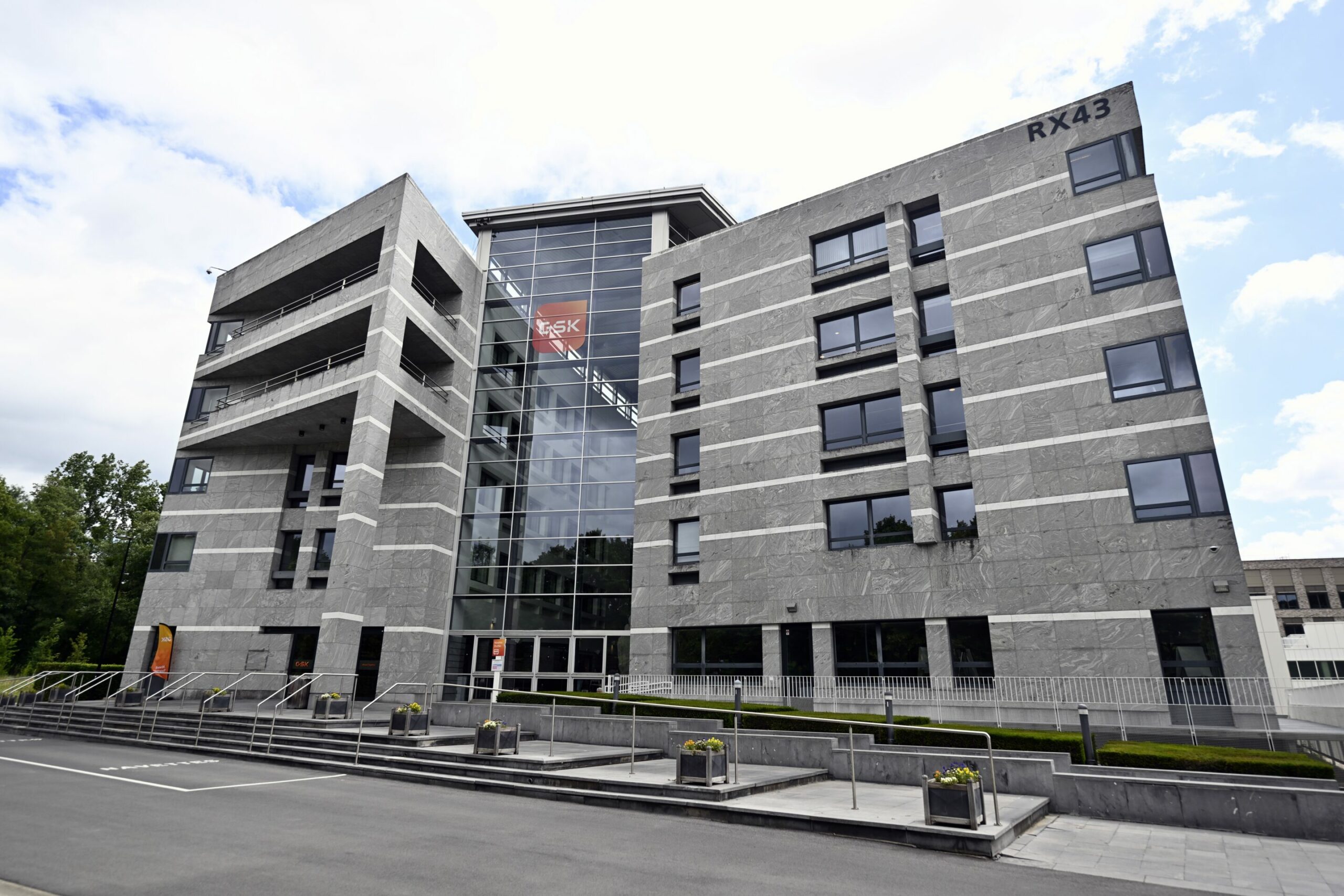
Pharmaceutical company GSK opened a new centre of excellence dedicated to accelerating vaccine development at their existing site in Rixensart in June 2026. Pharmaceuticals are a standout sector for productivity growth in Belgium. Credit: Belga/Eric Lalmand
Economists explain that if businesses can improve how efficient they are in their day to day processes without requiring more people or high levels of investment, this results in lower costs – improving productivity.
More importantly, better total factor productivity, noted the Bureau, "drives long-term income growth."
Zombies are holding back growth
Some of the drag in Belgium's productivity figures can be explained by so-called zombie companies, but many of these are going out of business.
Earlier this year, financial services company Graydon released figures which showed that, in 2025, Belgium had its highest number of business bankruptcies in 12 years. The figures also showed that the gap between new business starts and closures had "never been narrower".
"If you really look deeper into it, you see that it's a lot of small companies," said De Leus.
These smaller companies are suffering from the effects of the dialling back of subsidies given during Covid-19 to keep businesses afloat. In addition, interest rates, which have risen across Europe since the pandemic, have also played a part in business collapses.
"Every company can survive when the interest rates on their debt are about 1% or lower, but when interest rates are going up to 3.5-4%, you really have to earn your living. And quite a lot of companies, let's say they were in fact zombie companies, they are dying out now," said De Leus.
The European Central Bank (ECB) reviewed the prevalence of these so-called zombie firms in 2021 and confirmed that policy measures that supported businesses through the pandemic, as well as favourable loan and interest rates, led to an "increased risk of zombification in the eurozone economy, which could constrain the post-pandemic recovery."
De Leus suggested that the subsequent collapse in these types of firms is not necessarily a bad thing. However, beyond this, Belgium needs to take a deeper look at what is holding back productivity growth.
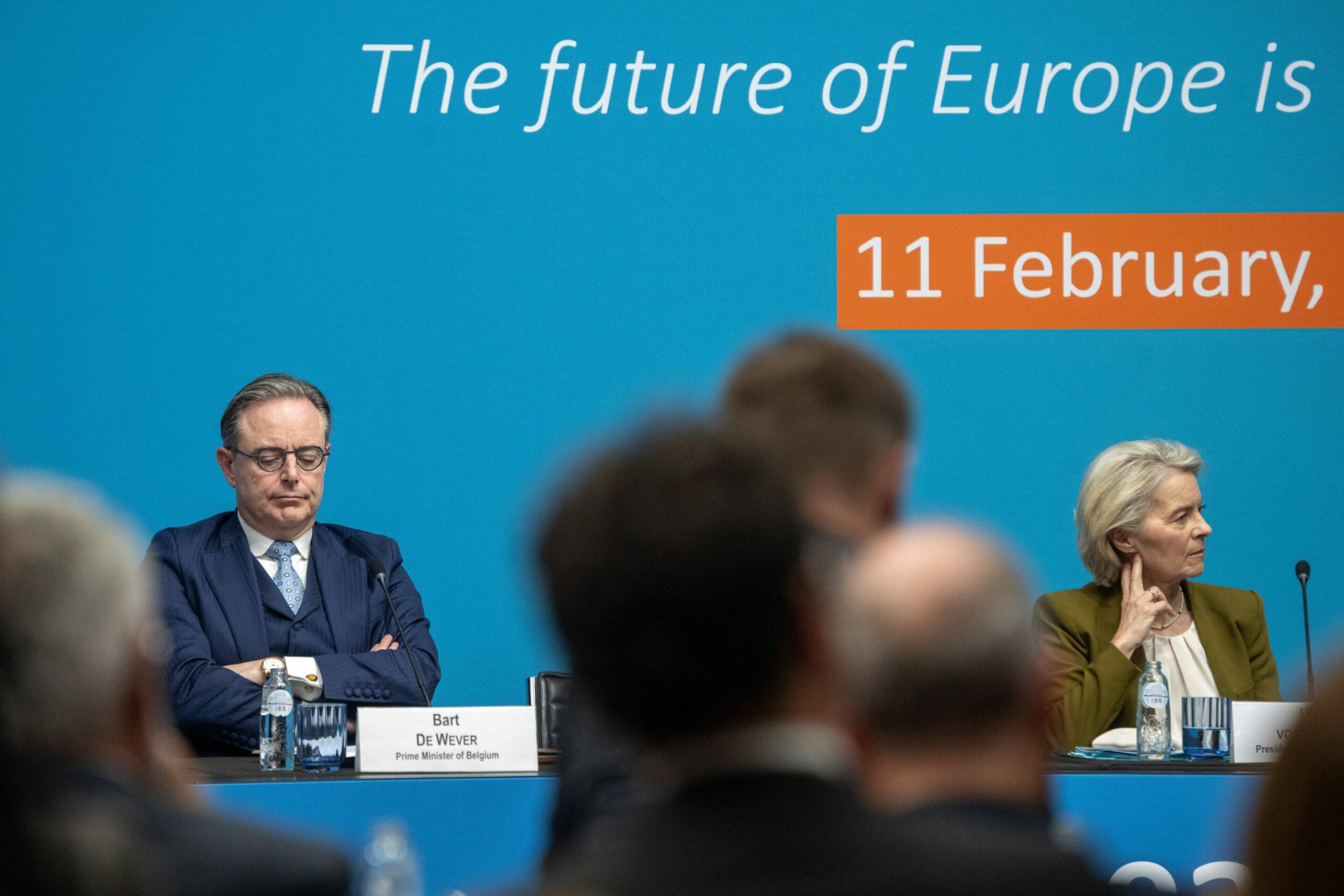
Belgian Prime Minister Bart De Wever and EU President Ursula von der Leyen are pictured during the European Industry Summit in Antwerp, Wednesday 11 February 2026. At the Summit De Wever argued the EU should stop trying to do too much and focus on "innovation, productivity, and competitiveness." Credit: Belga/Jonas Roosens
Belgium is too complex for businesses to grow
De Leus accepted that slower productivity growth is an EU-wide problem – a result, he claimed, of Europe not having a truly integrated market that makes it easy for companies to grow and deliver economies of scale, which would make them more competitive and productive.
But he also made the case that Belgium doesn't help itself, arguing there is too much complexity for businesses.
In particular De Leus railed against the inefficiency of how Belgium is governed, "the fact that in a country that is about 30,000 square kilometres, you have three different levels of government."
This, he said, results in money being spent by the public sector in ways that are uncoordinated, as well as firms facing different rules across Brussels, Wallonia and Flanders.
"For a small business to follow all these regulations, plus the regulations on climate, plus the EU regulations... that really creates enormous headaches, and it makes that for a small company of ten, you almost need two or three people following the regulations, and of course that doesn't create profits. It creates overheads."
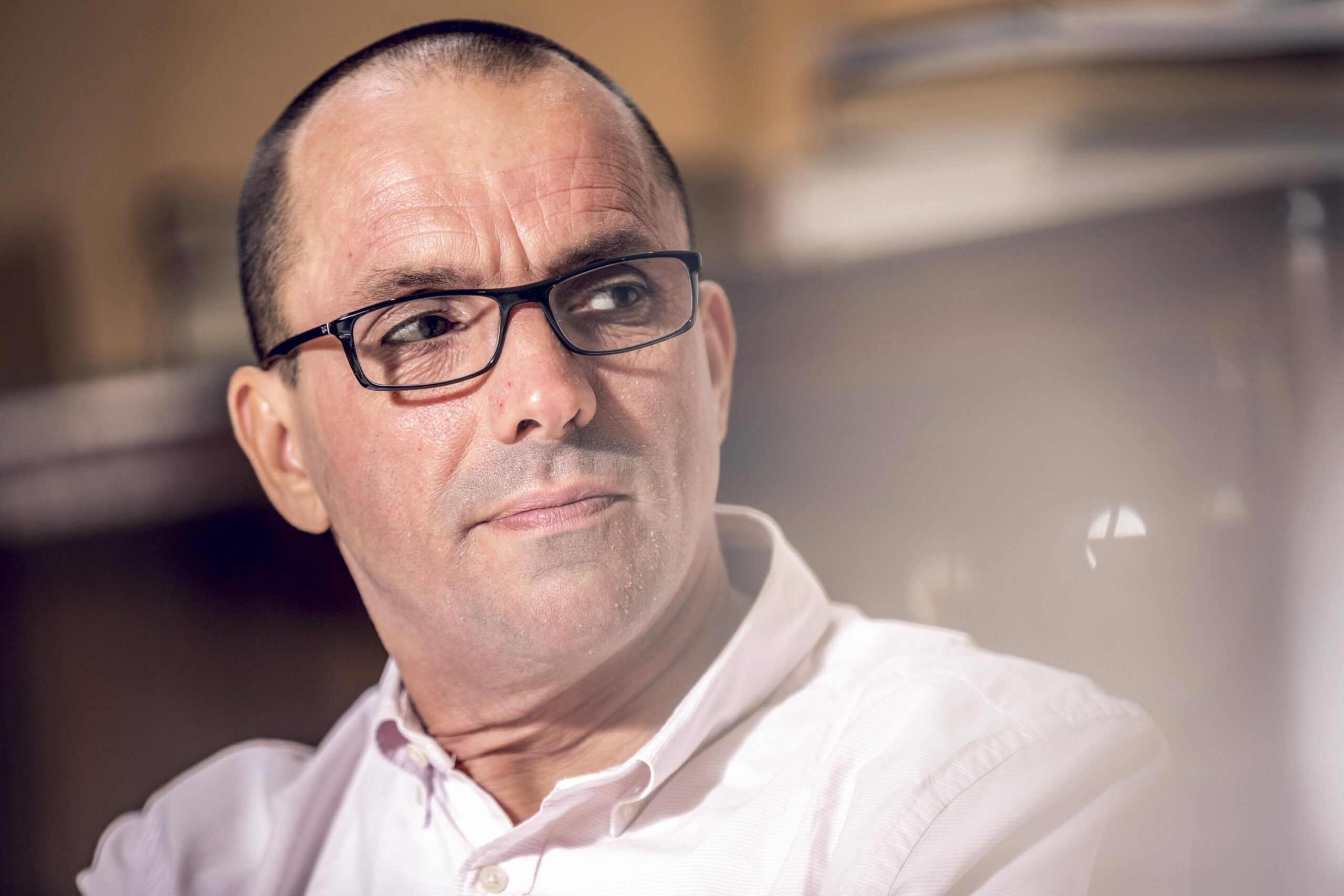
Koen De Leus pictured at a photoshoot in Evere, Brussels, August 2021. Credit: Belga / Hatim Kaghat
Making the economy work more effectively, or improving productivity, is something De Leus cited as critical. This is something politicians are not focused on enough, he said.
"Every measure that is being put into place by the new government, they should watch the effect on productivity, because the complexity is already huge, the regulations are enormous."
While boosting pay and reducing the deficit are outcomes politicians would agree on, De Leus argued that there is not enough of a focus on how to get there through boosting productivity.
As a result, he feels that politicians should focus more on how any policy they want to introduce affects productivity.
"If you can increase productivity, you will increase economic growth, and by increasing economic growth, you are going to have your debt relative to GDP automatically come down, and that is something that is not realised enough."
"We have some pension reforms, there were reforms on the labour market, but so far I have not seen many reforms that really push on productivity."
Related News
- The Brussels economy minister has a strategy for jobs, growth and Midi – but will it change anything?
- 'You can feel the tension in the air': Ixelles businesses sound the alarm after killing of beloved shopkeeper
- Cost of living: How does Brussels compare with other major European capitals?
- AI makes its way into the office but is yet to transform productivity
