
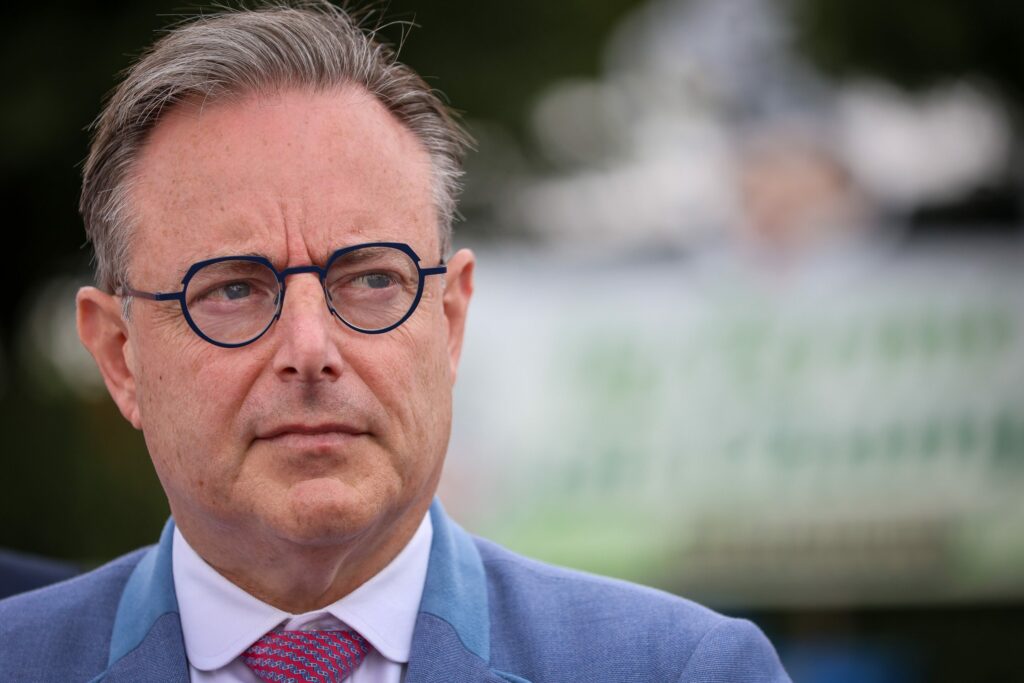
Within the Federal Government, the search for €10 billion is gradually getting under way. According to government sources, this will be "difficult but not impossible" – provided that all coalition partners are prepared to make concessions.
The federal 'core' cabinet (Prime Minister Bart De Wever and his five Deputy PMs) finalised the new budgetary effort before the summer: by 2029, De Wever's government will be seeking a further €10 billion.
This comes on top of the previous budget rounds, in which measures totalling €32 billion had already been announced.
In principle, "only" €7.7 billion is needed to meet the European expenditure benchmark by the end of the legislative term, but according to forecasts by the International Monetary Fund (IMF), that figure is already set to rise to €10 billion by 2031.
'Sense of urgency'
Additionally, interest payments on public debt threaten to exceed GDP growth in 2031, triggering fears of a highly damaging interest-rate snowball effect. Without decisive action, that disaster scenario is virtually a mathematical certainty.
If a new economic shock were to occur along the way – which experts say is not inconceivable with US President Donald Trump on the warpath – that point would simply be reached earlier. As a result, Belgium would risk coming under the scrutiny of the financial markets in the coming years.
De Wever has made it clear that he is acutely aware of the "sense of urgency" and is therefore aiming higher than is strictly necessary, in the hope of breaking away from the back of the pack in time to avoid the spectre of the interest rate snowball.
This means that for the second year in a row, the Federal Government's drafting of the budget has the air of a new coalition agreement, with the prime minister hoping that his coalition partners share his sense of urgency.
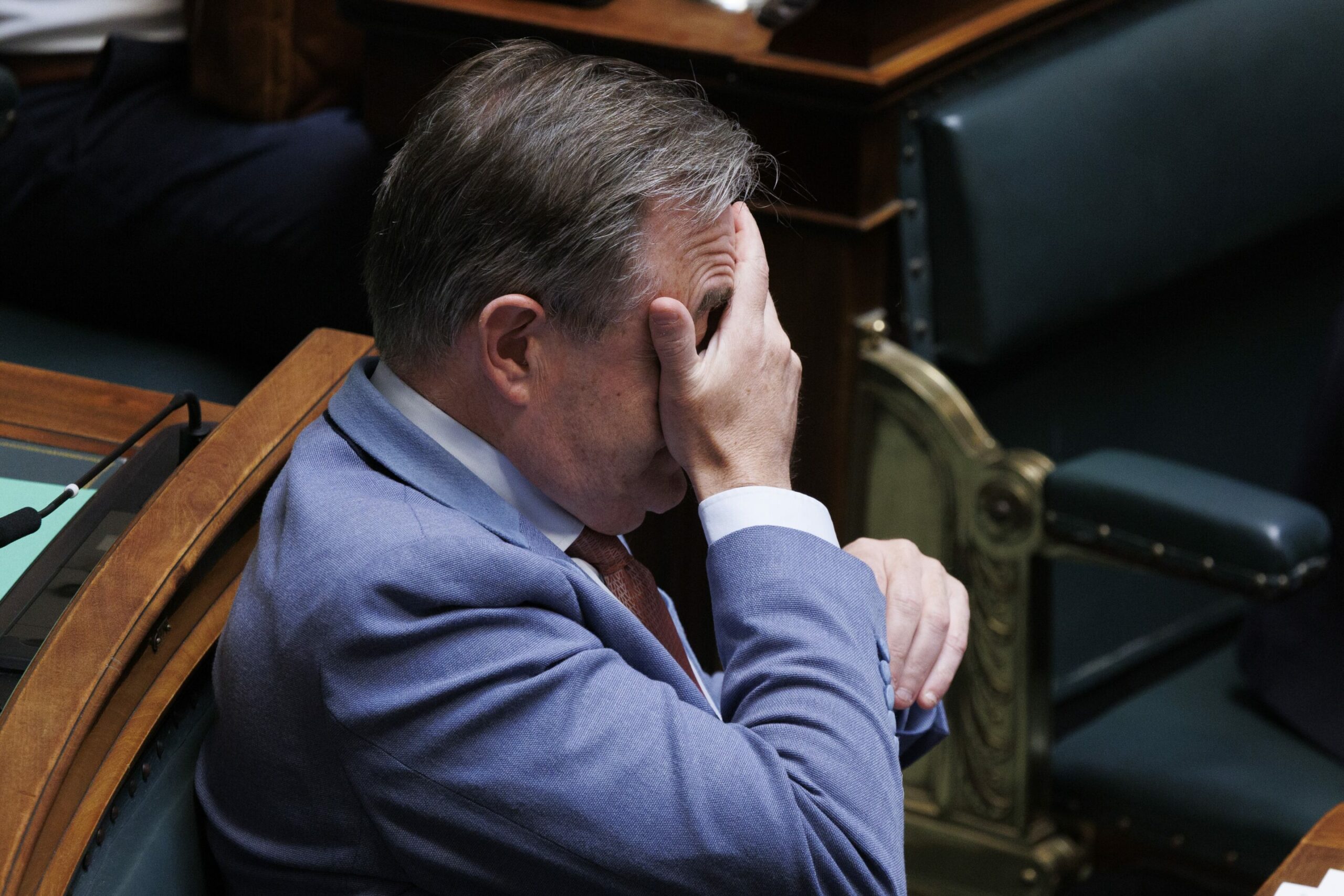
Prime Minister Bart De Wever pictured during a plenary session at the Federal Parliament in Brussels, Thursday 09 July 2026. Credit: Belga / Nicolas Maeterlinck
According to De Wever, anyone who now refuses to compromise and seeks to score political points by playing poker risks having to implement a programme within a few years that is three times as onerous and ultimately yields fewer results.
Officially, the Prime Minister and the Deputy PMs will start working on this next week. On the table is a list of all possible measures, costed by the Federal Planning Bureau.
What already seems clear is that making substantial cuts to the extra billions allocated to Defence – which, at a steady rate, amounts to €5 billion per year – is not feasible.
However, scrapping or scaling back the promised tax cuts is certainly not an option either, particularly for the (centre-)right coalition partners. Yet, this would push the bill up by a further €5 billion by 2030.
No more ugly camels
The loss of revenue may well have to be offset by other sources of income, although these must not stifle economic growth, according to government circles. A VAT reform is therefore quickly coming back into view, even though the "ugly camel" from the previous budget round still leaves a bad taste in the mouth of many government members.
The deadline for an agreement is 13 October, when the European Commission expects Belgium’s budget proposal and the Prime Minister is due to deliver his State of the Union address to Parliament.
Last year, this did not materialise: the government had to fall back on provisional twelfths, and De Wever even went to see the King to discuss the situation.
The last thing De Wever wants is a repeat of that scenario. On more than one occasion, he emphasised that he became Prime Minister to get Belgium's finances back on track and does not wish to cling to his post if that ambition proves unachievable.
Incidentally, even with a further €10 billion in the coffers, the Belgian budget is not in perfect health. According to De Wever, a similar effort will be required again in the next parliamentary term, preferably right from the start.
