
Renters are 16% more likely to experience race and ethnicity discrimination in Europe than in North America, according to new research published this week from the VUB and UGent. The results are based on an analysis of field tests from over half a million rental applications.
The difference comes down to the higher levels of racial diversity in US cities, which means a larger share of both landlords and tenants are likely to be non-white compared to Europe. Additionally, protective legislation has been in place longer in the US, Professor Pieter-Paul Verhaeghe, one of the researchers from the VUB, told The Brussels Times.
"Anti-discrimination legislation in the US is much older than in Europe, dating back to the Fair Housing Act of 1968 (in comparison with the more recent 2000 EU Racial Equality Directive). Moreover, many legal testing measures where implemented in the US, mainly during the late 1980s and during the 1990s. This paid off with less discrimination as a consequence."
Despite protections being in place in both Europe and North America, the study found that rental discrimination has barely changed since the 2000s. Only in one area – socio-economic status – has discrimination seen a fall.
Unia, the public agency with a mandate to combat discrimination, suggested that part of the challenge in Belgium is due to the shortage of housing and the use of social media to post adverts. This makes tracking and taking action difficult, as adverts often do not have the address.
"The housing crisis and the shortage of affordable rental housing play a significant role," Anne Salmon, a spokesperson with Unia, told The Brussels Times.
"The combination of limited supply and high demand from tenants (for example, in Brussels, 62% of residents are tenants) allows landlords to be extremely selective, and sometimes even discriminatory," she said. "The intense competition for available housing makes such discrimination almost impossible to detect."

Els Keytsman, director of Unia. Credit: Belga
Rental discrimination still common for some groups
Across all countries, the researchers found that the groups most frequently discriminated against when looking for rental accommodation are ethnic minorities, people with disabilities and those with insecure employment. On average these groups are 20% less likely to be invited to view a home by landlords or estate agents.
"When people think of rental discrimination, the focus quickly turns to ethnic origin. Our study shows that this is indeed one of the main grounds for discrimination, but that people with disabilities or in a precarious socio-economic position are affected just as severely. This reinforces inequality in our society," explained Verhaeghe.
Over 100 field experiments conducted between 2002 to 2024 in 31 different countries were analysed to find common patterns across countries. Field tests see researchers sending multiple applications to real rental adverts, changing nothing between the applications except areas where discrimination is being tested, such as ethnic origin or gender.
The aim is to see which applicants are more likely to be invited to view the property.
The results from Europe and North America shows that applicants with Turkish or North African names are the most disadvantaged against, receiving 28% fewer offers to view a property. This is followed by applicants with African, Eastern European or Asian names who receive between 15 to 18% fewer positive responses.
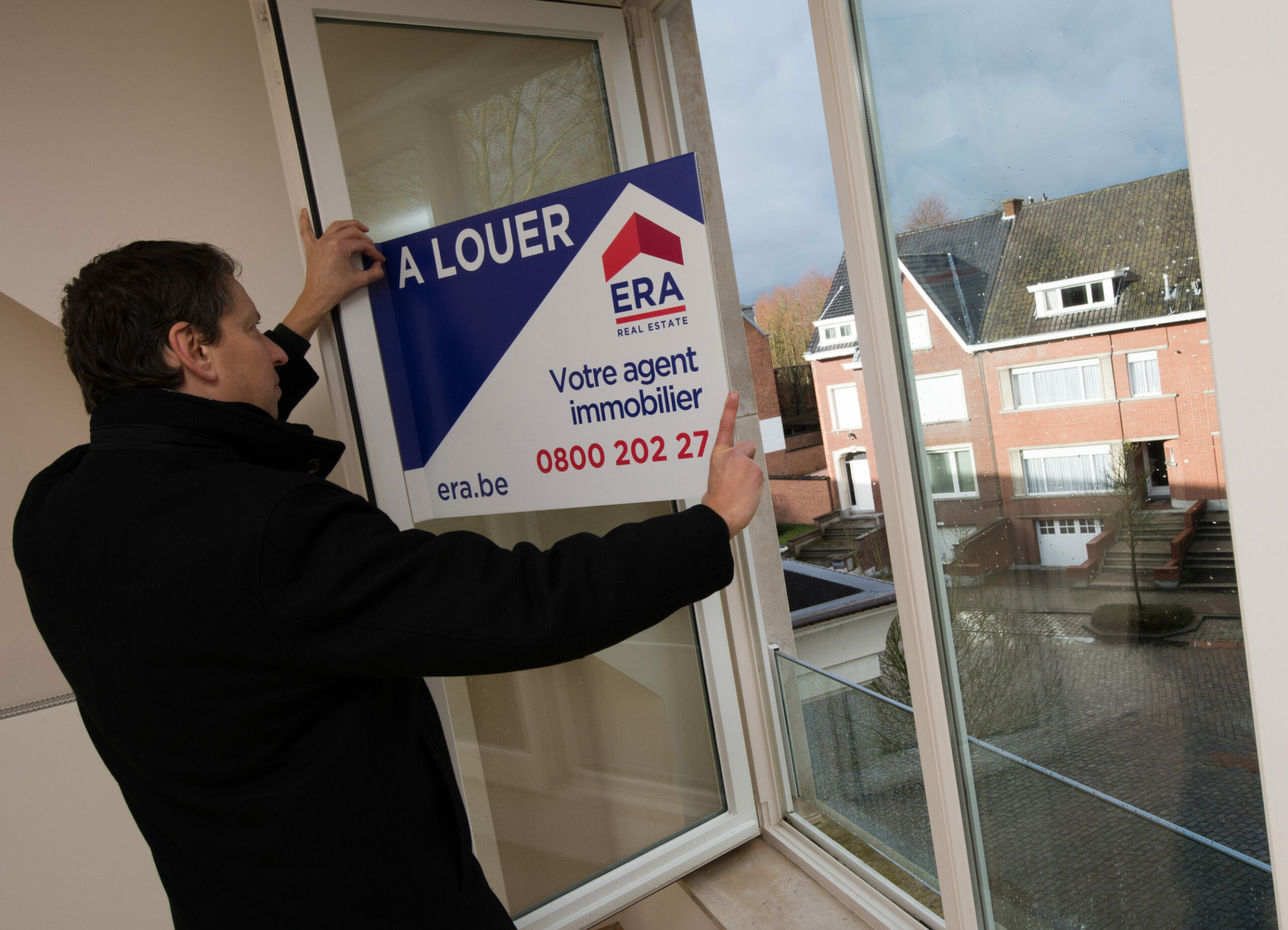
Picture shows a 'A Louer' sign of Era real estate company on a house. Credit Belga/ Benoit Doppagne
Housing discrimination in Belgium
According to Verhaeghe, the study shows that "Belgium scores quite average, with similar levels of ethnic, disability and socio-economic discrimination as the global figures."
Belgium also stands out positively on gender and sexual orientation. While the study showed that men and LGBTQ+ people were 4% less likely to be invited to view a property globally, Verhaeghe noted that "in contrast to the worldwide pattern, we do not see any rental discrimination in Belgium on the basis of sexual orientation and gender."
Another way to assess discrimination in housing access is using self-perceived discrimination. This approach goes further than the use of field experiments to consider experiences applicants felt they had both during the response to an advert and when they went to view a property.
Using this broader approach, figures from Eurostat show that Belgium is one of the worst countries in Europe for housing discrimination, and for those with a disability, it is the worst.
Nearly 15% of people with a disability in Belgium felt that bias against them played a role when looking for accommodation, the highest in Europe. This compares to an EU average of 8.3%.
Housing discrimination on the basis of protected characteristics is illegal in Belgium. People in Belgium who feel they have been discriminated against can report this to Unia.
However, Salmon noted that discrimination is difficult to prove, while "the lack of evidence discourages complainants from reporting the incidents."
"Unia’s support is therefore generally limited to registering the facts, providing information, and offering guidance to complainants."
The agency recommended an increased supply in social housing, improved anti-discrimination policies and mandatory training at local authorities and real estate agents, and the abolition of the one-third income rule, which is used as a test for housing affordability.
