
Brussels brothers Charles and Henri Masset initially set out to make a short social media video about a terminally ill Brussels cyclist. Nearly two years later, they had filmed a friendship, a battle with incurable pancreas cancer and a very different way of looking at life.
On 21 September, more than 1,000 people are expected at UGC De Brouckère in Brussels for the premiere of Une furieuse envie de vivre (A Furious Desire to Live), a documentary that began with a much smaller ambition: an Instagram video.
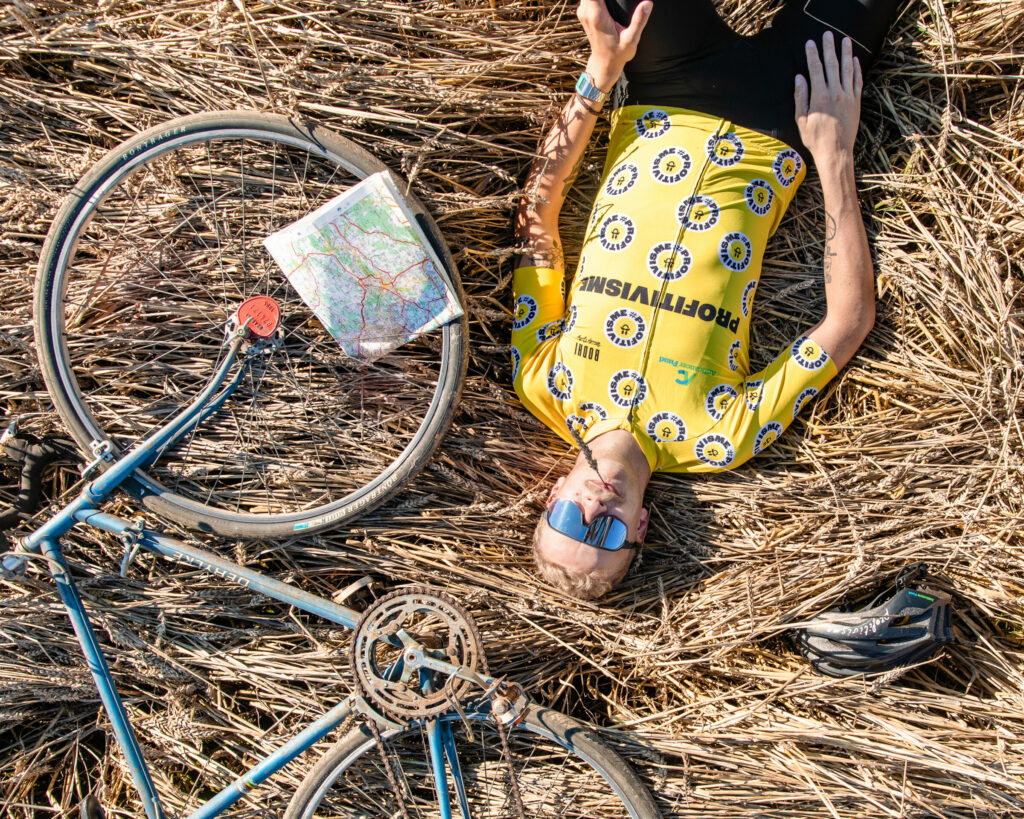
The film, made by the Masset brothers, follows Gilles Van der Spek, a Brussels cyclist who was diagnosed with incurable pancreas cancer at the age of 32. What was initially supposed to be a short promotional video about a cycling challenge in Kyrgyzstan gradually turned into a two-year documentary project – and, along the way, a close friendship.
Van der Spek died in 2024.
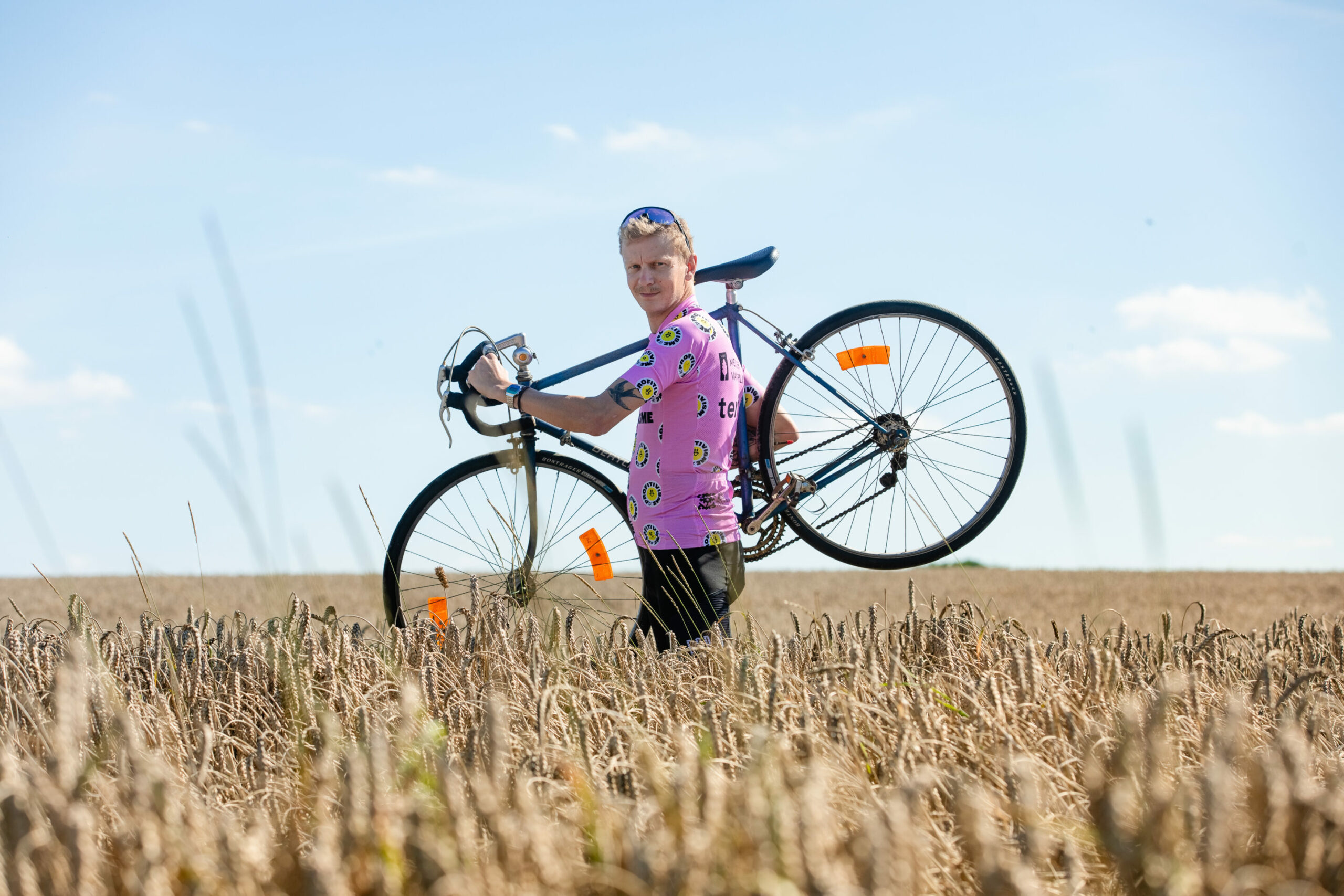
Gilles Van der Spek. Credit: Nicolas Coulon
From Instagram to the big screen
Charles Masset has been passionate about video since childhood, he tells The Brussels Times. "I studied medicine and business, but I could not really find my path. So I eventually returned to my first passion and turned video production into my profession."
He later brought his younger brother Henri, who had a stronger business background, into the project. Together, they created an audiovisual production company and spent several years producing corporate videos, sports content, interviews and social media videos.
In early 2023, Van der Spek contacted the brothers after seeing their work online. He wanted them to produce a short Instagram video announcing his upcoming project: a cycling challenge in Kyrgyzstan.
The brothers met him for the first time during an afternoon of filming in March 2023. The resulting video performed well on social media, but something else happened during that first meeting.
“We found the project amazing, but more importantly, something happened on a human level,” Charles recalls. “Sometimes you meet people and you immediately feel a kind of friendship at first sight. That’s what happened with Gilles.”
The brothers began making more videos documenting his preparation. At first, there was still no documentary in sight. “We were very focused on social media, but we realised the impact his message could have,” says Henri.
The idea gradually emerged that Van der Spek’s story deserved more than a 30-second clip that would disappear from people’s feeds a few days later.
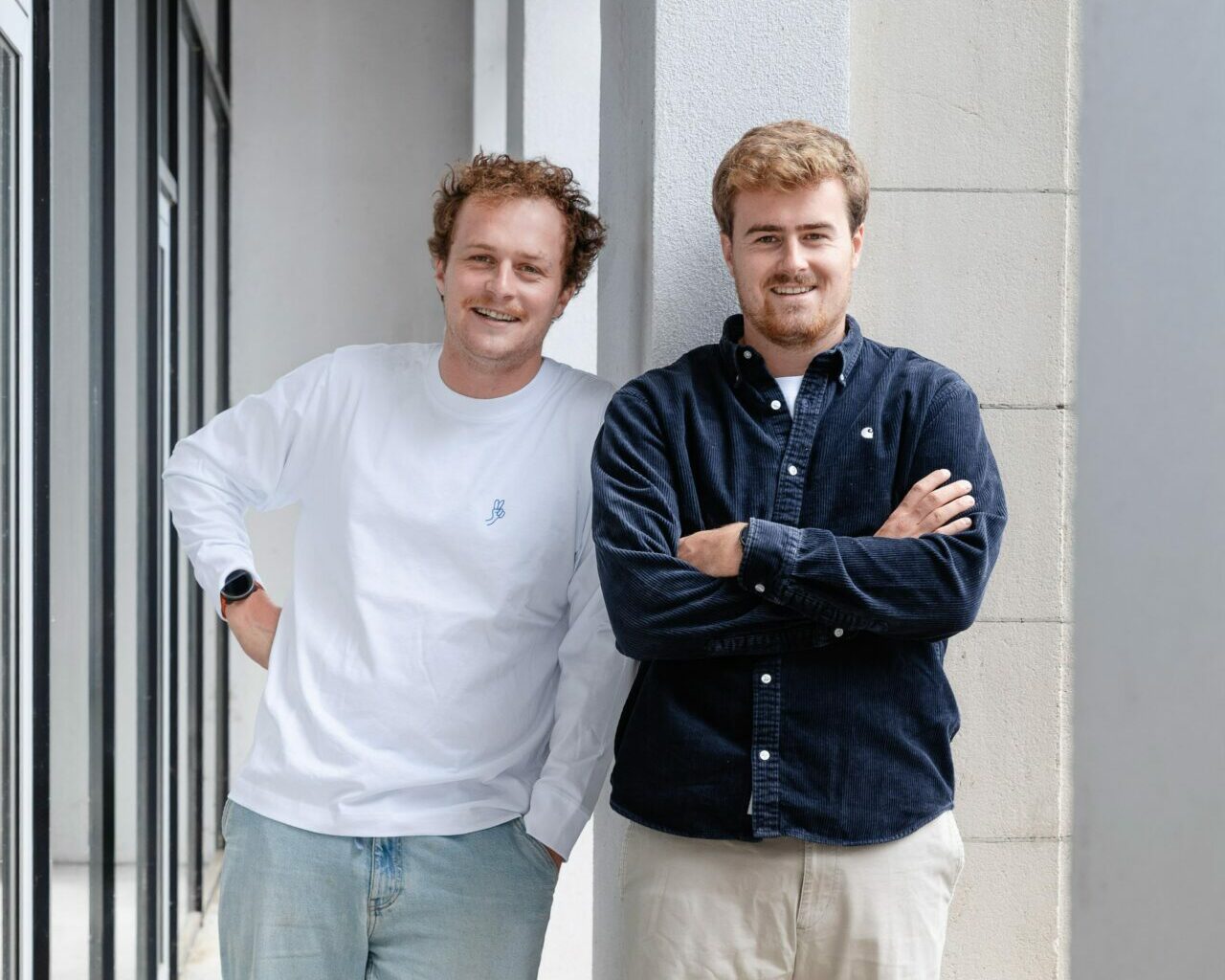
Charles and Henri Masset. Credit: Nicolas Coulon
More than a cycling challenge
The initial project was very much centred on cycling. Van der Spek wanted to travel to Kyrgyzstan and take on a demanding cycling challenge, while using the project to share his experience of living with incurable cancer.
The brothers hoped to accompany him, although they were reluctant to ask. “It was his dream and his project,” Charles explains. Eventually, Van der Spek invited them to join him. By then, the videos were attracting attention and helping give his project a wider audience.
The documentary project was born. But as filming continued, the filmmakers realised that the story was not really about cycling. “At first, we were making a film about cycling. And over time, we realised it was much bigger than that,” Charles says.
The bicycle remained an important part of Van der Spek’s story. For him, it was also a way of measuring his physical condition and proving to himself that he was still capable of pushing his limits.
But the film increasingly focused on something broader: how someone confronts adversity when confronted with the knowledge that their life will be shorter than expected.
A camera becomes a confidant
The brothers eventually spent nearly two years following Van der Spek. There was no precise filming schedule or predetermined ending. They simply kept bringing the camera whenever they were together. “We never really managed to answer the question with Gilles: when do we stop filming?” Charles says.
The camera gradually became part of their relationship. For Van der Spek, it provided a space in which he could talk about subjects that might otherwise have been difficult to discuss. “The camera really became a diary and a confidant,” Charles says.
It also allowed the brothers to ask questions that they might have felt uncomfortable asking a friend directly – about illness, death and the prospect of dying. “That’s something we ourselves might not have discussed with our own friends,” Charles explains. “We had the documentary and the camera as an excuse to ask whatever questions we wanted.”
Consequently, what began as a professional collaboration developed into a genuine friendship.
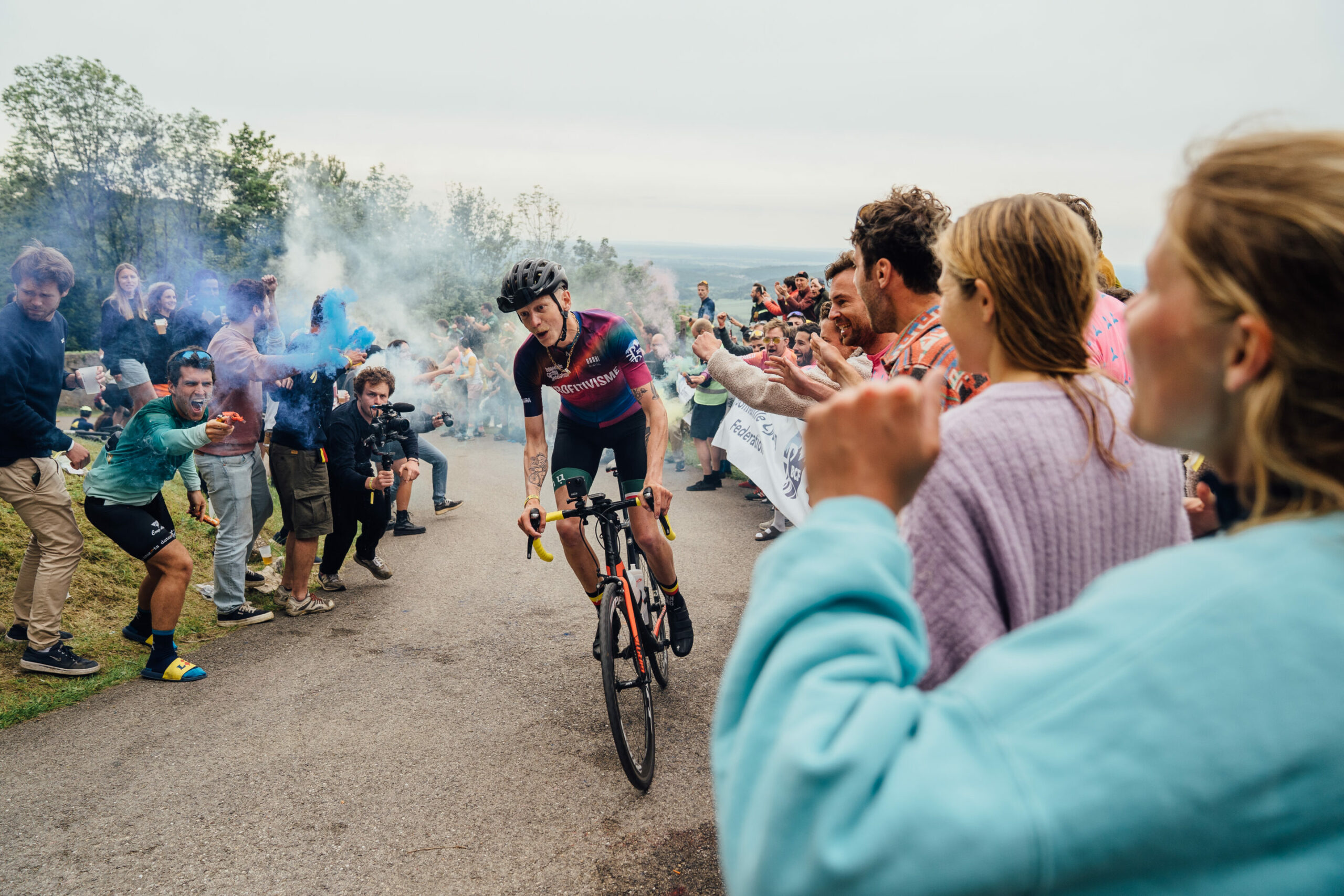
Biking was Van der Spek's passion. Credit: Emilie de Selys
The brothers never set out to document Van der Spek’s final months. They could not know when the illness would take his life, but when he died in 2024, the footage suddenly took on a different meaning. “The day after his death, we said to ourselves: now we have the chance and the responsibility to have all these images that bear witness to his message,” says Charles.
Finishing the documentary became part of the brothers’ grieving process. For almost two years, Gilles had been physically present in front of their camera. Then, during the editing process, he remained present through the hours of footage they had recorded.
“I think it might affect us even more once the project is over and we actually have to live our everyday lives without Gilles,” Charles says.
Not a film about cancer
Although Van der Spek’s illness is central to the story, the brothers insist that Une furieuse envie de vivre is not simply a film about cancer. The documentary aims instead to explore the different forms of adversity people encounter in their lives. “Whatever adversity comes your way, you have to find a way to face it,” Charles says.
Those difficulties can be dramatic, such as a terminal illness, but they can also be much more ordinary. “We wanted everyone to be able to identify with Gilles through their own difficulties,” he explains, mentioning depression, burnout or simply the challenges of everyday life.
The filmmakers also deliberately chose not to present Van der Spek as an endlessly inspirational hero. “There are situations in the film where things are really not going well, and we show that,” Henri says. “We wanted to show his weaknesses too.”
At the same time, the film retains something the brothers say was fundamental to Gilles’ personality: his ability to introduce humour into even the most difficult moments.
Every serious situation, they say, could be accompanied by a joke, a smile or a funny remark. That balance between emotion and humour became one of the film’s guiding principles.
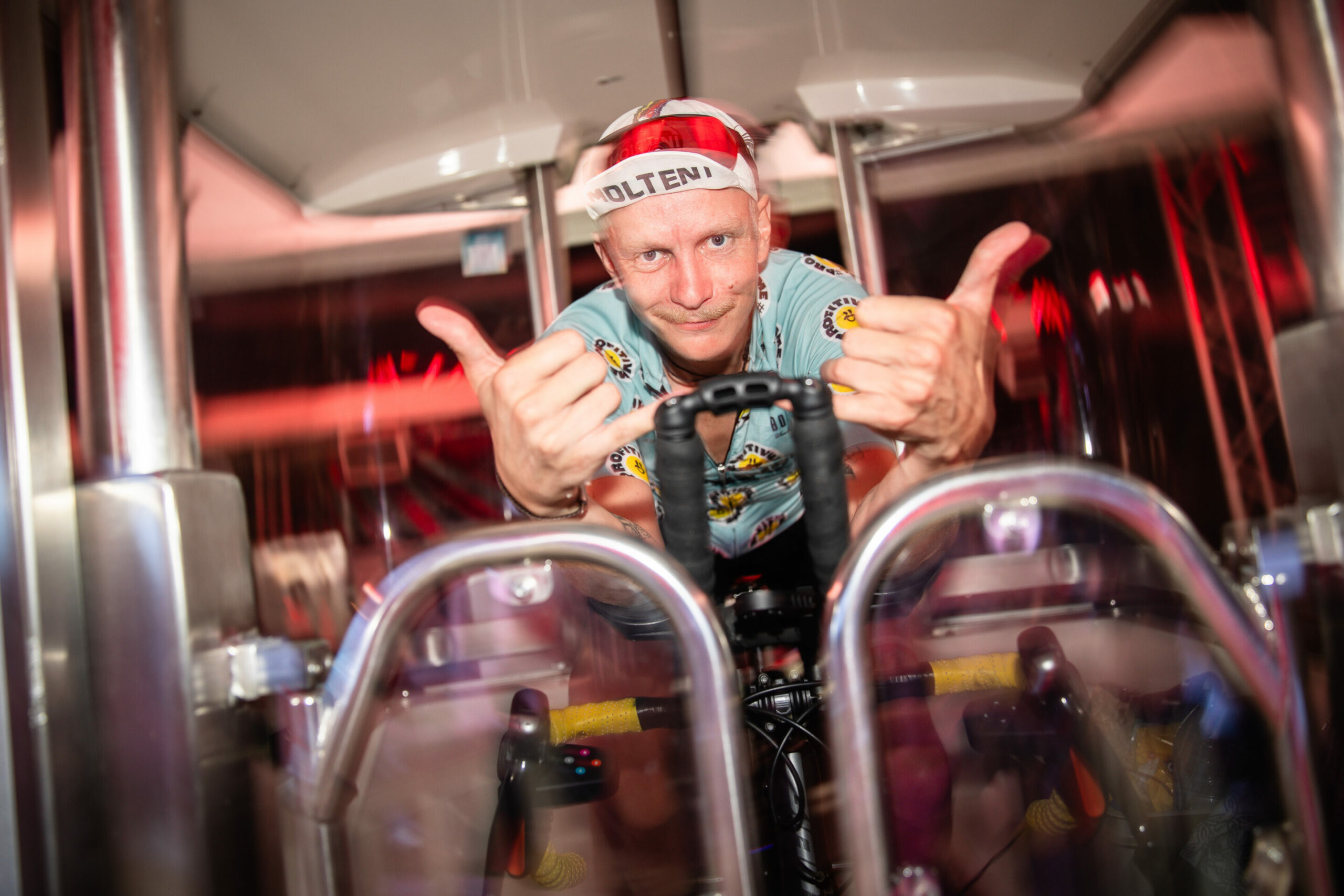
Une furieuse envie de vivre. Credit: Nicolas Coulon
‘A Furious Desire to Live’
Une furieuse envie de vivre comes partly from a Jacques Brel quotation that Van der Spek particularly liked: "Je vous souhaite des rêves à n'en plus finir et l'envie furieuse d'en réaliser quelques uns." (“I wish you endless dreams, and the furious desire to make some of them come true.”)
For the brothers, the word “furious” also captures Van der Spek’s determination and his particular approach to life. “He really had this incredible drive to live,” Charles says.
The documentary is therefore not intended as a conventional tribute. “We don’t want people to leave the cinema simply saying, ‘He was such a great guy’,” Charles says. “We hope they leave thinking: ‘I’ve seen someone’s life. Here’s what I can take from it for my own life.’”
On 21 September, the documentary Une furieuse envie de vivre will be screened at UGC De Brouckère. On 29 September, it will be aired on RTBF.
