
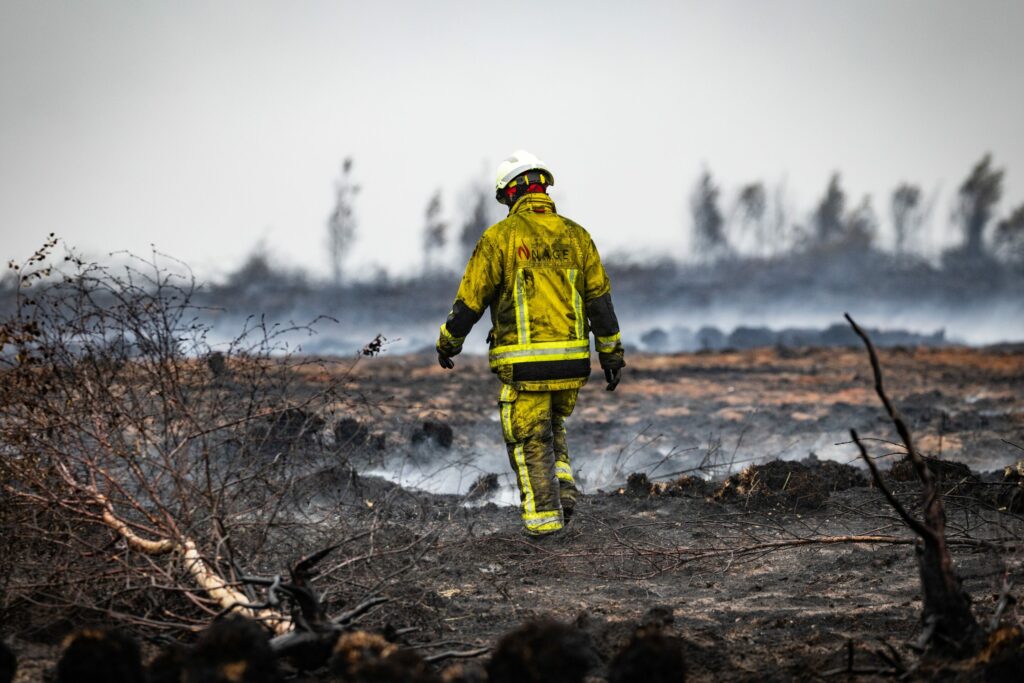
Children born today could face up to twice as much fire-prone weather over their lifetimes as their grandparents, according to a new study by researchers at Vrije Universiteit Brussel (VUB).
A child born in Europe in 2025 is expected to experience more than three additional years of extreme weather conditions conducive to wildfires compared with someone born in 1950, the study, published in Environmental Research Letters, found.
Under current climate policies, this would amount to an 84% increase in lifetime exposure. Researchers attributed 86% of that rise to climate change.
Related News
The disparity is particularly stark around the Mediterranean. In some regions, lifetime exposure to fire-prone weather could be 2.5 times higher for today's children than for people born in 1950, amounting to more than five additional years spent under conditions favourable to wildfires.
Portugal is among the countries facing the sharpest increase. The number of days each year with weather conducive to fires could rise from an average of 14 between 1950 and 1970 to 32 by 2100.
"Our results show that the level of fire risk today's children will face throughout their lives is fundamentally different from what their grandparents experienced," said lead author and VUB doctoral researcher Rosa Pietroiusti.
However, the researchers stressed that the trajectory is not inevitable. Limiting global warming to 1.5°C would substantially reduce children's lifetime exposure to fire-prone conditions.
"This future is not yet set in stone," said VUB professor Wim Thiery. "Every fraction of a degree of warming we prevent translates directly into a reduction in weather conditions conducive to fires over a child's lifetime."
