
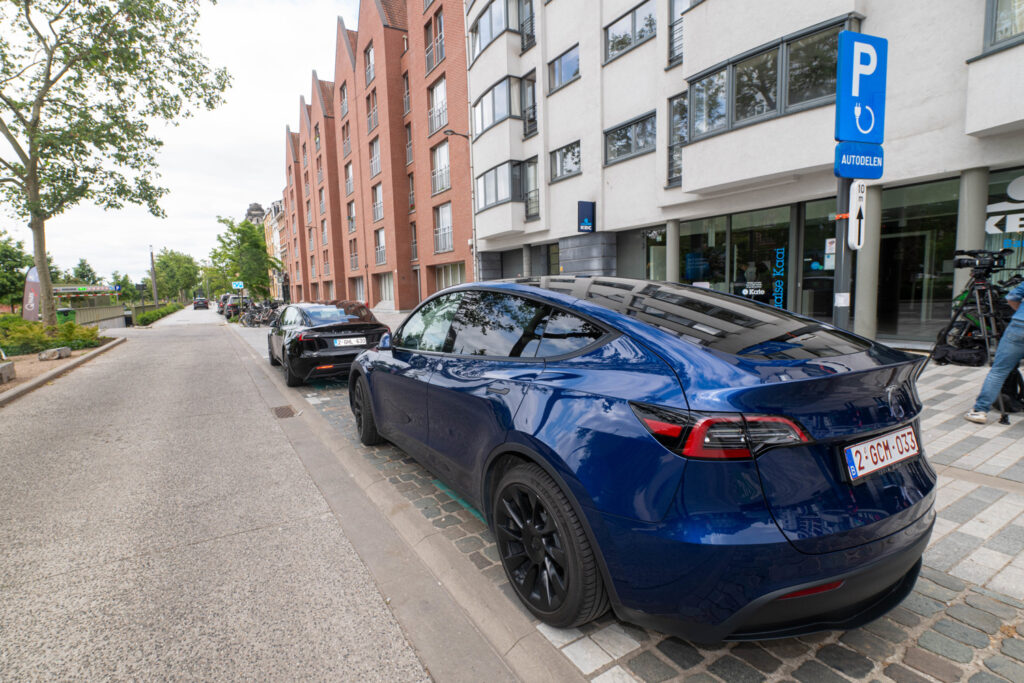
Tesla’s Full Self-Driving system regularly exceeded speed limits in the Brussels region during summer tests, according to a report published on Thursday by the non-profit group Johanna.be.
The vehicle exceeded the legal speed limit on 55% of the tested stretches in 30 km/h zones. In those cases, its average speed reached 44 km/h, with even higher averages recorded when traffic was flowing freely, the group said.
The study also found that the system showed the supervising driver incorrect speed limit information in most of the tested 30 km/h zones. In many cases, the vehicle correctly detected the limit but then displayed 50 km/h as the applicable speed.
Johanna.be said the FSD system also showed serious shortcomings on cycle streets. It said the car did not properly recognise the traffic rules in force and repeatedly attempted to overtake cyclists, despite Belgian law explicitly banning such manoeuvres.
Related News
- Multilingualism in Belgium: What happens in our brains when we switch languages?
- Brussels takes back its streets on Car-Free Sunday: 'It is a bit like a Utopia'
- Leuven's racing team finishes second in solar car race, losing to Dutch
The group said, however, that the system interacted with pedestrians and cyclists in a cautious and courteous way during the tests. It often gave way appropriately and generally behaved respectfully.
The tests were carried out between 17:00 on 20 July and 10:00 on 22 July.
Johanna.be has submitted its report to the authorities and is calling for a review of the permissions granted to Tesla.
Tesla’s FSD technology was approved by the Netherlands in April before other countries followed. In June, the US carmaker received approval in Belgium to test its near-autonomous vehicle technology.
The car can drive itself, stay in its lane and change lanes, but the driver must be able to intervene at any time and remains responsible.
The European Union is expected to take a decision on 6 October, potentially paving the way for wider deployment of the technology across other member states.
