
The death of Norway's King Harald V in late August was followed by a considerable display of public affection. Tens of thousands gathered along the streets of Oslo for his funeral, while more than 46,000 people visited the Royal Chapel to pay their respects.
Belgium has experienced something similar. When King Baudouin died in 1993, it is estimated that over 200,000 people queued in front of the Royal Palace to pay their respects to the deceased monarch.
More than three decades later, how strong is the attachment of Belgians to their own monarchy?
A 2026 Ipsos survey found that about two-thirds of Belgians preferred a monarchy to a republic. But support for the monarchy has fluctuated considerably throughout Belgium's history and remains divided along regional and political lines.
Popularity, crisis and controversy
Belgium has had seven kings since 1831.
Leopold I (1831–1865) helped consolidate the new state, while the reign of his successor, Leopold II (1865–1909), is today closely associated with the colonial atrocities committed in the Congo Free State (the territory that became the Belgian Congo and is now the Democratic Republic of the Congo).
Albert I (1909–1934) became widely popular during the First World War, when his wartime role gave rise to the image of the "Soldier King". Albert's sudden death in 1934 prompted widespread public mourning, as did that of Queen Astrid, the wife of his son and successor Leopold III, the following year.
Under Leopold III (1934–1951), however, the monarchy faced a major crisis. His wartime conduct led to the "Royal Question," and although 57.7% backed his return in a 1950 consultation, the result exposed a deeply divided country. Amid unrest, he abdicated in favour of Baudouin in 1951.
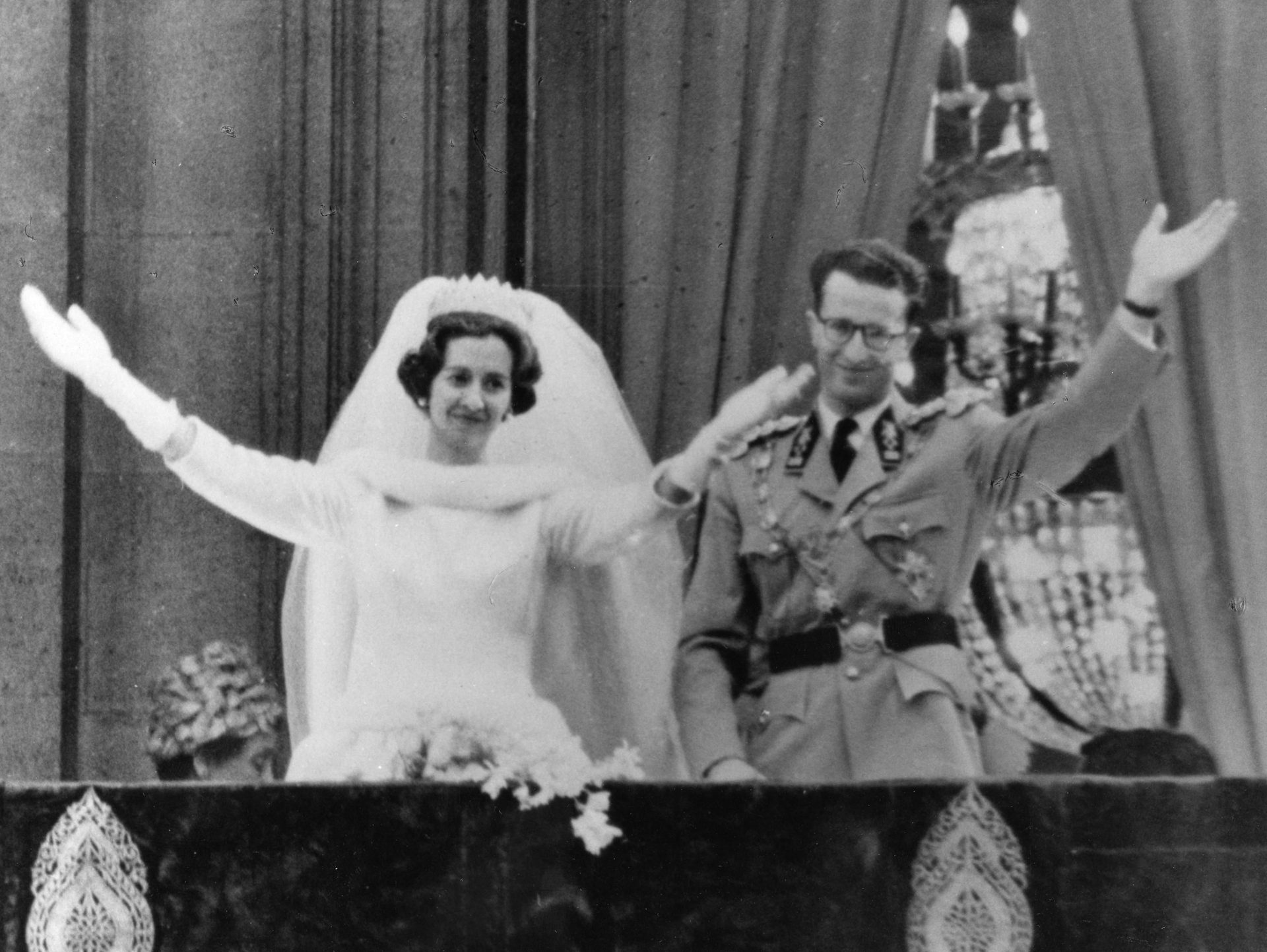
King Baudouin and Queen Fabiola salute the population at the Palais Royal after their wedding. Credit: Belga Archives
Baudouin (1951–1993) faced a major political and constitutional controversy in 1990, when he refused to sign a law partially decriminalising abortion. He nevertheless appears to have retained broad public support: an immediate poll found that 52.4% of Belgians believed the King had the right to refuse to sign the law on moral grounds, while 77% believed the episode did not require him to abdicate.
The extraordinary public mourning after his death three years later further demonstrated his popularity.
Later controversies included the long-running Delphine Boël paternity case involving Albert II (1993–2013) and repeated controversies surrounding Prince Laurent. Growing scrutiny of royal finances has also led to reforms of the allowances granted to members of the Royal Family.
A widening divide between north and south
Research by KU Leuven conducted just a few months after the abortion-law controversy found that roughly 61% of Belgians considered having a king necessary. At that point, differences between Flanders, Wallonia and Brussels were minimal.
By 2014, however, further research by the university found support for the monarchy at around 45% in Flanders, compared with roughly 66% in Wallonia.
The divide persisted in a 2023 Ipsos poll: while 57% of Belgians overall preferred a monarchy to a republic, support stood at 52% in Flanders, compared with 63% in both Wallonia and Brussels.
This marks a striking reversal from 1950, when around 72% of voters in Flanders backed Leopold III's return, compared with 42% in Wallonia and about 48% in Brussels.
The monarchy today
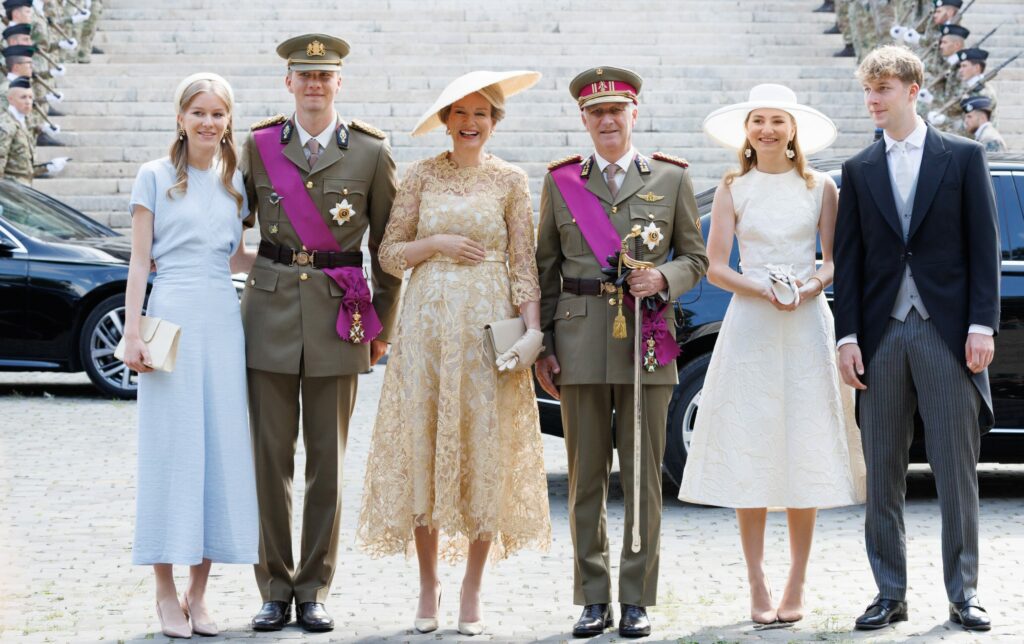
In the 2023 Ipsos poll, Philippe received an average score of 5.9 out of 10. In the 2026 Ipsos poll, his rating had risen to 6.9. His immediate family performed even better, with Mathilde scoring 7.1 and Elisabeth 7.3.
Support for the monarchy had meanwhile risen from 57% in 2023 to 65% in 2026, while the poll also showed substantial support for retaining the King's role in federal government formation. At the same time, 40% considered the cost of the monarchy too high and 75% said the King should make savings.
The strongest republican positions are found among Flemish nationalist parties. Flemish nationalist N-VA ultimately favours a republic, with its 2024 programme calling for abolishing the monarchy no later than the end of Philippe's reign and reducing the King to a purely ceremonial role until then.
Flemish far-right Vlaams Belang also calls for abolishing the monarchy as part of its broader project for an independent Flanders.
Most other major Flemish and French-speaking parties, however, did not put forward proposals on the future of the monarchy in their 2024 election programmes, although some have expressed republican or more sceptical positions towards the institution in the past.
How does Belgium compare?
Majority support for retaining the monarchy is also found in several other European countries. In the Netherlands, 62% supported keeping the monarchy in 2026, while support in Norway stood at 72% in the first poll conducted after Harald's death, up from 64% in May.
Spain presents a different picture: recent academic research found that 51.5% preferred a republic, making it the only one of seven European monarchies studied where a majority favoured a republic.
Nearly two centuries after Belgium chose its first king, the monarchy has survived periods of crisis, controversy and changing public attitudes, and continues to retain majority support.
