
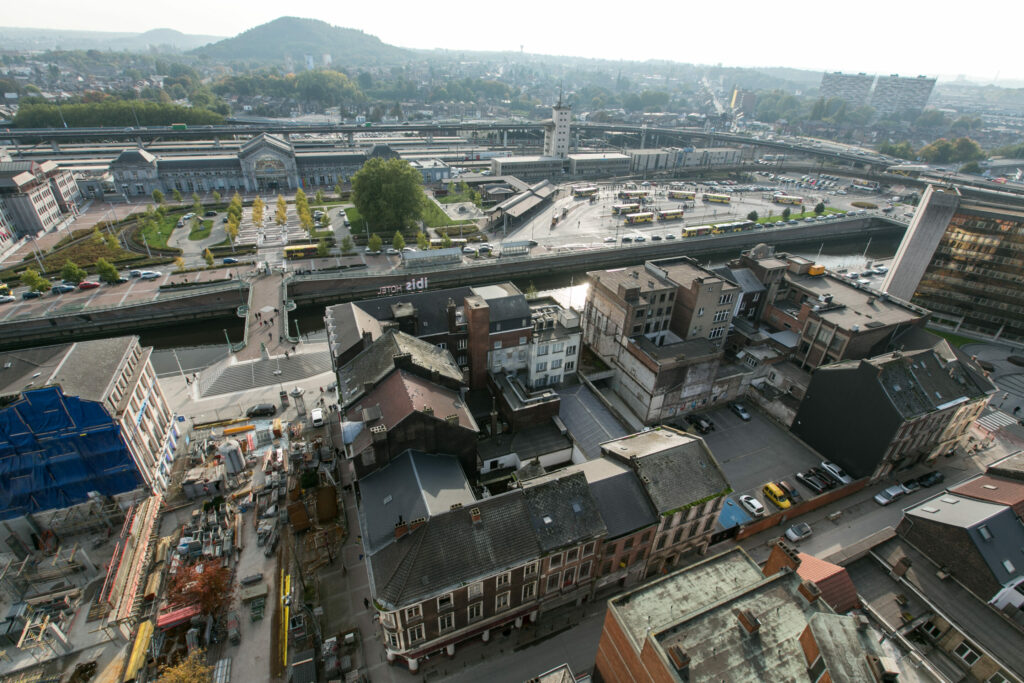
Banks have once again shunned Wallonia's major cities in their search for funding to cover structural budget deficits.
The latest funding round for the Walloon government's Oxygène plan raised just €16.2 million for 8 cities, short of the required €186 million. According to reporting in L'Echo, ING, only bank to offer a loan as part of the funding round, asked that its loan not be used to support seven major cities, including Charleroi, Liège and Tournai, given their financial situation.
Wallonia's Oxygène plan was set up by the regional government to provide financial support for municipalities looking to restructure their budget deficits.
The plan, offering a mix of loans and credit in exchange for budget consolidation efforts, seeks commercial sources of funding, with the Regional Centre for Municipal Assistance (CRAC) administering the scheme.
This is not the first time banks have refused to fund these major cities under the Oxygène plan, nor the first time ING has been the only bank to respond.
The Walloon government will now need to find alternative ways to fund the cities; in previous years, it has done so through direct public funding via CRAC rather than private finance.
CRAC funding will likely come again with strings attached, requiring each city to reduce its budget deficit, including through tax changes and spending cuts.
In 2024, Charleroi mayor Thomas Dermine (PS) criticised the conditions CRAC placed on his city, arguing that "in Charleroi, 95% of the municipal deficit is linked to expenses related to other levels of government."
Regional debt is projected to increase across Belgium
The refusal by banks to fund Wallonia's cities follows recent analysis by the Federal Planning Bureau, which classified Wallonia's debt levels as unsustainable.
The Region currently has Belgium's largest non-federal debt level, with a projected debt-to-revenue ratio of 295% this year.
However, efforts to reduce the deficit will slow debt growth in Wallonia, bringing the debt-to-revenue ratio to 327% by 2031.
The Brussels Region stands out from Wallonia and Flanders and will see its debt levels grow rapidly, despite efforts to restrain spending.
By 2031, Brussels' debt could reach three times its revenue, up from 165% in 2021 and matching Wallonia's levels.
