
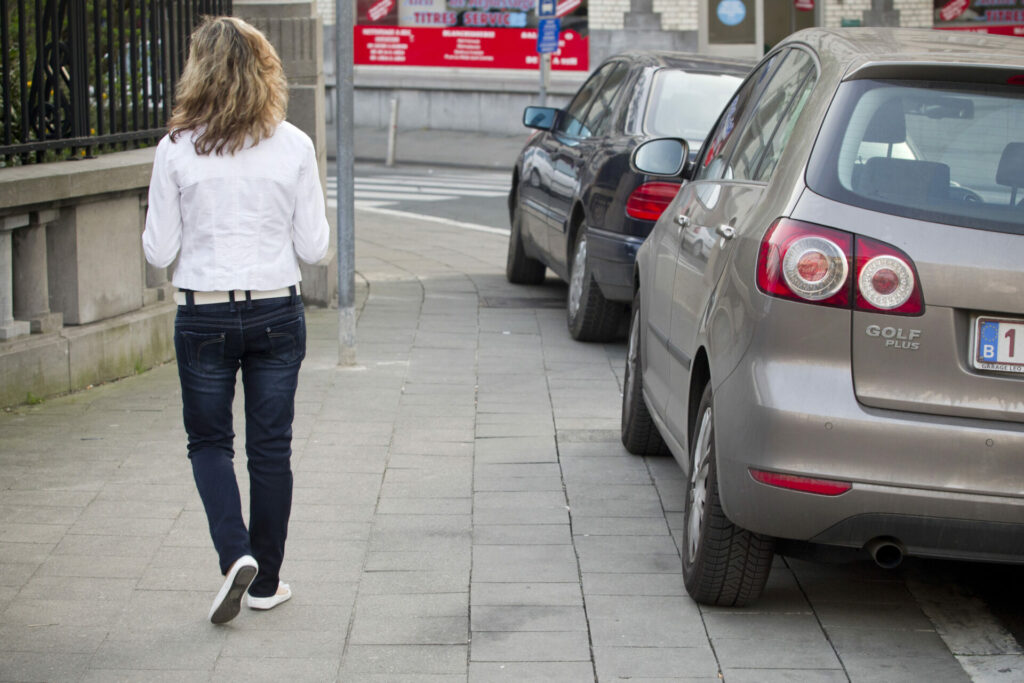
Almost four in ten Belgian drivers say they stay clear of cities because finding a parking spot there is difficult, according to a survey by mobility organisation Touring. However, experts point out that cities are not losing their appeal.
The survey, carried out by research firm iVOX among ,1000 Belgians between 15 and 22 July, shows that drivers are increasingly frustrated about the parking situation in Belgian cities. Some 94% of respondents indicated that finding a parking space easily is important, and a quarter are dissatisfied with parking options on their usual journeys.
Most of those surveyed (80%) adjust their travel because parking is an obstacle. Most often they change their shopping destination: 43% choose shops or shopping centres where parking is easy or free, while 38% skip cities altogether.
"We haven't ranked which problem is the biggest," Danny Smagghe of Touring told The Brussels Times. "But unclear parking meters and signage of parking zones, and not being able to find a parking space, are the main issues that came out of the survey."
Not enough spaces
Costs and clarity are also sore points. Three in four respondents (76%) find street parking (too) expensive, and 83% think it is just a “cash cow” for authorities.
Some 40% are unsure whether paid parking applies in the first place, and 68% have experienced a concrete problem paying for or registering a parking session. Nearly one in five admit to having parked illegally, on loading zones, pavements or reserved spaces.
Smagghe linked that last figure directly to the shortage of spaces. "People are sometimes under pressure, driving around for a while without finding a parking space. Some then park briefly in a forbidden spot because, at that moment, they see no other solution," he said.
"That's obviously not something we encourage, but it is a consequence of a certain kind of parking policy."
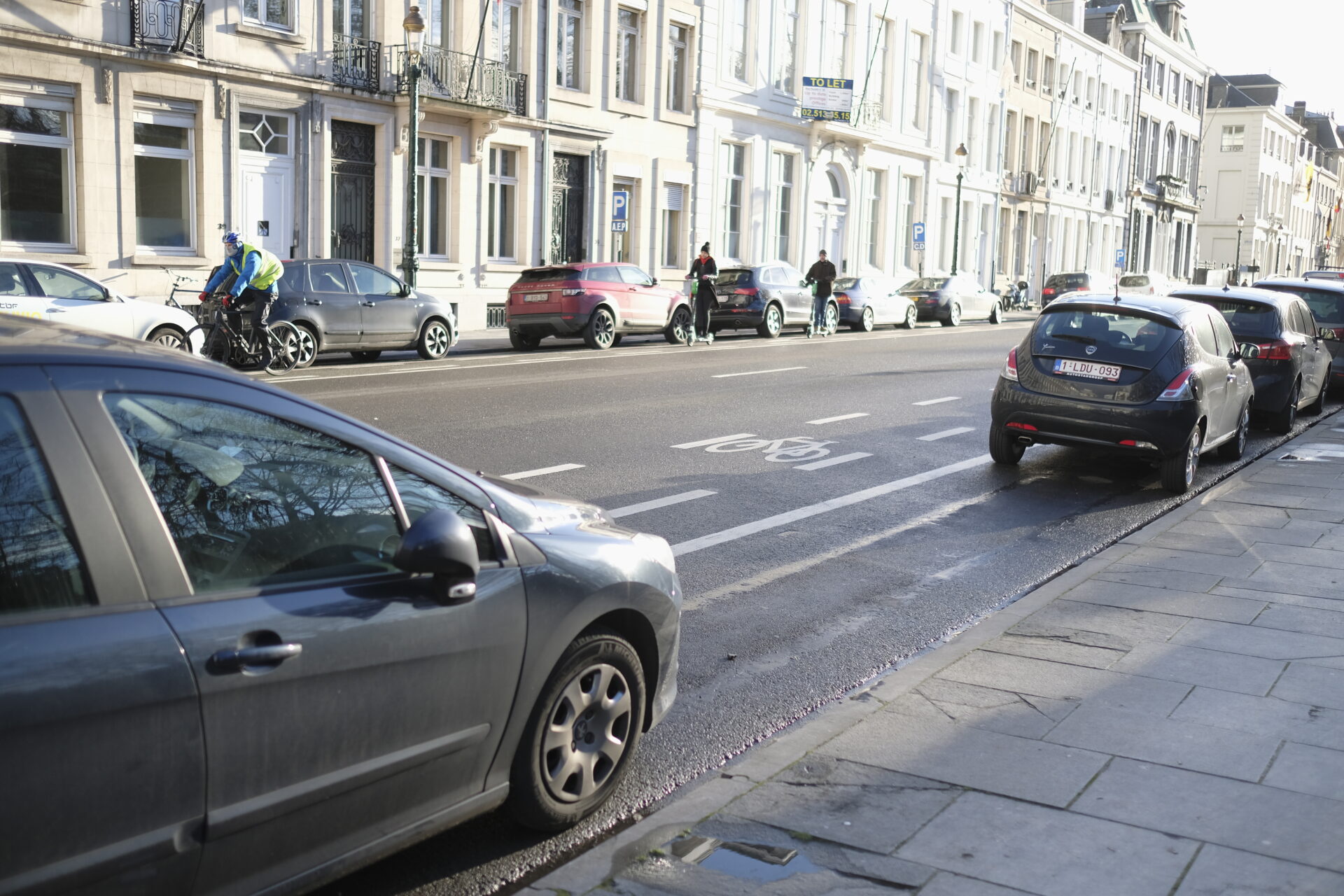
He pointed to loading zones as one example: "The number of loading zones has been reduced, while the city still needs to be supplied. That sometimes leads drivers to use those loading zones anyway."
Credit: Belga
Many cities argue that cars need to make way for cyclists, pedestrians and green space. But Smagghe said that should not come at the expense of accessibility.
"You need to keep main roads at full capacity, and parking spaces that disappear above ground should be compensated underground. That's not happening. You have to make sure the city stays accessible, because without cars, a city isn't liveable either," he said.
He pointed to shopping streets that have emptied out as people shift to retail parks on the outskirts. "That's fine if you live in the city yourself and get around by bike, but that's not the case for people coming from outside the city. They remain reliant on the car to some extent."
Smagghe did not reject the idea of discouraging car use altogether, but said it has to come with alternatives. "A proper parking policy can be part of an efficient mobility policy, even if the aim is to discourage people from driving into the city," he said.
"But then you need to provide enough parking in garages, parking towers and underground car parks, and those need to be reachable by car," he added. "Right now, you often have to sit in traffic for half an hour before you can even reach an underground car park."
Bigger picture
The big picture, however, is more nuanced. Geert Te Boveldt, mobility researcher at Vrije Universiteit Brussel (VUB), explained to The Brussels Times that the survey only captures what drivers say about their own behaviour, not how people actually get to city centres.
In Brussels, a study found that only 17% of people who come to shop do so by car. "It would certainly discourage some drivers from coming by car, but that doesn't mean the city loses all its customers," he said.
He also pointed to other European cities where parking is more expensive but city centres continue to attract visitors. “We don’t know for Brussels, but we do know from other cities, mainly in the Netherlands, that parking is much more expensive there than in Belgium, and city centres there function just as well," he said.
“In fact, it’s often the cities with a pleasant public space that do well economically.”
Credit: Belga
Te Boveldt pushed back on the view shared by 83% of respondents that paid parking is merely a way for authorities to cash in. "Some economists flip that question around," he said.
"Public space isn't free. A parking space is essentially a subsidy to car owners. The real cost is almost never charged. The 'cash cow' argument doesn't hold up," he argued. "Governments could actually earn far more by using that space differently."
He also said that cheaper, more abundant parking makes a city less attractive instead of more. "The more expensive parking is, the more attractive a city becomes. The more you facilitate it, the less attractive a city gets," he said.
Easy parking sets off what he calls a downward spiral: "More traffic, more asphalt, more parking spaces... In some American cities, satellite photos show more than half, sometimes even three-quarters, of the city taken up by parking. Making parking cheap is a dead end."
Fragmenting public space
That does not mean parking should be made deliberately difficult, he stressed. "It shouldn't be made difficult for those who genuinely need it. It needs to be clear and well communicated. But it shouldn't be cheap."
Te Boveldt also addressed the growing contrast between car-restricted city centres and busy arterial roads provided with large, free parking lots. That pattern, he said, is not inherently a problem.
"It makes sense that such retail clusters emerge along arterial roads. They're easy to reach and the land is cheap," he said. He added that these tend to attract car-dependent businesses like furniture stores or car dealerships rather than leisure shopping.
The real risk, however, is when retail, such as in city centres, migrates entirely to these roads, which are generally difficult to reach by public transport.
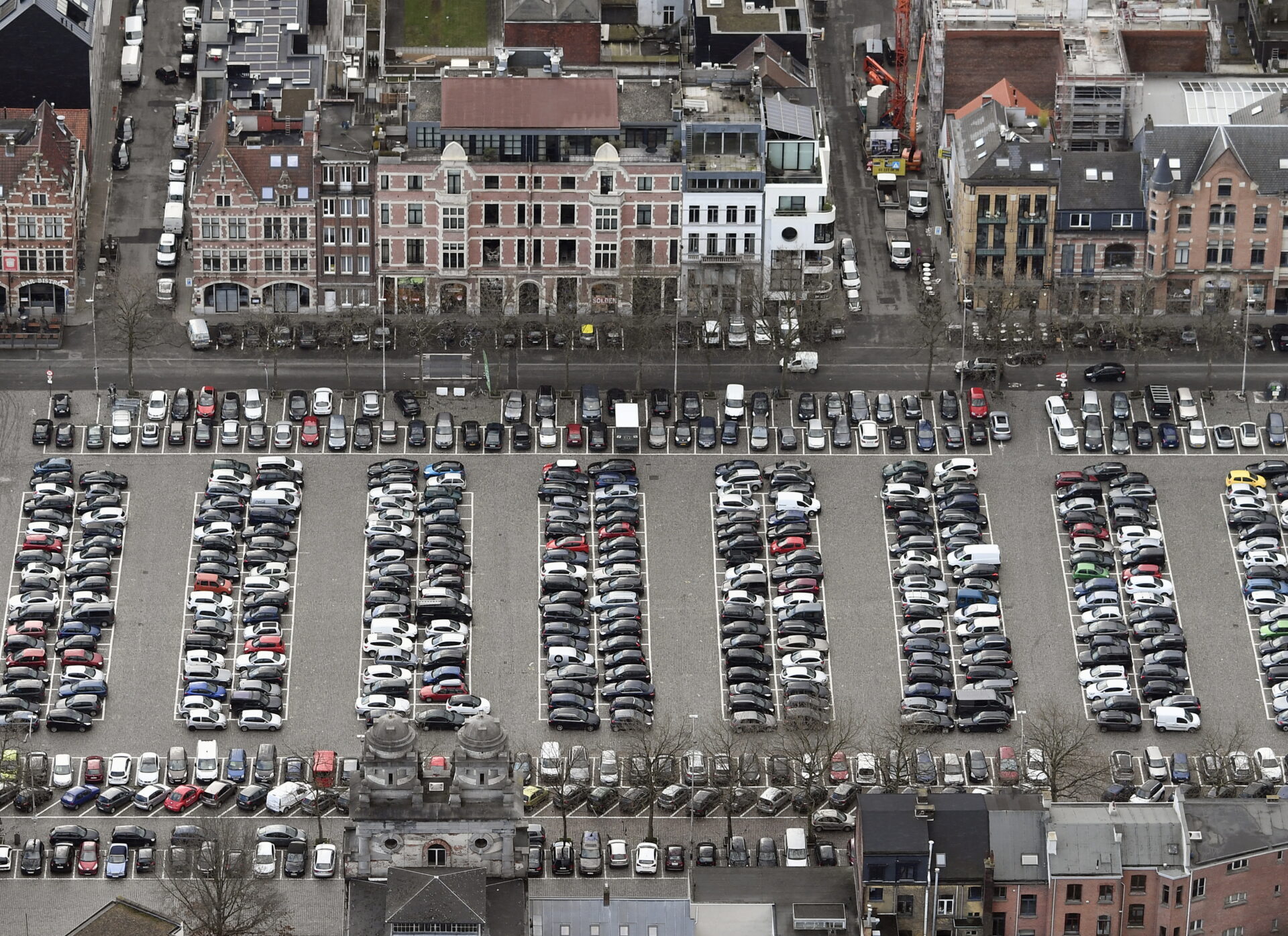
An aerial view of a parking lot in Antwerp. Credit: Belga / Eric Lalmand
"It only becomes a real problem when the centre of gravity of a shopping area shifts entirely to the arterial road. Partly because those roads are more dangerous, traffic-wise, and it fragments public space," Te Boveldt explained.
Asked what could manage car traffic without alienating drivers, Te Boveldt pointed to smarter routing combined with pricing, rather than simply making parking harder to find.
"You need to make sure parking remains available for those who really need it and are willing to pay for it, through better routing and a pricing system." A ratio of around 15% vacancy and 85% occupancy is seen as ideal.
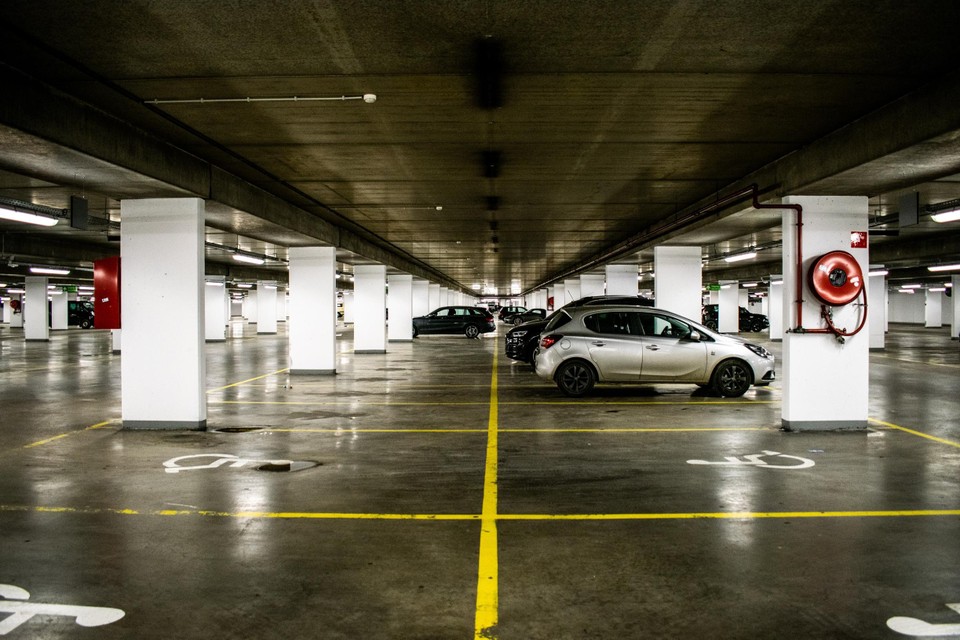
He pointed to a contradiction in Brussels: a large share of underground parking garages stand empty while drivers circle for street spaces. "The problem in Brussels is that a large share of parking garages stand empty while people park on the street. That routing should be improved."
