
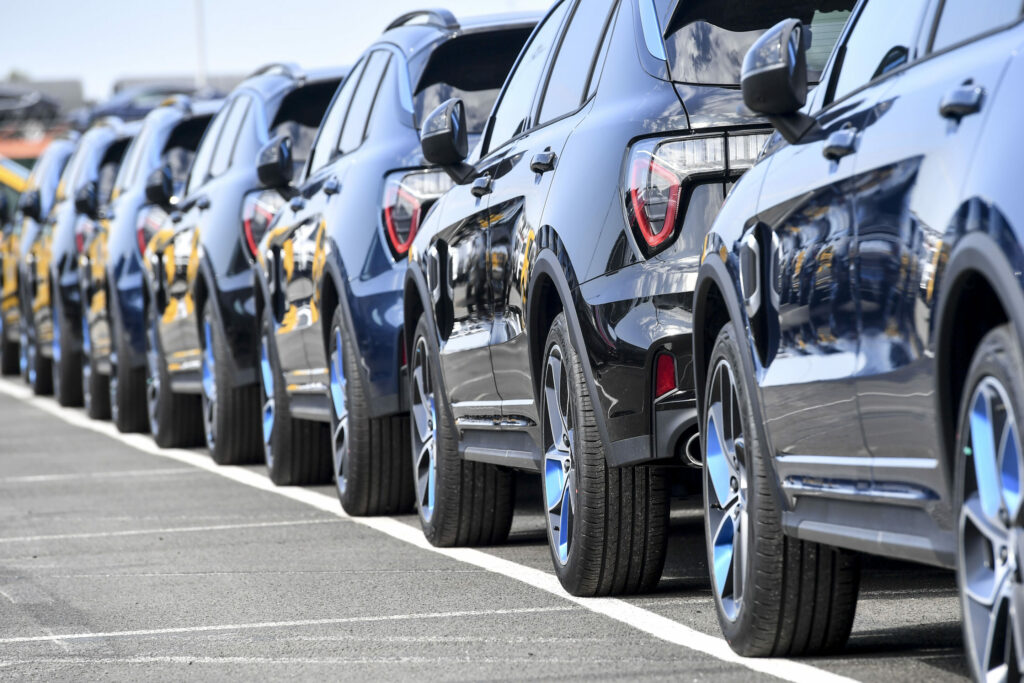
Belgium is known for its horrible traffic, yet the country subsidises car use through a highly popular system of company cars. Why is it so hard to change this scheme?
"I would rather swallow a lightbulb than abolish company cars." It’s a quote that Sammy Mahdi, the leader of the Flemish centre-right government party CD&V (Christian Democrats), said during a conference a few weeks ago.
Mahdi made his stark expression in the context of recent budget talks inside Belgium's federal government, which needs to save €10 billion to balance its budget, on top of earlier rounds of austerity and increased taxes.
On the surface, abolishing company cars might be an interesting idea to help Belgium make these savings. According to the Federal Planning Bureau, it would save around €5 billion. It would also mean that the government would no longer subsidise the use of cars, which has benefits that range from less emissions to better traffic safety.
Across Belgium, the response to the idea was swift, with people up in arms while politicians drummed in front of cameras to denounce the proposal.
Belgians are clearly attached to their company cars, but why is that? Why does a country known for its log-jammed roads insist on subsidising car use?
"The system is totally absurd," Dave Sinardet, professor of political sciences at the Free University of Brussels (VUB) and the UCLouvain, told The Brussels Times.
"Most of the politicians in Belgium agree that people should use more sustainable transport modes, yet nobody wants to stop subsidising car use," he said.
High taxes
While their growth is leveling off, company cars are more popular than ever in Belgium. Around 15% of Belgian employees have a car provided to them by their company.
Often these are employees that can also use their company car in their free time. In that case, they still pay taxes on that car. The taxes are calculated based on a complex formula, which includes factors such as the value of the car, its emissions and how long it has been on the road.
This formula is the crux of the debate. It underestimates the value of the car, which reduces the taxes paid on a company car, compared to a private car.
"It doesn’t correspond to the actual value," Michel Maus, a professor in fiscal law at the VUB, told The Brussels Times. “It’s much more advantageous to have a company car than to own a car yourself.”
On top of that, companies often give fuel cards to employees, allowing them to refuel on the company’s dime, even for personal use. It’s very common, for example, for Belgians to go on trips to neighbouring countries with their company car, which, in contrast to a train trip, is largely paid for by the company.

Credit: Belga/Nicolas Maeterlinck
Due to the Belgian fiscal system (which very heavily taxes labour), a company car is not just cheaper than owning a private car, but it is also cheaper than getting a wage increase
In typical Belgian fashion, this has led to a hodgepodge of legal measures and exceptions to reduce that tax burden. Company cars are one of those, but it also includes systems such as food cheques, eco-cheques and mobility budgets. All of them allow companies to pay their employees in alternatives to wages, which are less harshly taxed.
“Our high taxes are one of the reasons why they introduced company cars in the eighties," said Maus. “Since then the system has grown significantly.”
Reward and resistance
Since the 80s, company cars have also become a fixture of Belgian work culture. A nice car is a big plus for employees, and employers use it as a tool to attract new talent.
“In the past there were even companies who organised job interviews in car dealerships, so they could show off the cars new employees would receive," said Xavier Baeten a professor at Vlerick Business School, where he studies how companies reward employees.
Particularly in tight labour markets, and for niches where there’s a shortage of trained profiles, such as engineering, cars have become an important weapon to attract and keep employees.
“It’s a very visible and tangible reward for employees," said Baeten. “That partly explains why there’s so much resistance to abolishing them.”
Large-scale reform
The solution to all of this seems relatively straightforward to Sinardet: abolish, or at least reform, the hodgepodge of tax-reduction measures, and use the freed-up money to reduce taxes on labour. However, that is easier said than done, particularly in a country such as Belgium.
"We need to do a big fiscal reform," said Sinardet. "You, of course, cannot abolish company cars immediately, you need to do this gradually. But the Belgian fiscal system needs to reduce its pressure on labour."
Most Belgian political parties agree that such a reform needs to happen. Yet attempts so far have ended in failure. The previous government, led by Prime Minister Alexander De Croo (Open VLD) between 2020 and 2025, only managed a “mini-tax-shift.”
The current government, led by Bart De Wever (N-VA), wants to lower taxes on labour by the end of its administration. But it seems very likely that financial difficulties will cut that promise short.
Anyone wanting to abolish tax reduction systems in Belgium will inevitable also run into a range of established interests. "There are lobbies that benefit from these systems," said Sinardet. "Politicians also fear that people will be more angry about their company car disappearing than about the extra money in their bank account every month."
Abolishing company cars might also cause collateral damage that, ironically, hurts a Belgian transition to a more sustainable transport system: the federal government has forced new company cars, from this year onwards, to be electric or hybrid.
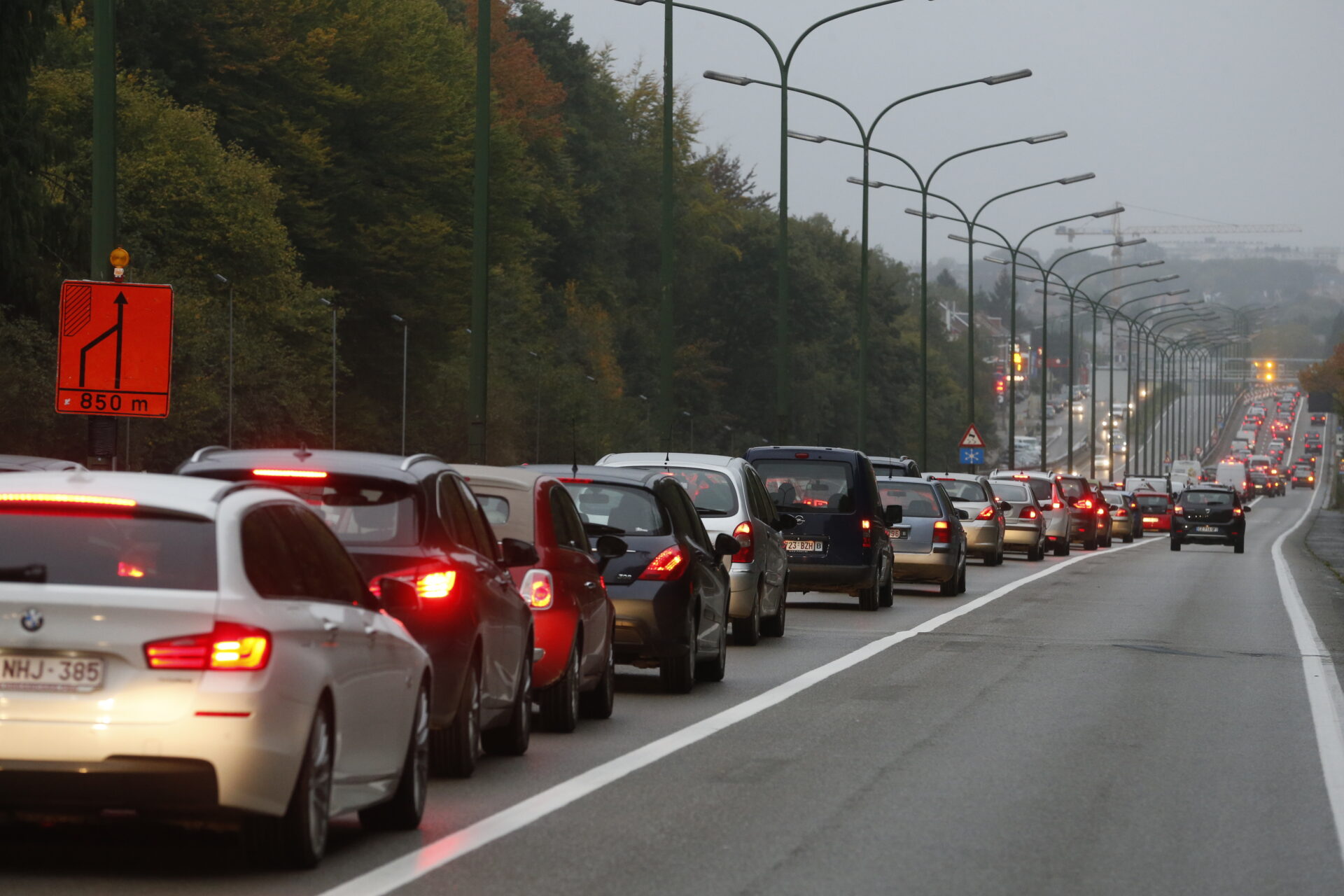
Traffic jam in the direction of Brussels. Credit: Belga / Nicolas Maeterlinck
This has spurred the growth of electrical cars in Belgium. Company cars have been one of the reasons why Belgium is advancing faster in car electrification than other European countries.
Maus agreed that Belgium needs a large fiscal reform, but is pessimistic about it actually happening. "It's very difficult to abolish the system of company cars, and the logic that underpins it. We are seeing smaller changes, however. Mobility budgets, for example, are expanding.”
Under this system the money that would have been given to a company car can be used, in the same tax-advantageous way, for other means of transport, such as bikes. It can even be used to pay a part of an employee's rent or mortgage, so they can live closer to work.
It perpetuates Belgium's messy fiscal system, but at least reduces the country’s emphasis on cars.
All in all, the company cars are a typical Belgian story. Most political parties agree they are less than ideal. But abolishing them might be too difficult anytime soon.
"We're stuck," Maus sighed. “It would be rational to change the system. But that runs into the reality of this country.”
