
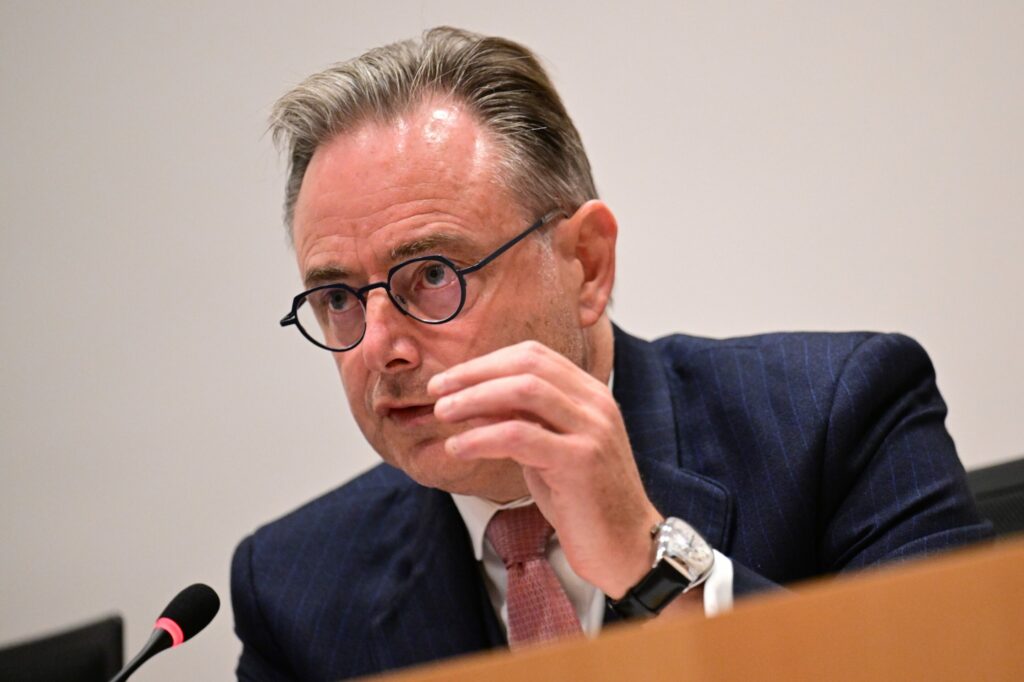
Belgium’s core cabinet will meet from 15:00 on Saturday to try to agree a budget overhaul worth €10 billion, but confidence in reaching a deal by Tuesday is low.
Prime Minister Bart De Wever and his senior ministers last met on Wednesday. At that meeting, senior officials from the National Bank and the Debt Agency again stressed the urgency of the situation.
Without clear action, Belgium could face a snowballing rise in interest costs from 2029, and possibly even earlier. The prime minister repeated that warning in parliament the following day.
Since then, De Wever has held bilateral talks with his deputy prime ministers. He is trying to secure enough common ground among the coalition partners to allow full negotiations to continue.
Related News
- How much do Belgian politicians earn?
- Belgium’s debt drift: Is the country's luck about to run out?
- Tax the rich? Belgians want wealth tax to reduce budget deficit
As already known, changes to VAT rates remain a major stumbling block for the MR party. Other proposals are also proving difficult for coalition partners, including a reduction in the growth norm for healthcare spending.
The prime minister must now find an acceptable balance in how the effort is shared across the main groups of measures. According to one source, he has put forward a number of small adjustments, but it remains highly uncertain whether these will be enough to produce a breakthrough.
De Wever is due to appear in parliament on Tuesday for his annual state of the union address. He traditionally uses the speech to set out his government’s plans for the coming political year, based on the budget agreement.
The government needs to find €10 billion in order to comply with the European spending rule by 2029. The preceding weekend is therefore usually seen as the decisive moment in the budget talks.
No signal has yet come from the prime minister’s office that Tuesday’s deadline will be abandoned. Even so, hopes of a deal being reached by then have faded in recent days.
The government found itself in the same position a year ago. Because an agreement was only reached at the end of November, it had to switch temporarily to a system of provisional monthly spending allocations at the start of this year.
The prime minister has already made clear that he does not see a repeat of that scenario as an option this year.
