
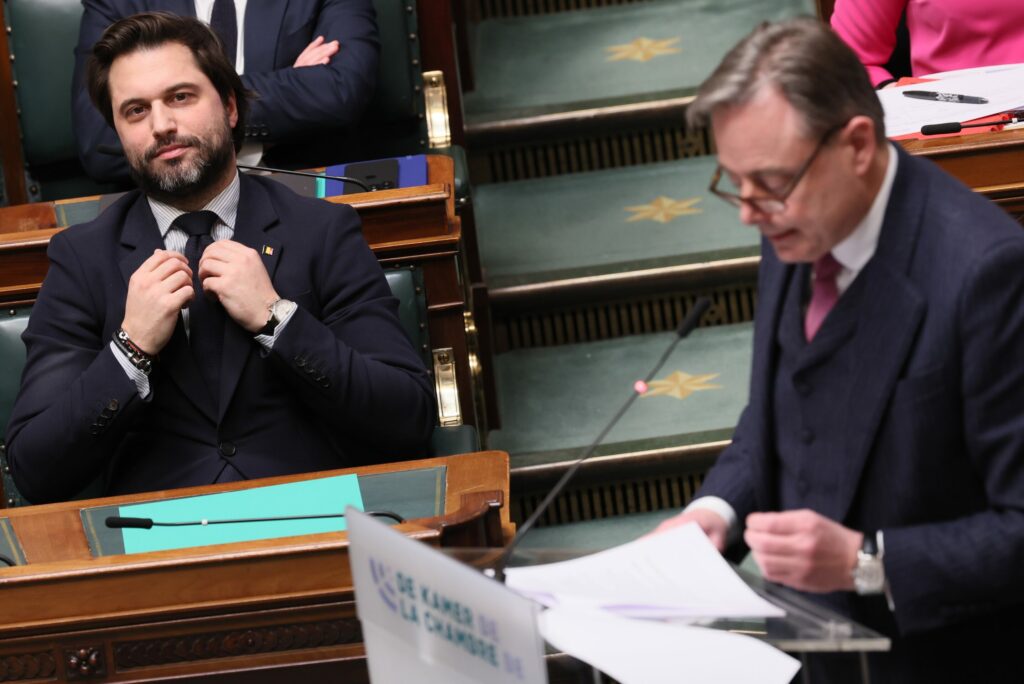
Belgium's Prime Minister Bart De Wever (N-VA) announced yesterday that the state of the union and budget address, scheduled for Tuesday, will not be delivered because the federal government coalition parties have failed to reach an agreement.
Opposition parties have criticised the postponement, with the Flemish green Groen party calling the delay "irresponsible" for failing to provide certainty and protection.
Governing parties have been locked in discussions for weeks, in an attempt to close a €10 billion budget deficit by 2029.
Belgium's deficit was 5.2% of GDP last year, the highest in the eurozone, and debt is forecast to rise to over 110% of GDP this year.
As a result, Belgium remains subject to the eurozone's Excessive Deficit Procedure, which it entered in 2024. Under this procedure, Belgium is expected to end its excessive deficit by 2029, bringing it to below 3% of GDP.
De Wever was due to present the budget plan to the European Commission later this week, but that is now likely to be delayed.
Key disagreements over the weekend centred on a proposed VAT increase, which Georges-Louis Bouchez, the leader of the Francophone liberal MR party, vetoed.
However, Bouchez said it was "simplistic" to present VAT alone as the stumbling block, stressing that all parties involved in the talks had red lines.
Parties failed to meet a similar deadline for last year's budget and were forced to use a system of provisional twelfths, under which the government can spend one-twelfth of its previous year's total expenditure each month. This allows it to cover wages and other costs.
However, De Wever has already ruled out deploying provisional twelfths given the state of the financial markets. "The Prime Minister will not accept this," his office said in a statement.
Last week, the National Bank and Belgian Debt Agency warned the government that rising borrowing costs on financial markets had brought the risk of an interest-driven debt “snowball” in Belgium forward to 2029, rather than 2031.
Under such a snowball, the government would be borrowing additional funds simply to cover interest payments.
The government parties will continue negotiations over the coming days. Failure to reach an agreement could lead to a government collapse.
