
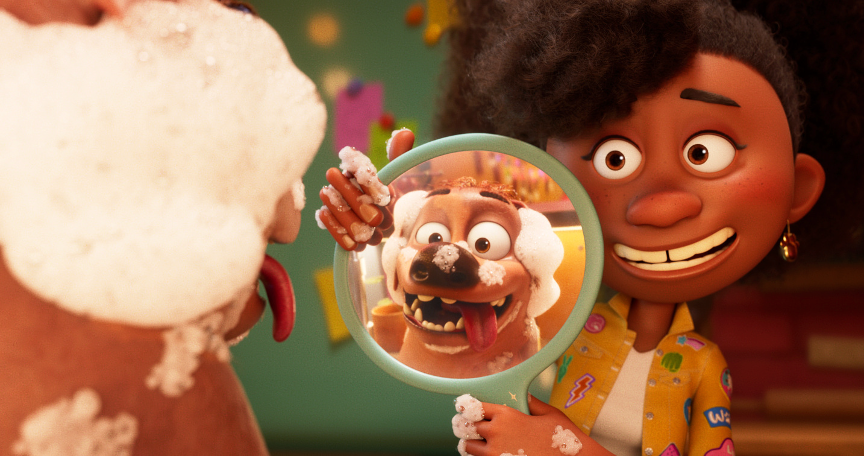
He has crooked teeth, an unfortunate face and little hope of winning a beauty contest. Yet Yugly, the unlikely hero of a new Belgian animated film, has ambitions far beyond his looks. Its directors tell Leo Cendrowicz how an ugly dog became a champion of difference – and why Brussels is an unlikely powerhouse of international animation.
In the relentlessly adorable world of animated cinema, where big eyes, fluffy fur and winning smiles are practically compulsory, the hero of Belgium's latest family film is something of an affront to good taste.
Yugly has crooked teeth, a lopsided face and a tongue that seems to have a mind of its own. He is, by general agreement, spectacularly ugly. Yet he has an improbable ambition: to win the world's most prestigious dog beauty contest.
The new film, Yugly, which opened in Belgian cinemas on 14 October, turns this unlikely premise into a colourful adventure about belonging, prejudice and the human obsession with appearances.
Behind it is nWave Studios, the Brussels animation company that has spent three decades making films for international audiences, often without Belgians realising they were produced on their doorstep.
For its directors, Jérémie Degruson and Yanis Belaid, the film is more personal than its exuberant canine antics suggest.
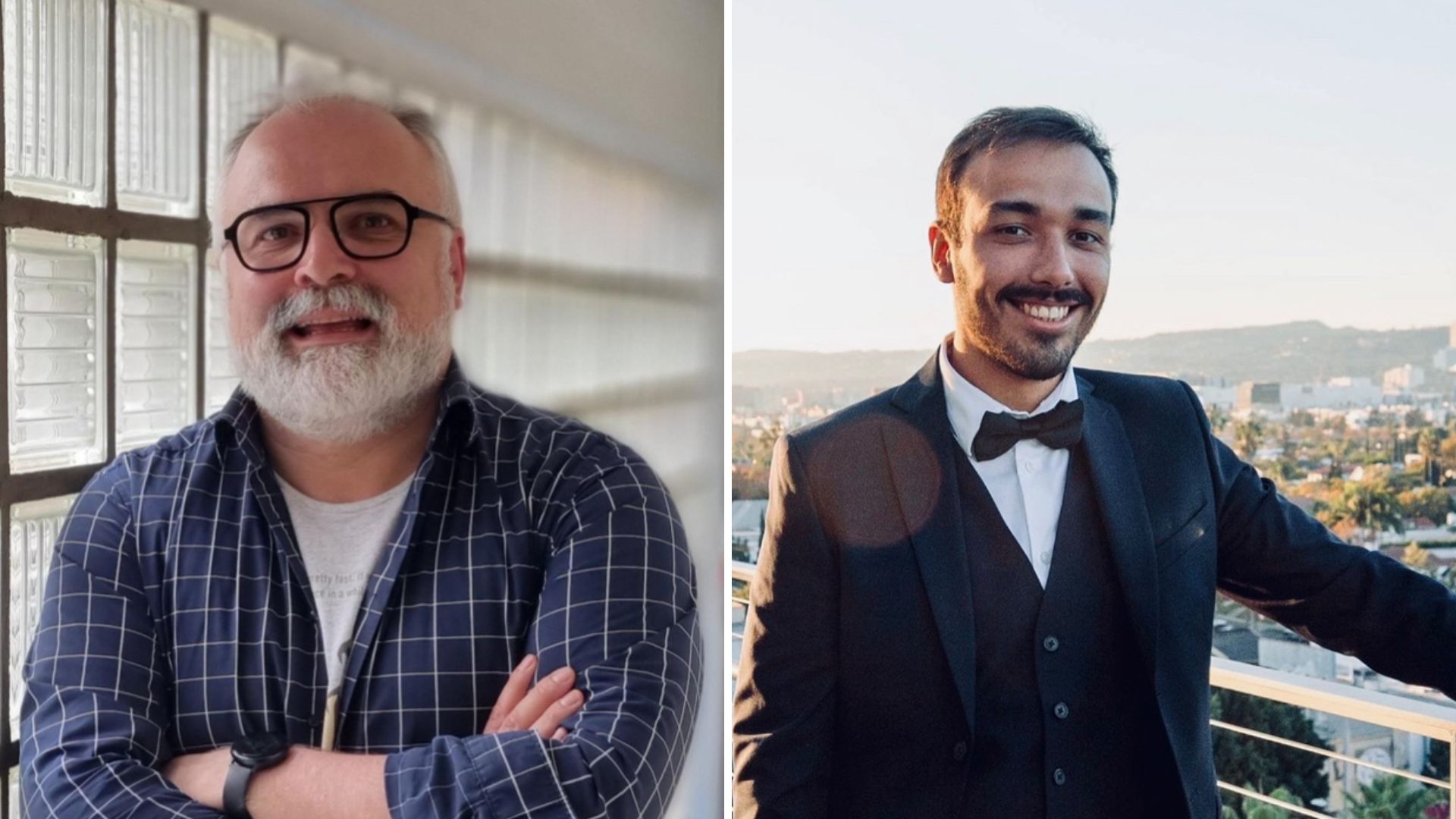
Jérémie Degruson (left) and Yanis Belaid.
“With this film, we wanted to talk about difference,” Belaid told The Brussels Times in a joint interview. “When Jérémie and I were children, we both felt different for various reasons, and sometimes it's difficult to show yourself to the world.”
Yugly, known as Mochy in French, has repeatedly been rejected for adoption because of his appearance. Convinced that winning a beauty contest will finally earn him a loving owner, he sets off on an improbable quest, helped by a ragtag collection of canine outsiders.
The joke, of course, is that the world's ugliest dog has the biggest heart.
Beauty is in the eye of the dog
The story draws inspiration from real-life ugly-dog competitions, including the unlikely celebrity of Peggy, the British dog whose unconventional looks earned her international fame – and a role in Deadpool & Wolverine.
Degruson sees something touching in these contests.
“What's nice about those shows is that they're very human: they're about accepting ugliness as a difference. We wanted to take that message and spread it through the film.”
But creating a convincingly ugly, animated hero presents a peculiar artistic problem. Make him too grotesque and audiences recoil; make him too cute and the central joke collapses.
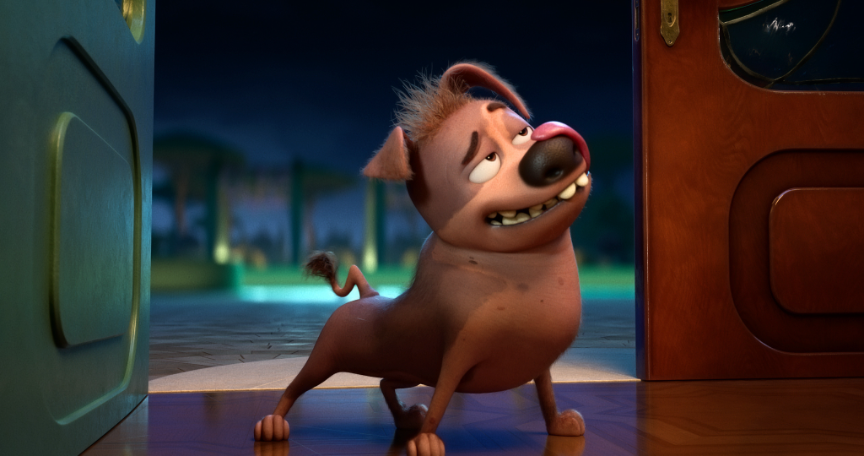
Still from Yugly.
The filmmakers had to strike a balance between comic ugliness and emotional appeal. Yugly may lack conventional canine good looks, but his personality is designed to win over even the most fastidious dog lover.
Both directors have experienced feeling different or being judged by others. Belaid, who struggled with criticism about his weight when younger, brings a particularly personal perspective to the film's message of self-acceptance.
Both are dog lovers, too. Belaid has a golden retriever called Baloo, while Degruson fondly remembers his border collie.
“What interests me about dogs is their profound capacity for love,” says Degruson. “There's no compromise: when they love, it's 200%.”
Beyond its message about acceptance, he has a practical hope: that the film will encourage families to adopt dogs from animal shelters.
A little bit of Charleroi, a touch of Dubai
The film's settings are almost as unlikely as its hero. Yugly's journey begins in a world inspired partly by Valenciennes in northern France and Charleroi, with their red-brick buildings and industrial landscapes.
As he pursues his dream, the scenery changes dramatically, giving way to a gleaming metropolis of skyscrapers, giant screens and technological extravagance, inspired more by Dubai than Brussels.
“For us, it's a contrast between the authentic and the superficial,” explains Belaid.
The filmmakers also looked beyond animation for inspiration. Belaid drew on the intimate camera work of live-action directors such as Terrence Malick and Richard Linklater to bring audiences closer to the dog's perspective.
The result is an ambitious production, three years in the making, combining elaborate computer-generated environments with a simple emotional story.
The soundtrack provides another Belgian connection, with original music by Brussels-based pop-rock band Puggy.
Made in Brussels, watched around the world
Founded in Brussels in 1995, nWave has quietly become an established European animation producer, responsible for films including Fly Me to the Moon, The Son of Bigfoot, Bigfoot Family and The Inseparables.
The studio handles virtually the entire filmmaking process in-house, from writing and character design to 3D animation, sound and post-production. Its workforce spans 12 nationalities, while its films are written in English for international audiences.
Brussels, Degruson argues, is a natural base for such an enterprise.
“Brussels is an international city. Belgium also has a graphic tradition, particularly comics, and some very good schools,” he says.
The city's international character and accessibility help attract talent from across Europe and beyond. Yet Degruson stresses that modern animation draws on influences far beyond Belgium, from Hollywood to Japanese cinema.
Don't mimic Disney
For independent European studios, the challenge is not simply to reproduce Hollywood blockbusters on smaller budgets.
“The wrong approach would be to try to do exactly the same thing as Disney or Pixar,” says Belaid. “With Yugly, we wanted to find something more emotional, rather than making a huge action film or relying on funny sequences all the time.”
The directors bring contrasting experience. Degruson is an nWave veteran, having worked on several of its biggest productions, while Belaid comes from a different filmmaking tradition. His acclaimed short Les Larmes de la Seine, about the repression of Algerian demonstrators in Paris in 1961, won more than 100 awards, including a Student BAFTA.
Their collaboration also comes as the animation industry confronts a technological upheaval that could transform how films are made.
Artificial intelligence advanced dramatically during Yugly's three-year production, particularly in image generation. Degruson, with three decades in the industry, admits the pace of change has left him unsettled.
“Those three years also saw an extraordinary acceleration in AI, especially image generation. It gave me a kind of vertigo.”

Still from Yugly.
“I have about 30 years of experience, and suddenly I have to rethink everything,” he says. “Every week there's new software and new developments. At some point, we'll have to decide how we want to work with it.”
Belaid believes European studios must embrace experimentation rather than rely indefinitely on the familiar formula of family adventures designed for international audiences. But he is wary of AI replacing the artists themselves.
“The artist then does the magic. Using AI to produce the final frame isn't the way I want to work.”
Yugly had its world premiere at the Annecy International Animation Film Festival in June, where it opened the Annecy Presents feature-film selection. Belaid recalls the pleasure of watching audiences respond, sometimes interpreting the ending in ways the directors had not anticipated.
Perhaps the most encouraging reaction came from a child who told him that, after seeing the film, they wanted to adopt a dog – perhaps even one like Yugly.
For a character convinced that nobody could possibly love him, that is quite a triumph.
