
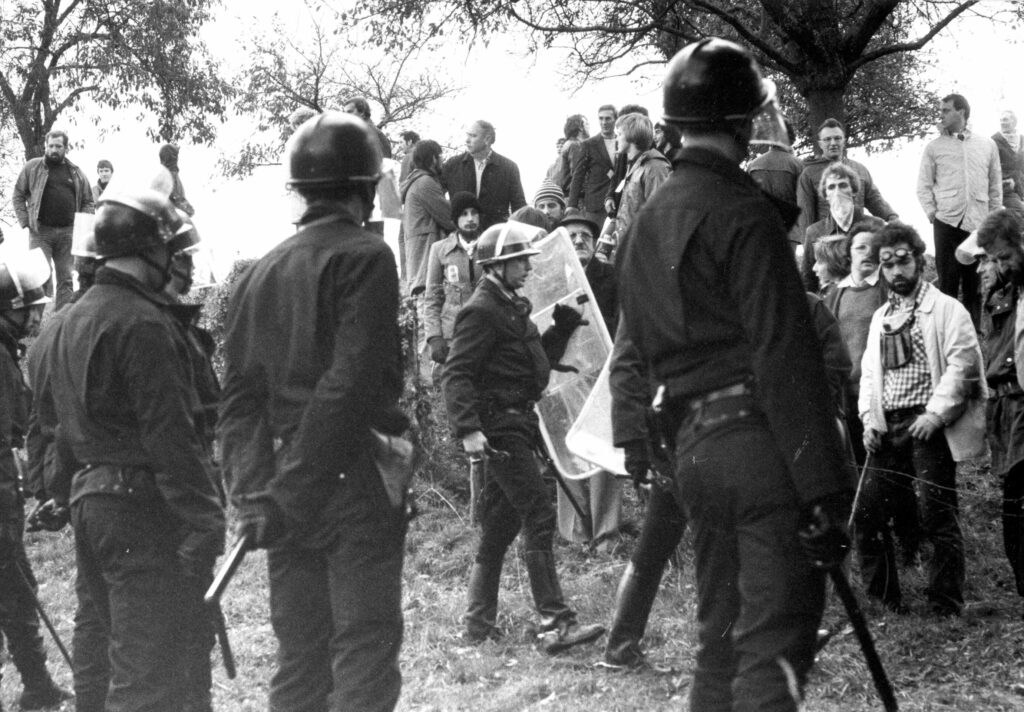
Belgian Defence Minister Theo Francken (N-VA) proposed creating a military-trained police reserve on Sunday, 18 October to tackle violent riots.
Speaking on RTL, Francken described the planned force as a "gendarmerie 2.0", operating under Interior Minister Bernard Quintin (MR). Prime Minister Bart De Wever (N-VA) was informed about the ongoing talks between the Defence and Home Affairs ministries.
Belgium's military union ACMP-CGPM has also backed the plan the following Monday. Earlier, union leaders pitched a similar paramilitary concept in their magazine De Schildwacht in 2024 to combat rising physical and digital security threats.
What was the Belgian Gendarmerie?
Founded during French rule on 10 July 1796 and formally established by the Belgian government in November 1830, the Gendarmerie, known in Dutch as the Rijkswacht, operated as a national military force tasked with civil law enforcement.
For over a century, the corps functioned as part of the armed forces alongside the army, navy and air force. This “fourth pillar” answered to both the Defence and Interior ministries. At its peak in the 1980s, the force employed 18,000 personnel with territorial brigades, highway patrol units, and specialised anti-riot squads.
Gendarmes maintained public order, conducted judicial investigations and patrolled borders. During demonstrations, anti-riot units deployed high-pressure water cannons, wheeled armoured personnel carriers, and even Belgian FN FAL battle rifles modified to fire tear gas rounds.
However, several operational failures in the 1980s and 1990s destroyed the force's reputation.
Related News
- Belgian military union backs proposal for new police-military force
- Brussels Mayor dismisses proposal for joint police-military unit as 'nonsense'
- Belgium in Brief: Gendarmerie 2.0
Between 1982 and 1985, the Brabant killers murdered 28 people in supermarket raids while the far-left militant group the Communist Combatant Cells (CCC) staged several high-profile bombing campaigns.
Two Brussels firefighters died in a 1985 CCC attack after the Gendarmerie failed to secure the perimeter around a car bomb on Rue des Sols. Just weeks earlier, poor coordination between gendarmes and municipal police contributed to the Heysel Stadium disaster, which killed 39 football fans.
Fierce turf wars, known as the "war of the police" pitted the Gendarmerie against the judicial and municipal police forces.
Parliamentary inquiries exposed fatal failures to share intelligence and coordinate security forces, prompting the government to demilitarise the corps in 1992 and strip its military duties.
Public outrage following the 1996 Marc Dutroux pedophile scandal sealed the agency's fate. After around 350,000 citizens marched in Brussels to protest systemic police incompetence during the investigation, lawmakers passed the 1998 police reform law.
Belgium officially abolished the Gendarmerie on 1 January 2001. They were replaced with two new tiers: the Federal Police and Local Police, absorbing its 432 brigades and 16,000 remaining staff.
How would 'Gendarmerie 2.0' differ?
Unlike its predecessor, the proposed unit would not exist as an independent fourth branch of the military.
From the revealed information, Defence personnel would train police officers in military tactics before placing them strictly under the Interior Ministry's command as an operational reserve to be used when regular police force is not enough.
"When violence is so extreme, we must protect citizens," Francken told RTL on Sunday.
Speaking on VRT radio programme De Ochtend on Monday, the minister admitted the reserve "will not be a miracle solution", though he argued it signals incoming reinforcements for existing services.
Quintin's office confirmed the discussions, pointing to existing joint patrols with railway police and site protection operations.
A question that remains on the mind of many is if civil unrest, domestic terrorism, and violent banditry exposed the original Gendarmerie's structural flaws, why would a revived version succeed now?
Military union ACMP-CGPM warned against simply copying the old model for that exact reason.
Modern security challenges include organised drug crime, terrorism, sabotage, and hybrid threats, requiring an integrated network connecting the army, intelligence services, the justice system, and existing police force.
Moreover, any new paramilitary unit will require strictly defined legal responsibilities before deployment.
