
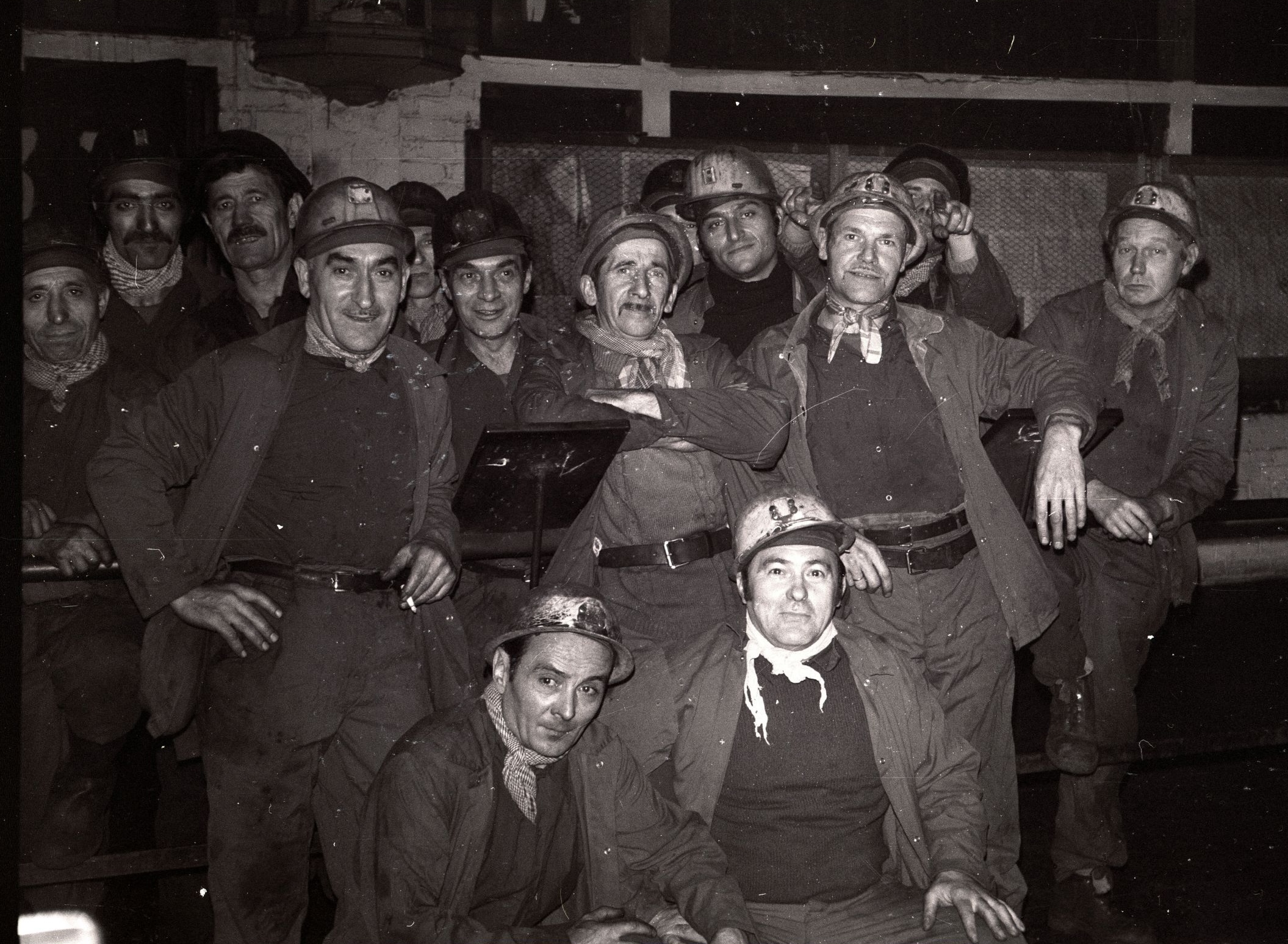
Recruited to power Belgium’s post-war economy, Moroccan workers helped build the country from the coalfields up. Six decades later, their descendants are reshaping its politics, culture and sense of identity, as Ahmed Medhoune and Christophe Sokal write.
On 8 August 1956, disaster struck the Bois du Cazier coal mine near Charleroi. A fire killed 262 miners, 136 of them Italians. The catastrophe was so devastating that Italy, until then a major source of labour for Belgium’s mines, refused to send any more of its citizens into the coalfields.
Belgium had to look elsewhere for workers. It eventually turned to Morocco, signing a landmark labour agreement on 24 February 1964.
More than six decades later, the consequences reach far beyond the mines. Moroccan immigrants and their descendants have helped shape Belgium’s economy, culture and public life – and, increasingly, the way the country sees itself.
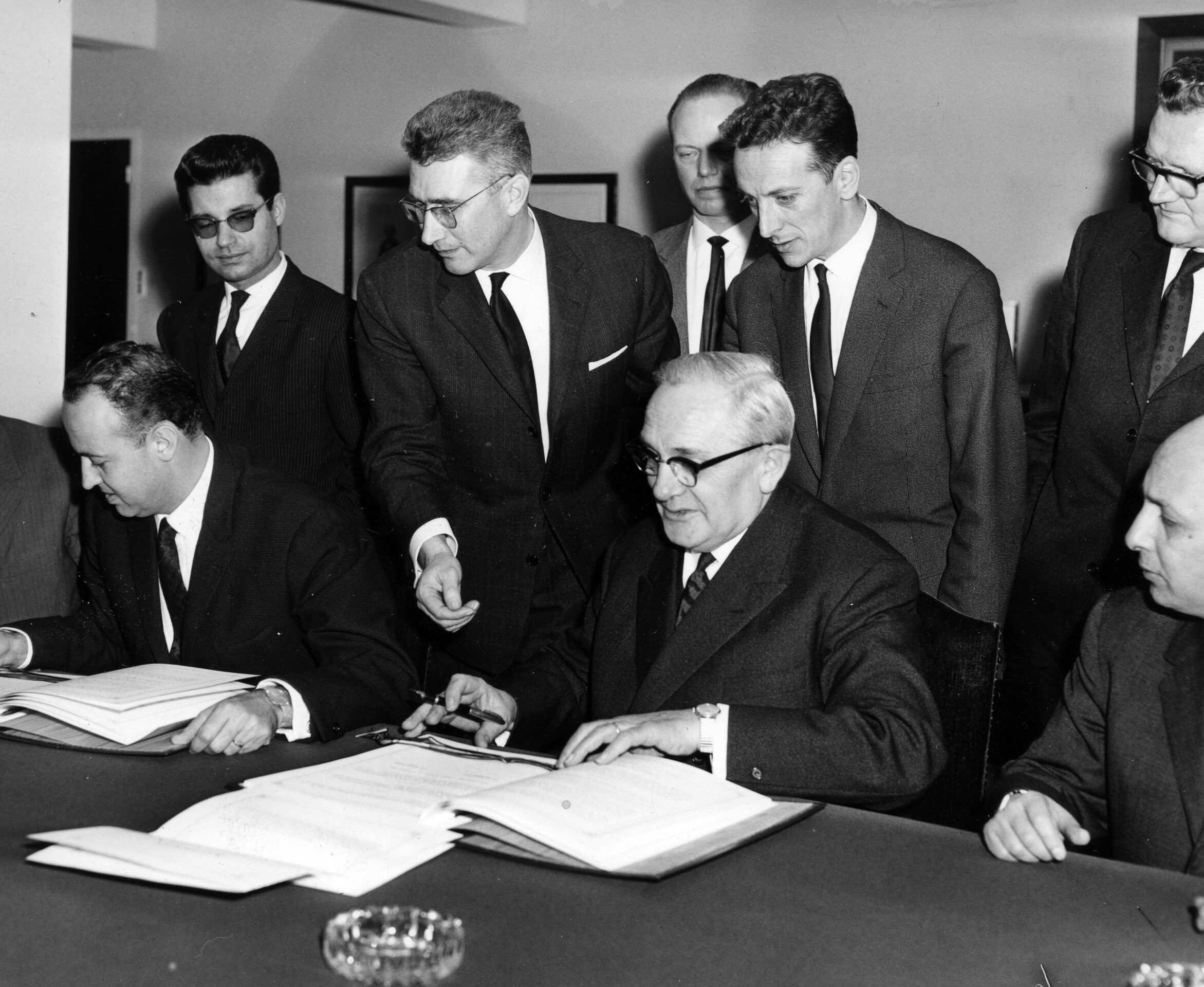
February 1964, signature of a convention between Belgium and Morocco concerning Moroccan workers in Belgium. Credit: Belga Archives
Their story runs through modern Belgium: through the infrastructure they helped build, but also through the emergence of a multicultural society that remains imperfect and sometimes fractious, yet increasingly at ease with its plural identity.
Through an exhibition, the book Belgica Biladi and a podcast series, we have retraced the experiences of the men and women who crossed the Mediterranean in search of work – and of the generations that followed.
The first generation – the witnesses and pioneers of this history – is now disappearing. With them risk vanishing intimate parts of the migrant experience: how they made lives in Belgium, how they imagined retirement and even where they hoped to be buried. A vital chapter in the shared history of Belgium and Morocco is passing out of living memory.
At the same time, a third generation of Belgian-Moroccans is looking back with renewed curiosity, reclaiming roots while negotiating an identity that is both deeply local and irreversibly transnational.
Why Belgium looked south
The answer begins with the economics of post-war Europe.
After the Second World War, northern Europe’s industries were hungry for labour. Belgium needed workers above all for its mines, with coal still fuelling reconstruction. Morocco offered young, largely unskilled labourers willing to do hard and dangerous work.
Competition for manpower among Europe’s industrial economies was fierce. After a succession of mining disasters, the Belgian Coal Federation (Fédéchar) looked across the Mediterranean for recruits.
Morocco – followed soon afterwards by Turkey – offered a ready supply of young workers. Decades of French influence, from the establishment of the Protectorate in 1912 to independence in 1956, also brought some familiarity with French language and culture, making Moroccan labour attractive to Belgian employers.
Morocco, meanwhile, had only recently gained independence. The northern Rif region was beset by economic crisis and political instability. Sending workers abroad brought in badly needed foreign currency while easing social pressure in the north.
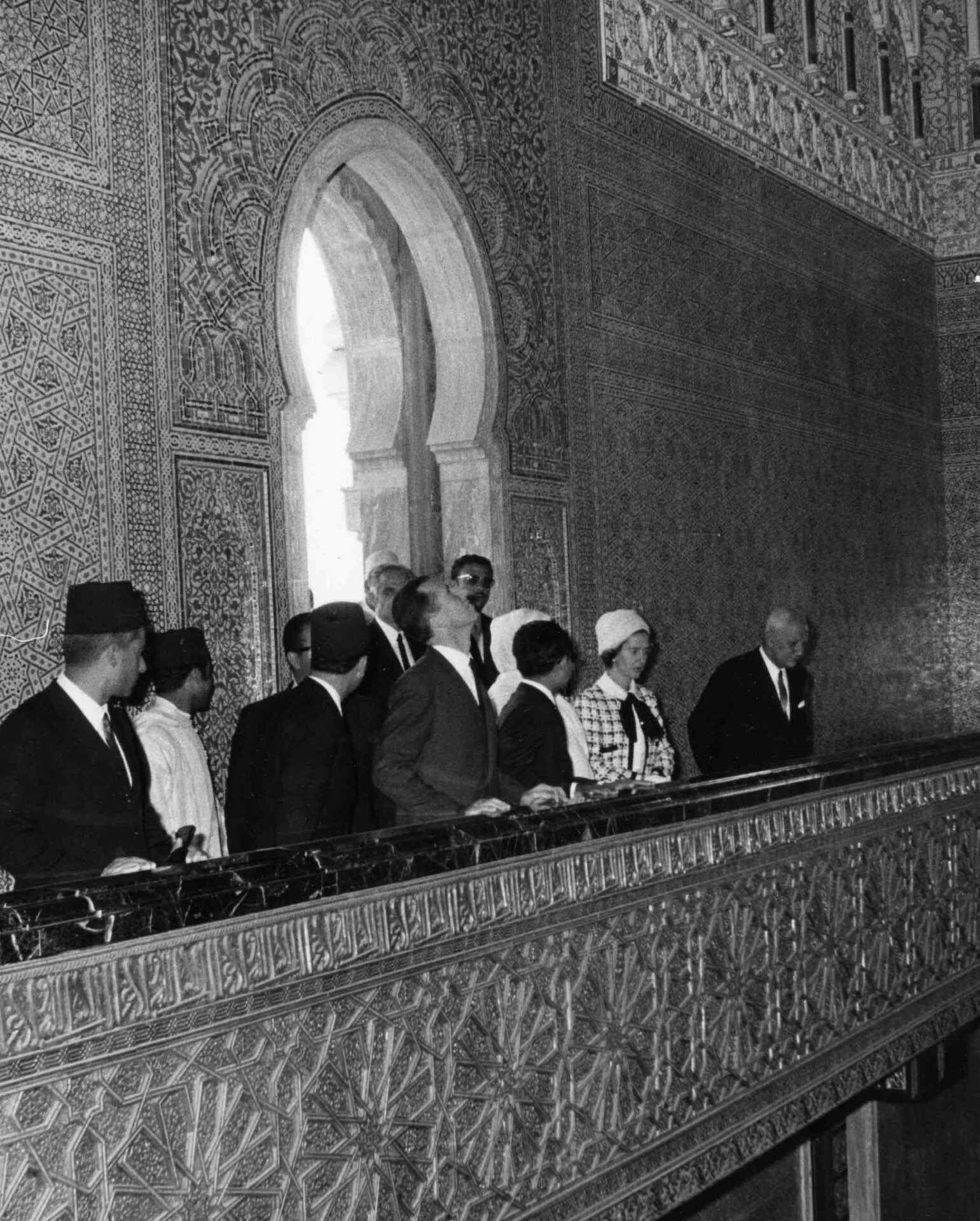
King Baudouin and Queen Fabiola in Morocco. Credit: Belga Archives
This was also a country with a much longer history of movement. As early as the 14th century, caravan routes linking Mecca with sub-Saharan Africa, and stretching as far as Timbuktu, helped great religious and commercial centres flourish.
In the 17th century, Jewish merchants known as the Tujjār, protected by the Sultan, sailed from Mogador (present-day Essaouira) to establish trading posts from Asia to northern Brazil. By the 19th century, farmers from the Rif were crossing Morocco’s eastern border to work the land in Algeria.
Under the French Protectorate, Moroccan manpower was also drawn heavily into the armed forces during both world wars. Moroccan Goumiers fought with distinction in the Second World War, including at Monte Cassino and Gembloux, at a heavy cost in lives.
Migration, in other words, is woven deep into Morocco’s history. The country absorbed successive civilisations – Phoenician, Greek and Roman among them – each leaving its mark. Berber tribes in the south welcomed Jewish communities after the fall of Jerusalem; in the oases, Jewish and Berber communities gradually mingled, sharing skills in weaving and jewellery-making as well as rites and traditions.
Morocco also offered refuge to Europeans fleeing Nazism – an episode later romanticised in the 1942 film Casablanca.
Migration still runs in both directions. Westerners are drawn to Morocco, not least in retirement, while migrants from sub-Saharan Africa pass through the country, often facing detention and hardship as they try to reach Europe across the Strait of Gibraltar. Centuries of movement have made Morocco a linguistic and cultural crossroads.
Millions of Moroccans now live in more than 100 countries across five continents. Emigration has long carried a double meaning: the pain of departure and the promise of opportunity.
From workers to citizens
Talks on a bilateral labour agreement had begun in the 1950s. By the time Belgium and Morocco formally signed it in February 1964, however, Fédéchar had already been recruiting in northern and southern Morocco for years. The deal prompted barely any public debate. Many Moroccans continued to arrive outside the official system until 1967, regularising their status after finding work.
The coal industry set the terms: one-year contracts, renewable only once, and precarious living conditions. Workers endured cramped barracks, punishing hours and little prospect of training or advancement.
Trade unions were initially wary of their new foreign "colleagues," fearing competition over wages. But as coal began its long decline, other industries – metallurgy, construction and food processing among them – clamoured for the same low-cost labour. Immigrant workers gradually spread through the wider economy and, in time, into the unions themselves.
A 1963 demographic study commissioned by the Walloon Economic Council and led by demographer Alfred Sauvy supplied another argument for immigration. Belgium was ageing, threatening the long-term viability of social security and pensions. The country needed workers.
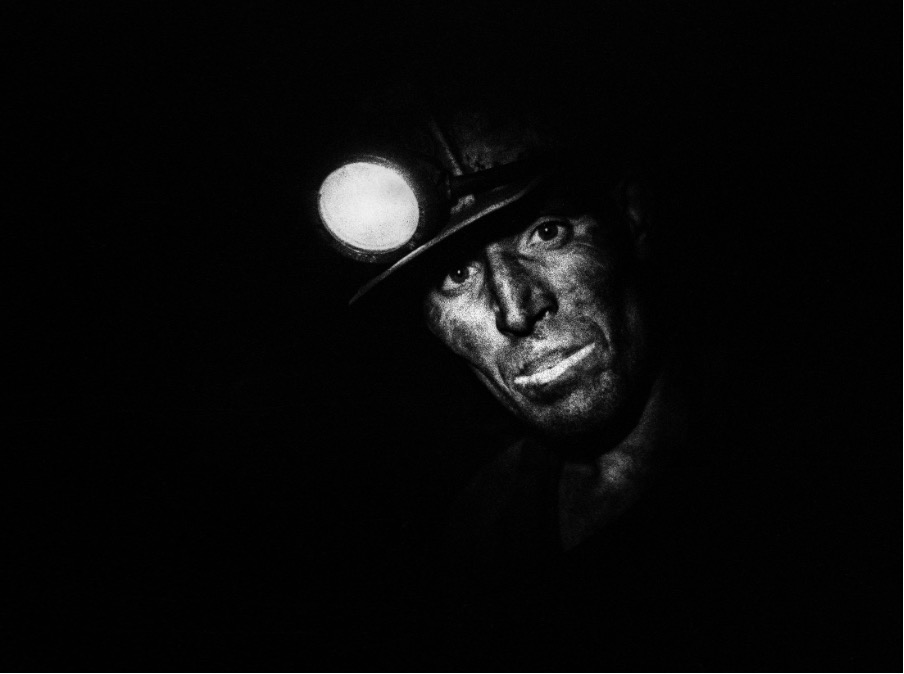
Credit: Belgica Biladi
The argument has a strikingly contemporary ring. Long before today’s anxieties over labour shortages, pensions and demographic decline, Belgian policymakers had concluded that economic growth depended on immigration. Moroccan workers were recruited not only to keep mines and factories running, but to replenish an ageing workforce.
The young men who had mostly arrived alone were encouraged to bring over wives and children. Few could have foreseen the consequences. A temporary labour scheme became one of the defining demographic and cultural shifts in modern Belgian history.
Permanent settlement remained officially almost unthinkable, but conditions gradually improved. Workers gained better access to housing, their children entered Belgian schools and unions slowly gave greater voice to their demands.
The 1973 oil crisis abruptly ended the era of industrial expansion, and Belgium moved to halt labour immigration. As companies shed jobs, immigrant workers – often among the least skilled – suffered disproportionately. Many joined the growing ranks of the unemployed and became targets of a familiar populist refrain: foreigners were taking jobs from ‘real Belgians’ while living off welfare.
Some Brussels municipalities sought to restrict their rights or simply refused to register them. Other measures followed, sometimes accompanied by aggressive policing, racial profiling and violence.
Large-scale redevelopment in the densely populated northern districts of Brussels displaced many residents; some were effectively pushed out of the country. A deportation order targeting Moroccan children and teenagers provoked public outrage. Universities, trade unions and civil-society groups mobilised to demand reform of the 1952 Law on the Policing of Foreigners.
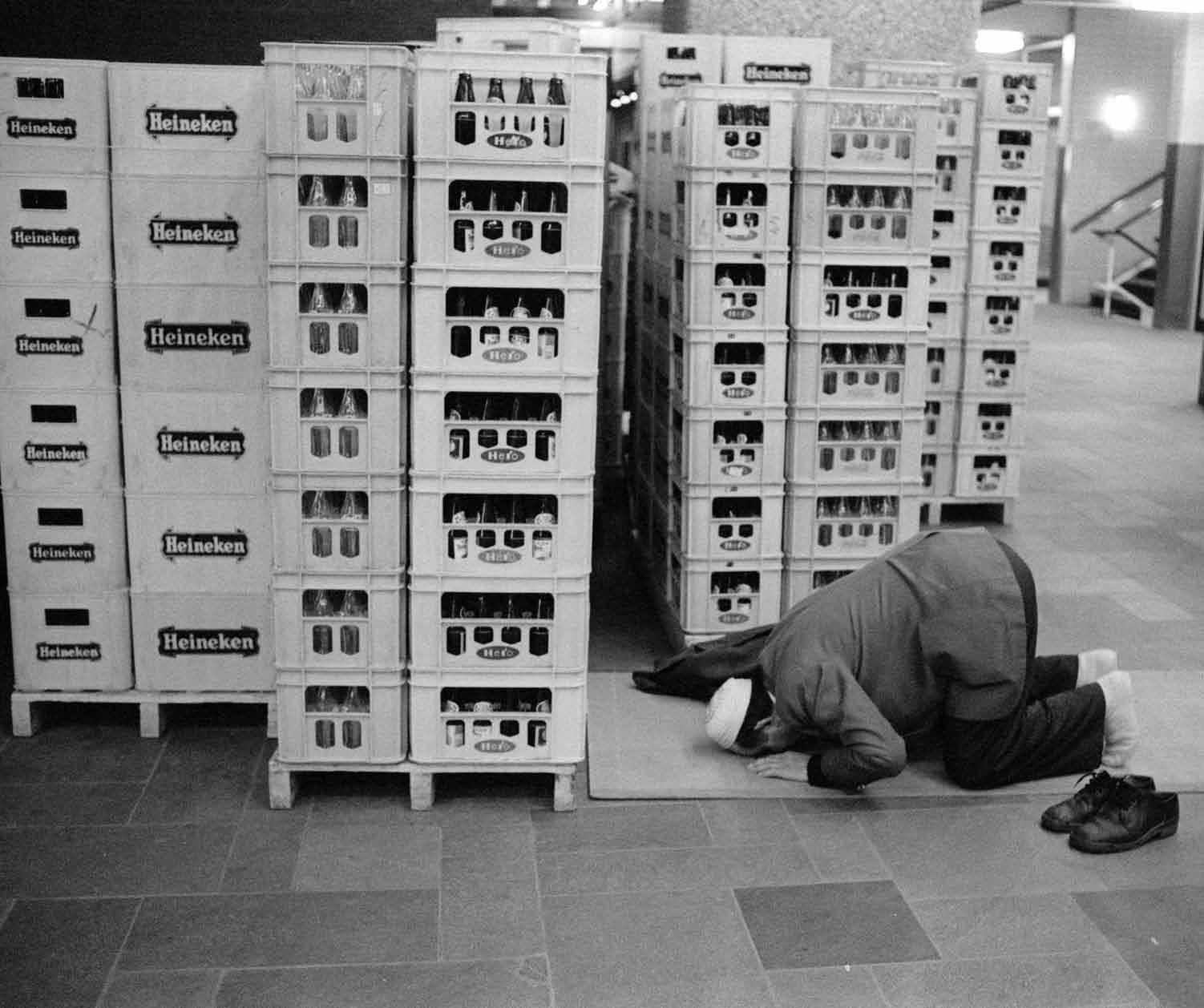
Credit: Belgica Biladi/Paul Dahan
Immigrant associations, strengthened by Moroccan students fleeing the repression of Morocco’s "Years of Lead," organised workers and offered literacy programmes alongside legal and social advice.
UNEM, the Moroccan Democratic Rally and the Union of Workers of Morocco were among the most active organisations from the 1970s to the 1990s. Their sustained pressure helped bring legislative change: a 1980 law set rules for the entry, residence and removal of immigrants; legislation criminalising racism followed in 1981.
Moroccan workers had also been prominent since the 1970s in campaigns by undocumented migrants for legal recognition. Despite severe repression, these movements helped secure successive rounds of regularisation. Around the same period, Islam gained official recognition in Belgium.
The politics of belonging
These first gains in immigrant rights owed much to voluntary associations, trade unions and immigrants’ growing awareness of their own rights. In 1984, a new nationality code eased access to naturalisation and extended rights to children born in Belgium whose parents had acquired Belgian citizenship.
For young people from immigrant backgrounds, however, daily life remained difficult. They were told to "integrate" into the society in which they had been born while still facing systematic barriers to employment and full participation in public life.
In 1991, heavy-handed policing sparked unrest in two Brussels communes after a routine identity check escalated into violent clashes between officers and young people from working-class neighbourhoods.
The riots exposed a deeper contradiction. Many of those involved had been born in Belgium, attended Belgian schools and spoken the country’s languages all their lives, yet were still treated as outsiders. The question was no longer simply immigration. It was belonging.
The upheaval also gave public voice to the grievances, ambitions and creative energy of immigrant communities. Journalists and producers Khiti Benachem and Taghian Mehrdad responded with Sindbad, an RTBF documentary programme that brought leading figures from the unrest before television cameras.
For many viewers, it was the first time the social and cultural reality of immigration had been given recognisable faces and voices on Belgian television.
The gradual easing of naturalisation rules, followed by the introduction of birthright citizenship for the second generation in 1991, gave immigrants’ descendants a new public visibility – in national debates and, increasingly, on ballot papers.
Within a generation, that visibility had reached the heart of politics. Since the 1980s, Belgium’s mainstream parties have increasingly opened their ranks to candidates of immigrant origin. Today, Belgian-Moroccans are represented across the political spectrum and at every level of government – a degree of political inclusion that remains unusual in Europe and is especially striking in Brussels.
Belgian-Moroccans are now woven into the national fabric. Belgium’s own complicated identity may help explain why. Unlike countries built around a single language or national story, Belgium has long accommodated overlapping loyalties: Flemish and Francophone, local and regional, national and European.
For many Belgian-Moroccans, multiple identities are less an exception than an extension of Belgium’s own complexity.

Famous Moroccan-Belgians. Credit: Belga
Yet civic integration has not erased the fault lines. Inequalities persist in education, employment and housing, while limited social mobility sustains a stubborn divide.
In Brussels, the contrast between the so-called "poor crescent" – including Molenbeek, Anderlecht, Forest, Saint-Josse, Schaerbeek and Saint-Gilles – and the wealthier municipalities to the southeast remains visible, even as gentrification and the capital’s intensely international character redraw the map.
Brussels is the natural stage for this evolving story. More than three-quarters of its residents are foreign nationals or of foreign origin. The city can resemble a modern Tower of Babel, but it is also a daily experiment in living with difference, where identities overlap, languages mingle and new forms of belonging are constantly negotiated.
Moroccan migrants and their descendants served in Europe’s wars, laboured in its coalfields and contributed to Belgium’s economic and demographic growth. They also fought for equality and recognition, in Belgium and Morocco, contributing in different ways to both their country of origin and their adopted home.
More than 60 years after Belgium and Morocco signed their labour agreement, Belgian-Moroccans still face familiar questions: Are you more Belgian or more Moroccan? Do you feel caught between two worlds?
Many reject the premise. They do not see themselves as trapped between two identities, but as both local and transnational: shaped by Brussels and Casablanca, by Dutch or French as well as Arabic, by Belgian life and Moroccan family roots.
The descendants of the miners and factory workers who arrived in the 1960s are now entrepreneurs, artists, academics, journalists, civil servants and politicians. Theirs is no longer simply a story of migration. It is part of the story of modern Belgium.
Belgian-Moroccans have helped shape not only the country’s economy and infrastructure, but its understanding of who belongs. The journey between Brussels and Casablanca, inheritance and reinvention, is still unfolding.
Belgica Biladi - Une histoire belgo-marocaine, edited by Ahmed Medhoune, Andrea Area, Fatima Zibouh and Christophe Sokal. Editions de l’Université de Bruxelles, 288 pages. 2025.
