
For some, management companies are a path to dodging taxes; for others, a legitimate way to structure a business. Either way, they have become a lightning rod for Belgium's budget negotiations and, according to one expert, signal a much-needed debate over how the country taxes labour.
Coalition parties in Belgium's federal government have been negotiating for weeks on how to close a €10 billion budget gap by 2029 through a mix of tax and spending changes. At the outset of negotiations, many parties took the position that "those with the broadest shoulders should carry the greatest burden" in any tax or spending changes.
Management companies quickly entered the fray of negotiations, as some see them as a way for the highest paid to avoid Belgium's high salary tax. Through this company form, income can be taxed at the lower corporate tax rate. Current Health Minister Frank Vandenbroucke (Vooruit) has previously called their use "legalised tax fraud."
Last week, L'Echo reported that parties discussed proposals to limit which tax benefits management company directors could claim. Companies with no employees could lose the reduced 20% corporation tax rate, while single-director companies that work almost exclusively for one client would be excluded from the reduced 18% dividend rate (VVPR-bis) for new reserves from 2028.
The proposals were reported to be worth €300 million in extra tax receipts next year, and €450 million each year from 2028, while also placating those who say the growing use of management companies is just a way to avoid paying income tax.
However, the debate is complex: some parties on the right don't want to increase the tax burden, and others argue that reforms would be untargeted and affect all companies indiscriminately. As Belgian law has no definition of a management company, the no-employee test would apply to every company without staff, not just management companies.
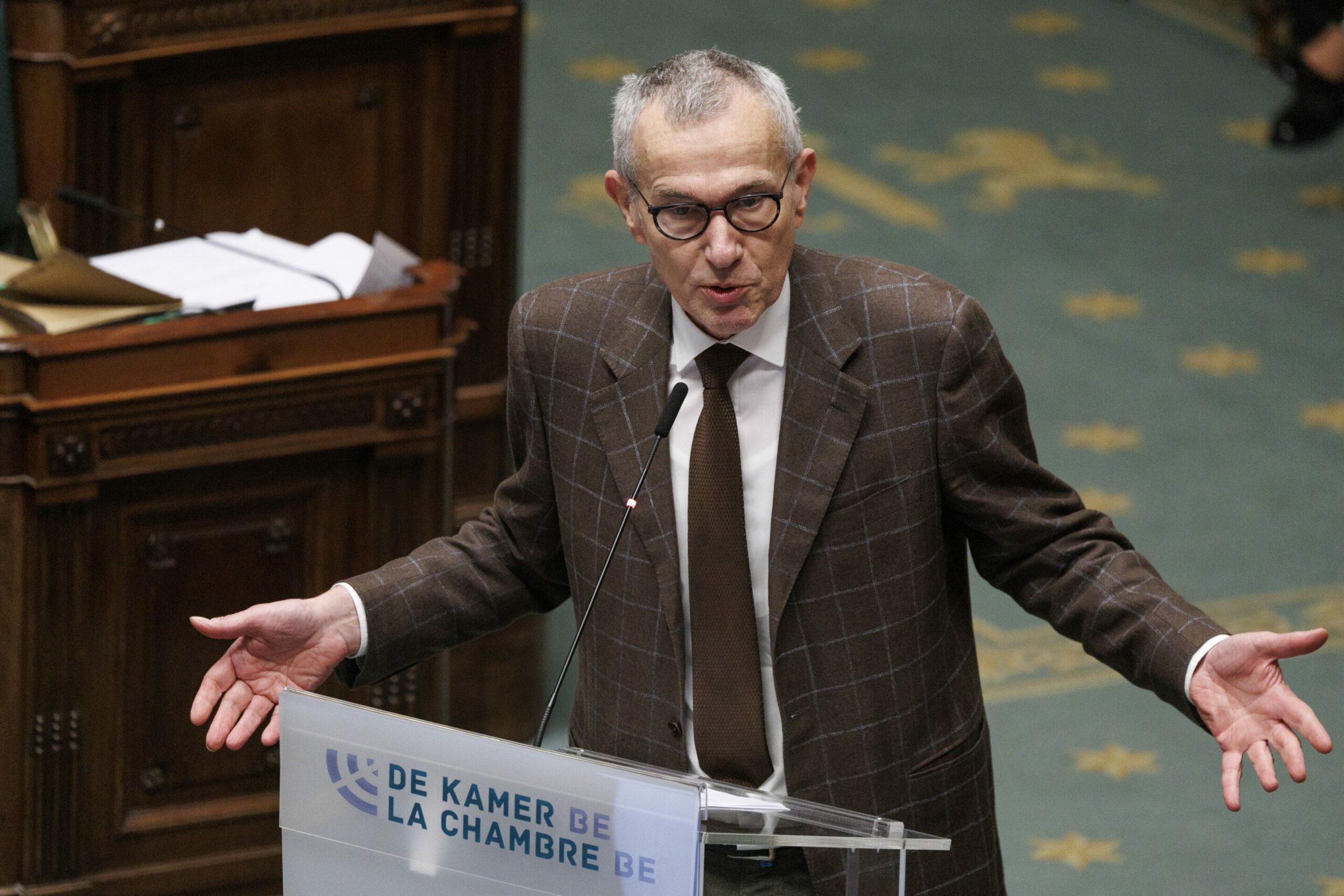
Deputy Prime Minister and Minister of Social Affairs and Public Health Frank Vandenbroucke (Vooruit) at a plenary session of the Chamber at the Federal Parliament, in Brussels, Thursday 11 December 2025. Vandenbroucke has previously called the use of management companies "legalised tax fraud." Credit: Belga / Nicolas Maeterlinck
What are management companies?
Management companies do not exist as a legal form, which complicates the debate, Joran Ceulebroeck of UNIZO told The Brussels Times. "It generally refers to an ordinary company through which a self-employed professional organises their business activities."
Under this structure, the self-employed person establishes an SRL company, of which they are typically the only director and employee. Doctors, lawyers and architects commonly use them; however, their use has been growing in Belgium over the last decade.
Estimates vary because of the difficulty of identifying them; however, figures from Het Nieuwsblad suggest an increase between 2018 and 2025 of 70% to 56,758 companies registered with at most two directors and one employee.
Organising this way allows the self-employed person to separate their personal and professional lives, limiting their personal exposure to financial, operational, or contractual risks associated with the company.
Sole traders, or 'natural persons', are another option for self-employed professionals. This form does not separate those risks; both the self-employed person and the business are the same legal entity.
Beyond the risk separation, the tax advantages can be significant for management company directors. Instead of paying remuneration as wages, directors can pay it as shareholder dividends.
Philippe Ledent, an expert economist at ING Belgium, told the Brussels Times that it is an entirely different tax system from sole traders. "The things you can deduct from your income are different, and the taxation on the revenue itself is completely different," he explained.
To qualify for a reduced corporate tax rate, a management company's director must pay themselves a minimum salary of €50,000 a year, which is subject to income tax and employer social contributions.
If they do, the company pays 20% corporation tax on its first €100,000 of profit, instead of 25%. The company can retain the rest of the profit or distribute it as shareholder dividends at a lower tax rate. In effect, this shifts an individual's tax base from personal income tax, where rates can reach around 50%, to corporation tax and dividends, which can be closer to 34%.
Management company directors also have access to benefits in kind, which sole traders do not. These include company cars and some extra-legal salary benefits.
However, Luc De Broe, a fiscal law professor at KU Leuven, explained to The Brussels Times that it isn't all upside, with these benefits being balanced against some risks for management company directors.
"Choosing the company route gives up several features of social protection," De Broe noted. These include legal protections in the event of termination of employment, such as notice periods or severance pay, and worse social benefits, such as lower pensions.
Additionally, benefits available to employees, such as vacation pay, year-end premiums and sick pay, are also unavailable to management company directors.
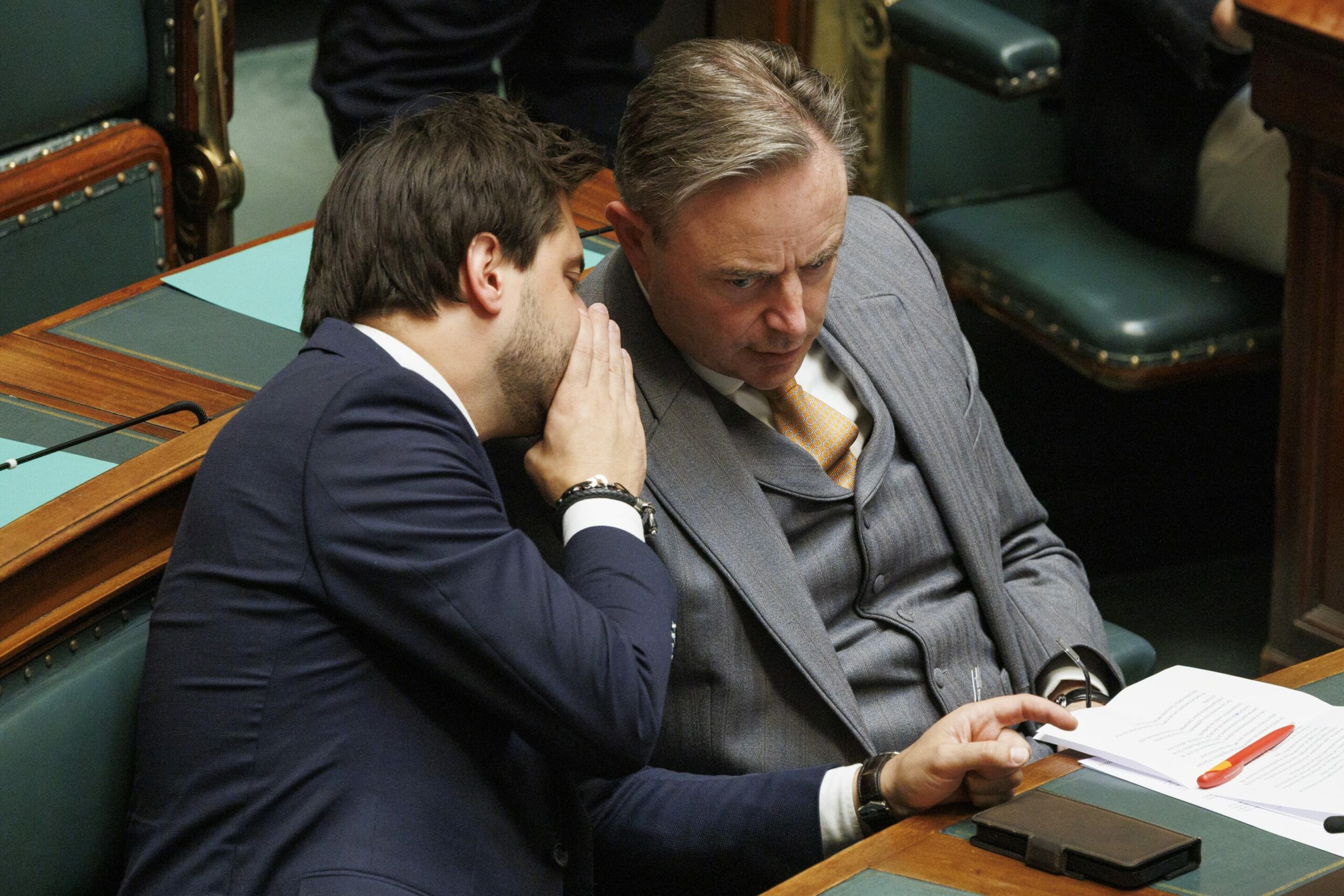
MR leader Georges-Louis Bouchez and Prime Minister Bart De Wever pictured during a plenary session of the Chamber at the federal parliament, in Brussels, Thursday 05 June 2025. Credit: Belga
A question of fairness?
Not everyone can set up as a management company, and the ability to opt out of the income tax system by paying only €50,000 to yourself may seem unfair to some.
"You pay the minimum wage, and then you are allowed to accumulate a lot of money in the company, and that's really what could be considered as unfair," noted Ledent.
Yves Stox, managing consultant at Partena Professional, told The Brussels Times that the turnover level at which it makes sense to switch from a sole trader to a management company typically starts at €100,000. Below this, the trade-off for a self-employed sole trader is limited.
The federal government's current focus on management companies that have no employees, or whose income comes primarily from a single client, is because both can look like bogus self-employment on paper, used to access a tax advantage rather than a genuine company serving multiple clients or growing through employment.
Both professor De Broe and UNIZO's Ceulebroeck pushed back, arguing that the government already has legislation to tackle bogus self-employment rather than fiddling with a complicated system. Ceulebroeck also stressed that using the number of employees as a judgement factor would have unintended consequences for entrepreneurs.
"Consider a start-up that cannot yet afford to hire employees, an independent consultant working for several clients or a small business that has become more productive through digitalisation. All three could face higher taxes, despite running perfectly legitimate businesses," he argued.
Ledent suggested a different approach and argued that reforms should focus on the minimum wage of €50,000. "This minimum wage that the company needs to pay is so low compared to the advantage that you can get," he argued.
Calling the salary threshold "peanuts," he suggested a better reform would be to change the minimum wage from a fixed €50,000 regardless of turnover to a system in which the minimum wage is based on a percentage of the company's turnover.
This, he argued, would avoid a situation where "someone who has a yearly turnover of €1 million just needs to pay a €50,000 annual wage in order to benefit from the system."
However, the issue is more fundamental than just changing thresholds, argued Stox. Beneath the debate over the use of management companies lies an unexplored debate about the systemic pressures on the social security system. This debate includes other labour-market changes, such as the growing use of flexi-jobs, which also erodes social security contributions.
"If you want to continue calling it a social security scheme and an insurance scheme, you have to make sure that the majority of the funds still continue to be contributions and not taxes."
For Stox, a bigger debate is needed on the use of labour in Belgium and, with that, the right level of taxation. "We are living this new industrial revolution, and we have to consider what its consequences will be."
All of this helps to explain why the debate is so difficult. It overlaps issues about what a company is, the fairness of only some workers being able to cut their tax bill, and the eroding solidarity of Belgium's social security system.
Stox argued these issues need time and space to be debated properly; the heat of a budget negotiation, with a ticking clock, may not produce the best answers.
