

Belgian Prime Minister Bart De Wever (N-VA) handed in his resignation on Monday, triggering talks between King Philippe and the coalition members. A final decision on the country's political future is expected on Friday.
De Wever visited the Royal Palace on Monday after a final push over the weekend failed to resolve the blocked budget talks.
The talks centred around an effort to curb Belgium's deficit – which currently sits at 5.2% of GDP – by finding €10 billion by 2029, as the country fears being hit by a snowball effect of compounding interest. As things now stand, Belgium might soon have to borrow money on the international markets to pay the interest on its debt.
The negotiations were arduous from the beginning, as coalition parties argued both publicly and privately about where to cut spending and where to raise new revenue, with some parties preferring the former and others the latter.
So far, however, no solution has been found.
Now, the King faces three options: give the current government another chance to reach a budget agreement, allow De Wever to explore changes to his coalition, or accept the resignation and open the door to new elections.
Scenario 1: King Philippe sees a way out of the budget deadlock
The King has made it clear that Belgium cannot afford a political crisis under these circumstances, stating that he regrets "that no agreement has been reached on a credible budget tailored to the current challenges. Against a backdrop of major geopolitical uncertainty and significant economic challenges, the country cannot afford a protracted political crisis."
He bought himself and the government time by delaying the final decision on De Wever's resignation to Friday, while holding a round of talks with the party leaders. This will allow the coalition parties to look to the King's involvement to finally break the deadlocked negotiations.
As talks involving the King are held under colloque singulier, very little is known about what was discussed, though a way out might be your typical compromis à la Belge, with some cuts to spending and some new taxes raised to keep everyone satisfied but no one happy.
If, following his talks with all party leaders, the King believes a deal might be struck, he can refuse De Wever's resignation and send him back to work.
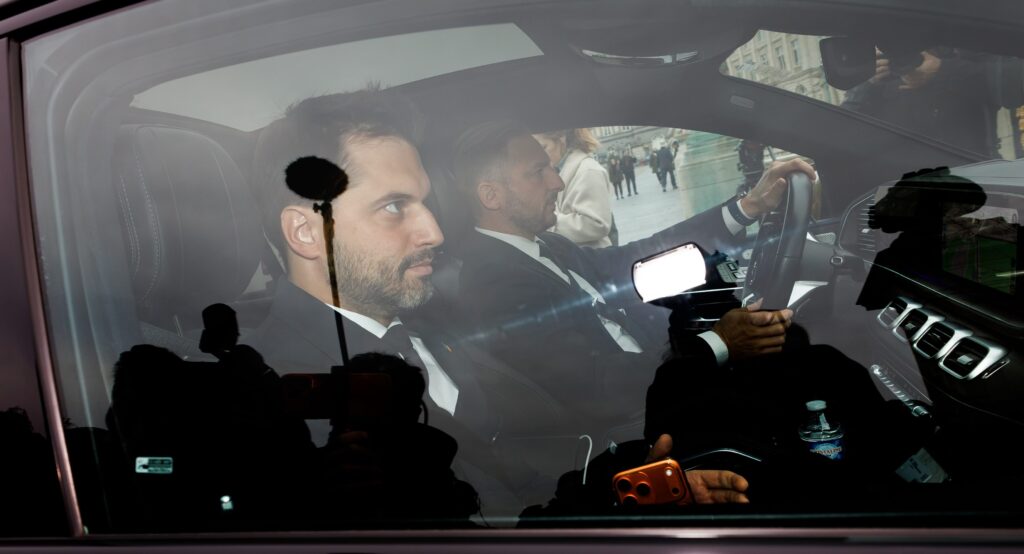
MR leader Georges-Louis Bouchez. Credit: Benoit Doppagne
Scenario 2: PM De Wever changes his coalition
If the King believes that the current coalition parties cannot find an agreement, De Wever might look out to change out one or two parties blocking an agreement.
The talks stalled last weekend after Vooruit (Flemish social democrats), CD&V (Flemish Christian democrats) and Les Engagés (Francophone centrists) reportedly asked for increased taxes on the "strongest financial shoulders," something MR (Francophone liberals) and N-VA (Flemish nationalists) strongly oppose.
Vooruit and MR have been singled out as the ones holding out, with CD&V leader Sammy Mahdi telling both parties to "speak at the negotiation table, rather than in television studios."
Currently holding 18 seats in Parliament, MR is the second-largest party in the coalition. While De Wever might want to force out the party and its intransigent leader Georges-Louis Bouchez, the only realistic option would be to bring the Francophone Parti Socialiste (PS) into the fold – shifting the balance further left. This would be hard to stomach for De Wever, who has criticised the PS repeatedly.
PS-leader Paul Magnette denied any potential support from his party, saying he will not be responsible for "saving a dying government."
The most viable option seems to be to swap out Vooruit for the Flemish liberals of Anders. While the coalition would still lose a significant amount of support, trading Vooruit's 13 seats for Anders' 8, it would still hold on to a (slim) majority.
Anders has said it would provide support for any measures that cut government spending, but did not want to go as far as suggesting they would replace Vooruit in the coalition.
While, theoretically, an entirely new government could be formed, this seems very unlikely in practice. A coalition on the left centred around PS could mathematically form a majority, but Magnette likely believes he will receive a stronger mandate to become the new Prime Minister after elections he is predicted to win.
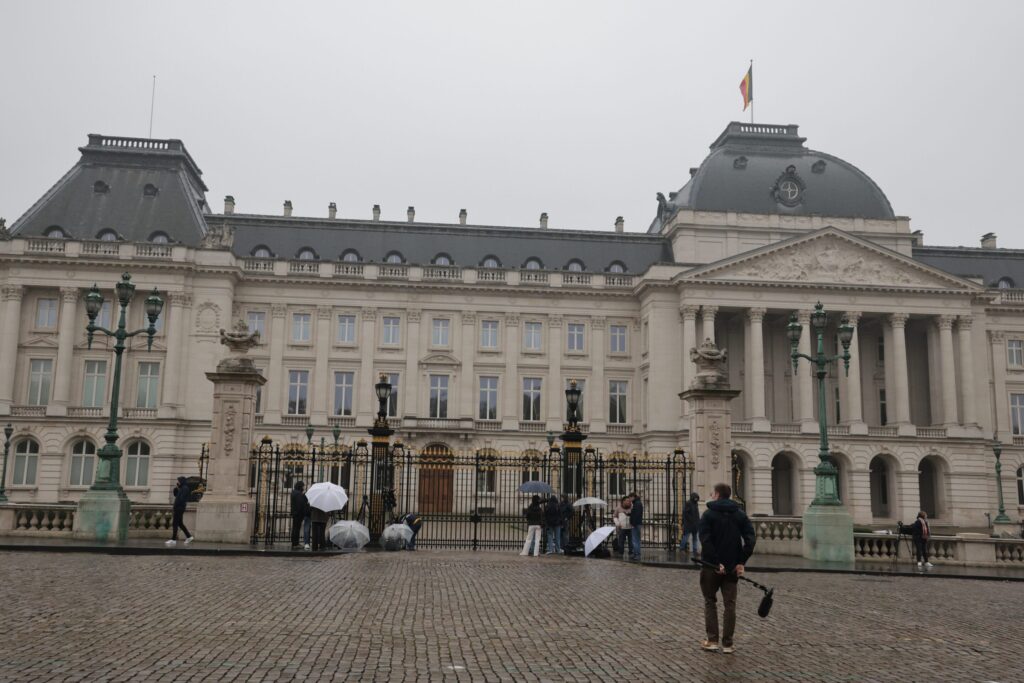
The press waiting at the Royal Palace. Credit: Belga/Nicolas Maeterlinck
Scenario 3: Belgium holds new elections
If the King accepts De Wever's resignation on Friday, and the coalition is not able to reshuffle its members, the country could see a snap election being called.
De Wever's government would become a caretaker government, being forced to work with temporary, provisional budgets until a new government is ready to take over.
Recent polls have suggested both MR and N-VA could suffer losses if new elections are held: MR would see rivals PS once again take over as the largest Francophone party, while N-VA would lose its spot at the top in Flanders to the far-right Vlaams Belang.
Forming a government in Belgium has historically been a lengthy process, even in less politically complicated circumstances. With the current financial reality and economic climate, forming a new coalition could take a lot of time.
Time that Belgium, with the prospect of an interest snowball, can ill afford.
