
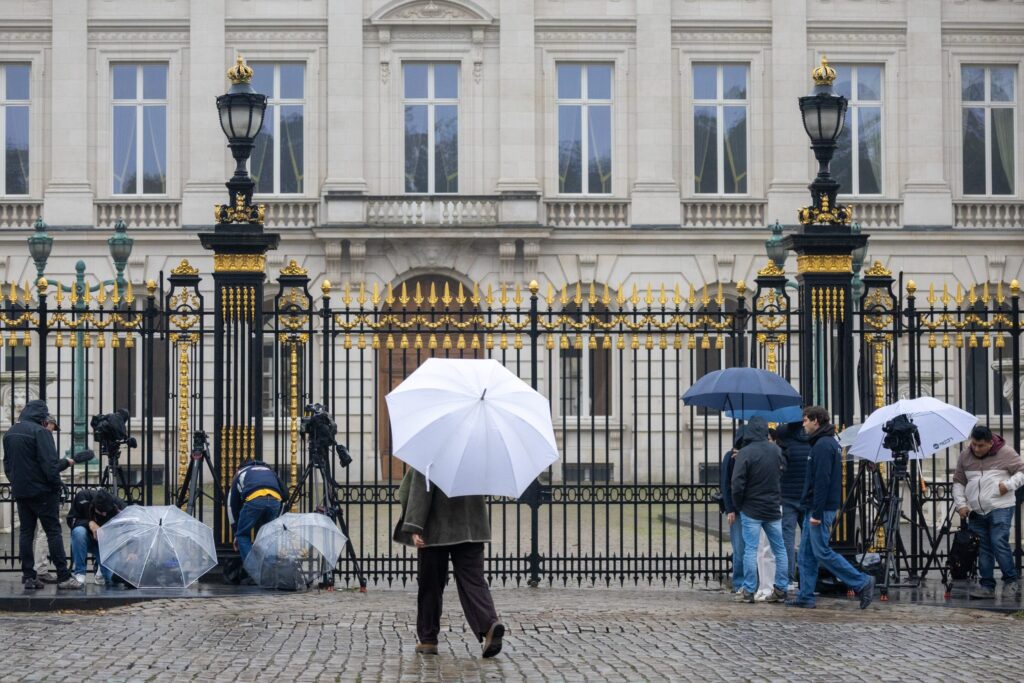
As Belgium’s Prime Minister Bart De Wever (N-VA) offered his resignation to King Philippe after he failed to lead his federal government to a budget agreement, it seems inevitable that the country will start 2027 with an “emergency budget.” What does that mean?
For about two months now, the government has been trying to find the €10 billion needed to prevent Belgium’s debt from spiralling out of control, but the governing parties have been unable to reach an agreement so far.
Talks broke down completely in the early hours of Monday, leading to De Wever’s offer to resign. While the king keeps De Wever’s resignation under consideration until Friday, he will be consulting with party leaders this week to assess the situation.
During these consultations, there seem to be no plans for the ministers to return to the table to negotiate further, VRT reports. It is said that De Wever is first waiting for the outcome of the king’s consultations before reconvening the government.
Six to eight weeks
Without a budget agreement, the federal government will have to work with an “emergency budget,” also known as “provisional twelfths,” for (early) 2027 – precisely what De Wever wanted to avoid at all costs.
“Given the seriousness of the budgetary situation and developments on the financial markets, a scenario involving provisional twelfths is not an option,” he stated less than a month ago.
However, the longer it takes for an agreement to be reached, the more likely a repeat of this scenario becomes.
As it takes six to eight weeks for a budget to be approved by the federal parliament, the chances of a full budget being approved this year are dwindling – especially when taking into account the end-of-year holidays.
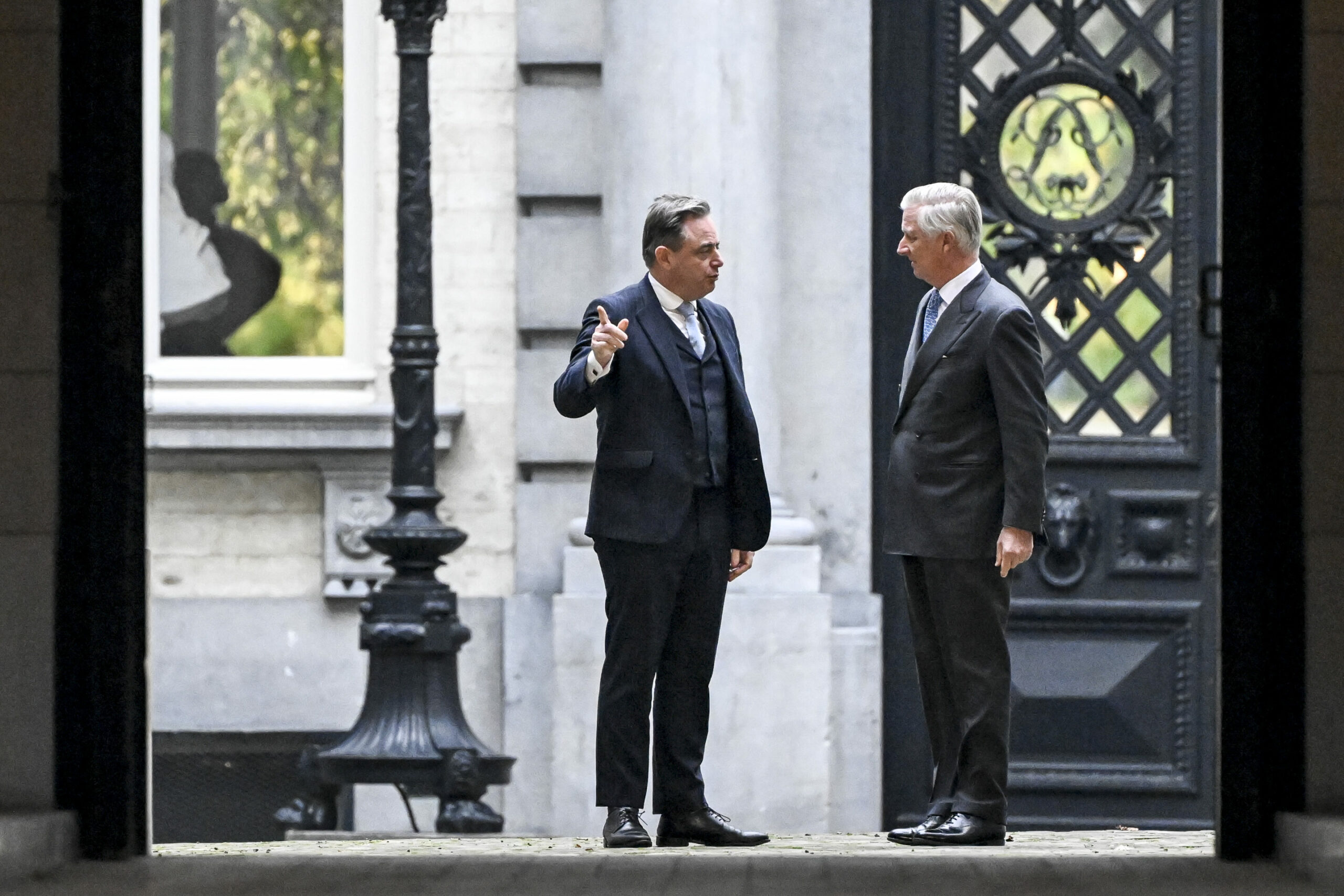
N-VA leader Bart De Wever and King Philippe after a meeting at the Royal Palace, Tuesday 12 November 2024. Credit: Belga / Dirk Waem
Without a full budget agreement, a system of provisional twelfths is put in place. This means that each month, no more than one-twelfth of the previous year’s expenditure can be spent. At this point, avoiding this scenario seems next-to-impossible.
At the start of this year, an emergency budget was in place for three months as well, after the federal government only managed to find a budget deal at the end of November 2025.
Last year, the ministers only found an agreement after De Wever also headed to the king, asking him to extend the deadline. After the royal visit, an agreement was found within weeks.
“Does this same last-ditch measure now increase the pressure this time, or mainly the sense of déjà vu?” said political scientist Dave Sinardet (VUB). “Either way, the financial threat should be sufficient.”
Snowball of compounding interest
At 5.2% of GDP, Belgium’s deficit is the highest in the eurozone – with the debt rising to over 110% of GDP this year. Across the eurozone, only France (116%), Italy (137%) and Greece (146%) have a higher relative debt.
In early October, the National Bank of Belgium and the Debt Agency warned the federal government that the threat of a snowballing interest rate crisis is imminent. This means that the country would have to borrow money to pay the interest on its debt.
This, the warning said, could begin as early as 2029, or perhaps even 2028. Belgian interest rates have been on the rise for weeks now.
