
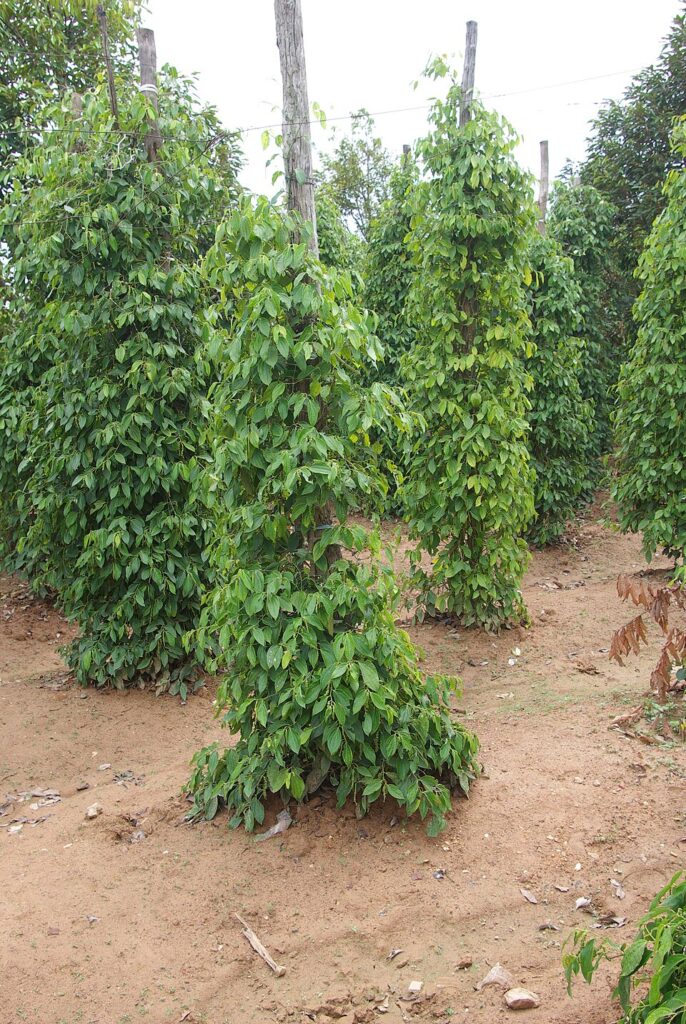
A French-Belgian couple who left careers in IT to settle in Cambodia now run one of the country’s leading pepper producers, exporting Kampot pepper and other spices to more than 40 countries.
Nathalie Chaboche of France and her Belgian husband, Guy Porré, say their journey began 13 years ago, far from the plantations of southern Cambodia. At the time, both worked in IT between Paris, London and Brussels.
After selling their stakes in a company in the sector, they decided to change direction. They say they wanted to build a project with a strong social impact.
They arrived in Cambodia as tourists in 2013 and discovered Kampot, a rural coastal region framed by the Bokor mountains. During a visit to a local producer, they had what they describe as a moment of revelation and decided to go into pepper farming.
Their venture, named La Plantation, began despite the couple having no agricultural experience. Kampot pepper, once a thriving crop, had declined sharply during decades of war before gradually recovering, and it now holds protected geographical indication status.
The first plants went into the ground in 2013, with the first harvests only coming three years later. Today, the pepper vines climb around 22,000 supports across about 30 hectares.
The farm employs nearly 200 people and also works with about 150 small family farms. Certified organic and Fairtrade, the company says it wants more of the added value from Cambodian pepper to remain in the country rather than be sent to Vietnam for processing.
“Our idea is really to keep the added value in Cambodia and to do the processing here,” the entrepreneurs say.
The couple have built much of their business around the distinct flavours of different peppers. Black pepper is said to carry notes of eucalyptus, red pepper leans more towards ripe fruit and tobacco, while white pepper, whose outer layer is removed after soaking, develops hints of fresh grass and citrus.
They have also created a salted pepper of their own. Picked young, before its core fully forms, the grain stays tender and almost hollow, producing what Nathalie Chaboche describes as an “explosion of flavours” in the mouth.
Their enthusiasm extends well beyond the farm. Guy Porré says they always keep three or four pepper mills on the table at lunch so they can match black, red or white pepper to different dishes, and even take their own mill with them when dining out.
La Plantation has since expanded beyond pepper into turmeric, ginger, galangal, lemongrass, cinnamon and cardamom. The company also sells dried fruit, cashew nuts, herbal infusions, sauces and condiments.
The business says it now handles just over 100 tonnes of pepper a year from several regions of Cambodia and estimates that it accounts for about 40% of Kampot pepper production.
Belgium is among its export markets, with products sold in Brussels at Rob, through Le Comptoir Africain and at about 30 other outlets. In France, the couple say their products are stocked by around 400 delicatessens.
Overall, the company exports to more than 40 countries across Europe, North America, Asia and Australia.
In Kampot, the farm has also become a tourist attraction, drawing tens of thousands of visitors each year. Over time, La Plantation’s products have also won several international awards.
