
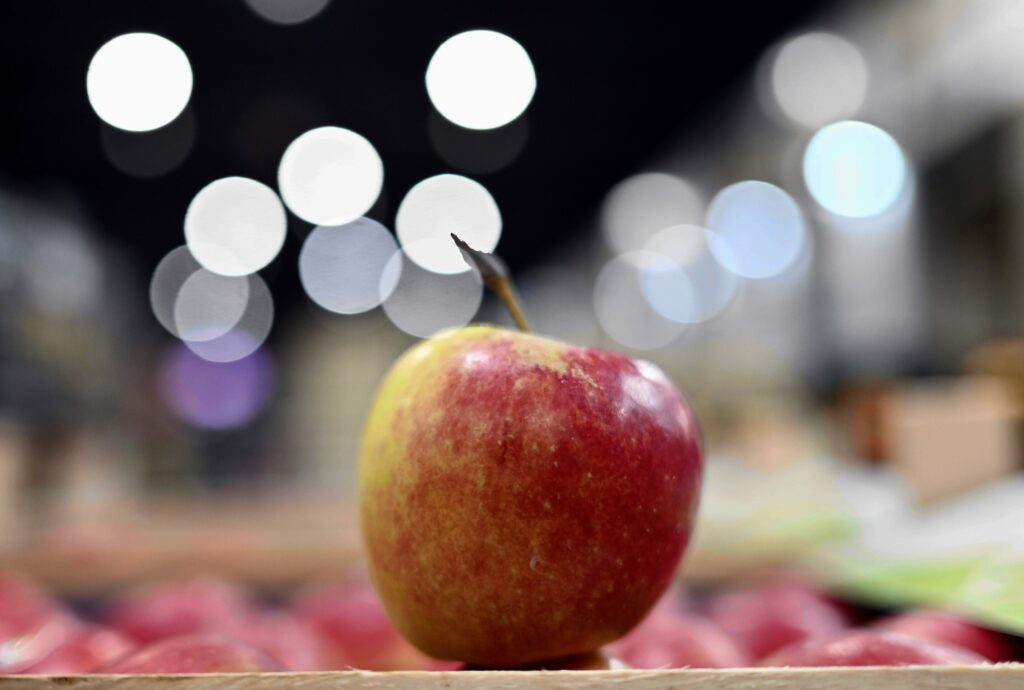
A couple hundred years ago, a wise Welsh lady told her complaining children: “Eat an apple on going to bed / And you’ll keep the doctor from earning his bread.” The saying became a Welsh legend, right there with their red dragon.
Not only was it immortalised, but it travelled far and wide. And so, all these years later, here we are, with one of the questions I get asked most: is it true that an apple a day keeps the doctor away?
The proverb has recently taken the fancy of scientists and researchers, who are beginning to discover that there may be more truth in folklore than we give it credit for. They have started putting the old apple wisdom to the test and we await the concrete results.
In the meantime, if we had to turn to the Welsh lady for advice, I’m sure she’d gives us a wink and say: “Beth sy gen ti i’w golli?” What have you got to lose? I say, nothing. Let’s assume it’s true.
And one reason the apple may deserve some of its good reputation is that apples are very, very generous with fibre.
Fibre is the part of vegetable and plants that our bodies cannot fully digest. So much of it passes into the large intestine (our poo storage container) where it adds bulk to stools and helps them move through the bowel.
I’m sorry for being graphic, but if you have a tendency for constipation, apples are your friends. Especially because they have a particularly interesting type of soluble fibre called pectin. Pectin is a traffic controller: it forms a gel in the gut and slows the digestion and absorption of carbohydrates, helping to keep the rise in blood sugar in a slow-drip rather style than a deluge.
That would be more than enough, but there’s even more.
Apples contain lots of polyphenols. Polyphenols aren’t vitamins, and they’re not nutrients that you need in a particular daily dose (so you won’t find them on the supplements rack at Holland & Barrett). They are part of the enormous chemical repertoire plants use to protect themselves, and they can be beneficial to us because our gut microbes go delirious for them.
Credit: Belga/Eric Lalmand
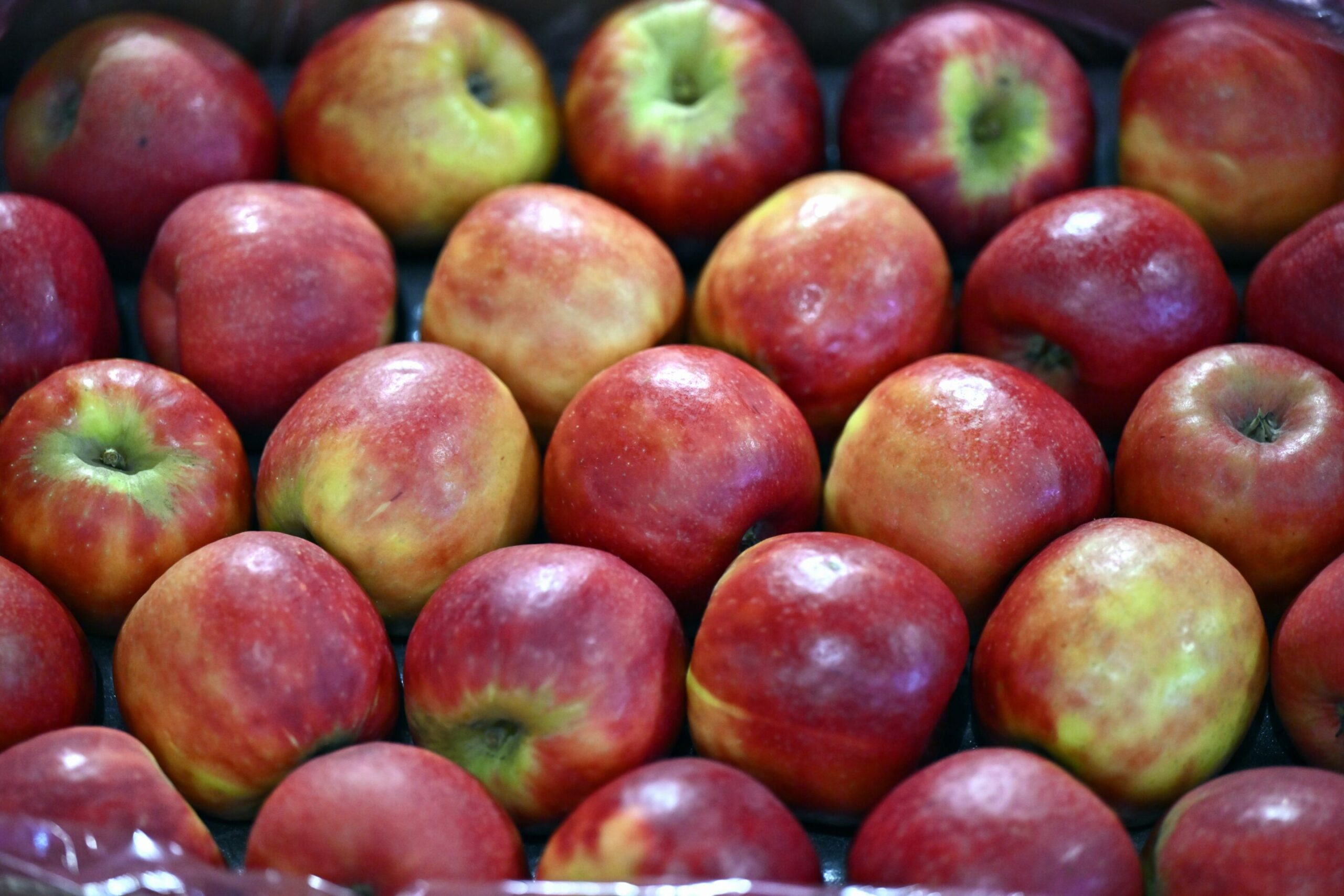
I always have this image of gut microbes queueing in an ice-cream shop, waiting their turn to see what’s on offer. “GUYS! It’s RED apple today!!” Which translates to: eat the apple with the skin on because it contains a particularly high concentration of polyphenols which makes our gut healthier.
There’s some other extras: apples also contain vitamin C, potassium and other micronutrients. Other vegetables contain more, but we’re not going to turn down freebies, are we? Oh, and we must not forget the water.
A raw apple is about 85% water, which means that a medium apple roughly contains 170 ml of water. So, you’re hydrating too, while chewing.
And because it’s a firm fruit, and we need to move our jaws quite a bit, we stimulate production of saliva, and saliva is important for protecting teeth and neutralising acids.
There’s only one caveat to apples. They don’t quite perform the same nutritious tricks if they’re squeezed into juice. We are now realising that the structure of the food matters. Keanu Reeves was right all along about The Matrix. When you eat a whole apple, you’re getting the whole package, with its fibre, polyphenols and physical structure intact.
It’s more favourable to our body’s metabolic health when the fibre matrix is broken down during juicing. Think Magritte. He always painted his apple muses whole.
In fact, think like him: ceci n’est pas une pomme. We see an apple, but my goodness, look at what’s hiding in there.
Which apple should we go for?
Where I come from, we mainly have to import our apples, and we tend to get only a handful of varieties: Marlene, Gala, Pink Lady and Granny Smith.
So you can imagine my joy when I first stepped into a Farm shop here and found a whole wall dedicated to different types of apples, with a little chart telling you how sweet, acidic and crunchy each one was.
Belle de Boskoop, Braeburn, Jonagold, Elstar. I was as delirious as my gut microbes! I mean, you can even have a degustation of apples! (Readers, if this is actually a thing, and there is an event somewhere in some orchard where you can sit down and taste your way through a dozen varieties of apples, please do write and let me know.)
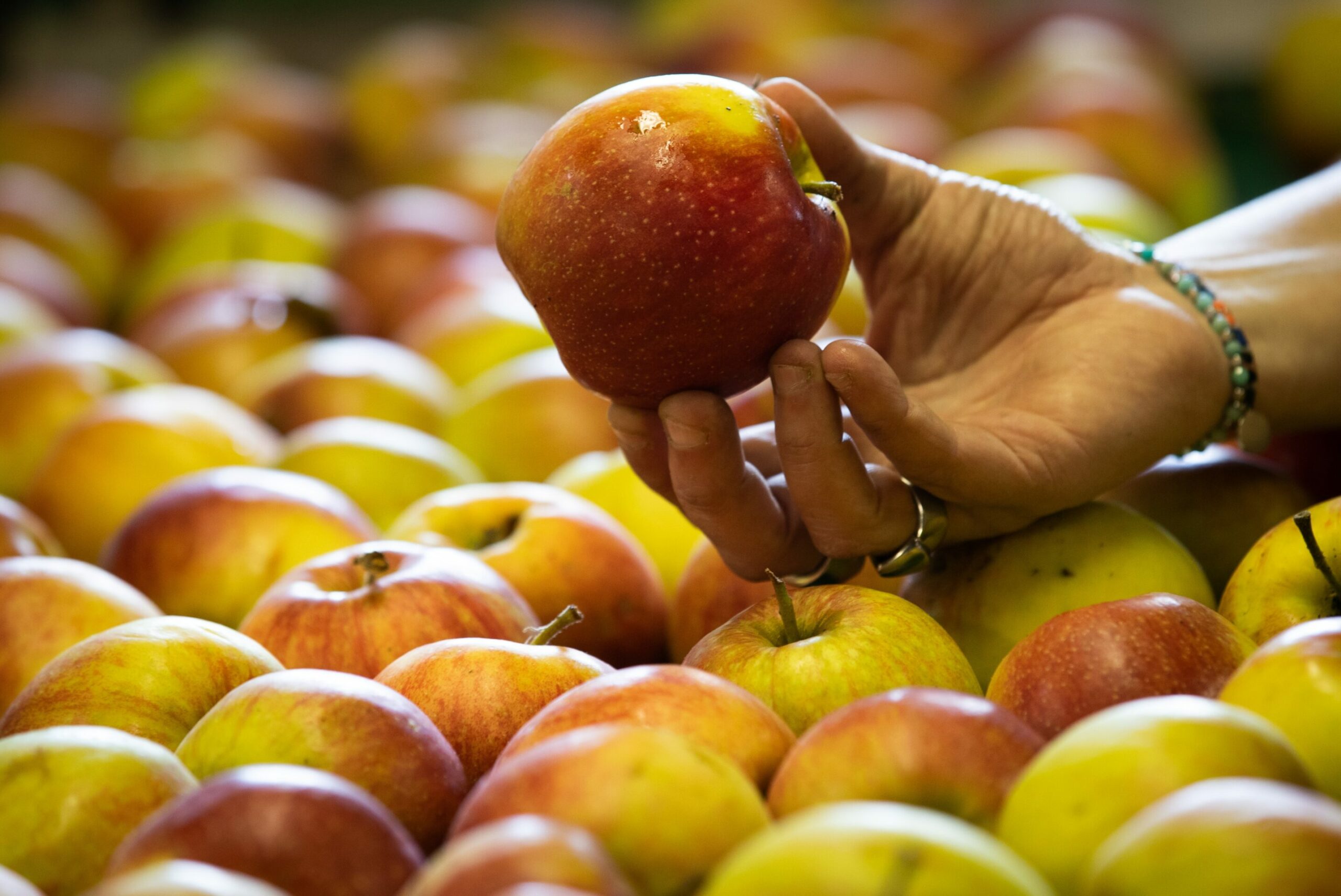
There are more than 7,500 apple varieties worldwide although we tend to see only a fraction of them in the shops (in Belgium, Jonagold is the reigning favourite; my personal favourite is the new kid on the block, the Juliet: sweet, juicy and crisp).
Credit: Belga/Benoit Doppagne
The reason they all taste so different isn’t simply the colour, it’s the genes. They influence everything from sweetness and acidity to firmness, aroma, juiciness and when the apple ripens.
Then of course, the soil, water, sunlight, temperature and weather all affect the chemistry, which is why even apples of the same variety can taste different depending on where and when they were grown. So, if someone tells you, ‘I don't like apples’, just go ahead and ask them: ‘Which one?’
Incidentally, it doesn’t matter if it’s blemished. Even if hail marks have left it failing to meet supermarket cosmetic standards, the nutrition hasn’t changed. We care about what’s inside, not the aesthetics.
In the end, the Welsh lady may not have known about polyphenols, pectin or the gut microbiome, but I suspect she knew a good apple when she saw one.
P.S.: I left the Adam-and-Eve-apple story out. If you care for it, visit the stained-glass windows of Brussels Cathedral of St Michael and St Gudula, it’s beautiful.
