
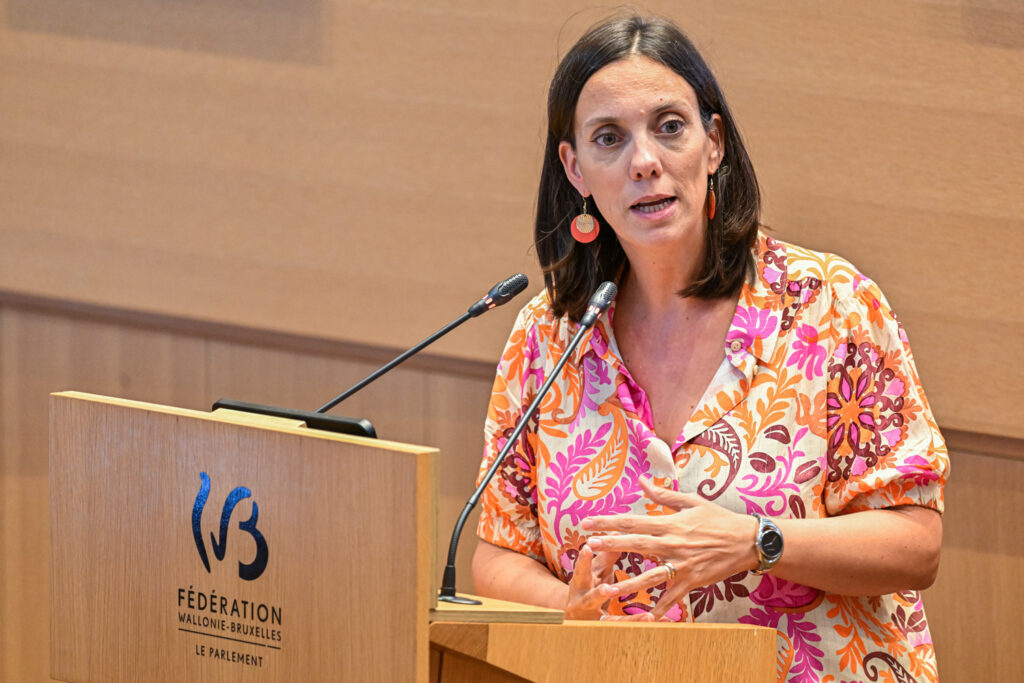
Media education, youth mobility and the place of the French language in artificial intelligence were among the priorities set out on Sunday by Élisabeth Degryse, Minister-President of the Wallonia-Brussels Federation, during the opening day of the 20th Francophonie Summit in Phnom Penh.
The summit is taking place under the banner of peace, but attention is also being drawn to tensions surrounding Monday’s election of the organisation’s next leader.
The Wallonia-Brussels Federation holds a distinctive position within the International Organisation of La Francophonie. Like Belgium, it is a full member and can therefore directly promote issues that fall within its remit, including media education, culture and teaching.
Related News
- Calls for a 'French-speaking federalisation' of Belgium: What does it mean?
- Bilingual Ottawa, bilingual Brussels: same challenges?
- Lost in translation? Why Dutch-speakers still feel out of place in Brussels
It also plays a significant financial role within the organisation. Its statutory contribution amounts to just over €4 million, making it the third-largest contributor after France and Canada.
At federal level, Deputy Prime Minister and Foreign Minister Maxime Prévot had also been due to represent Belgium in Phnom Penh. However, he was forced to cancel the trip because of budget negotiations in Brussels, with Belgium’s ambassador to Bangkok taking over on the ground.
After the opening ceremony, delegations took part in a round-table discussion on the summit theme, “Reinvesting in peace for shared prosperity and lasting stability.”
Speaking on the sidelines of the meeting, Ms Degryse stressed the importance of media and digital education. She said a proper understanding of algorithms and access to high-quality information, particularly for young people, were essential.
Youth mobility across the Francophone world is another of her priorities. She said young people should have the opportunity to travel, experience other countries, cultures and ways of working.
In her view, such mobility is also a key driver for the economy across La Francophonie.
Another major issue is the place of French in the digital sphere. With English overwhelmingly dominant in AI tools, Ms Degryse said there must be enough French-language content to feed these technologies and safeguard linguistic diversity.
Against the backdrop of crises affecting several member states, she also argued that the OIF retains an important diplomatic role. In her view, the organisation helps keep dialogue open between political leaders and can bring positions closer on some international issues.
La Francophonie is not limited to defending the French language. The OIF, which brings together 90 states and governments, is also active in education, culture, digital affairs, democracy, development co-operation, crisis prevention and peacebuilding.
In Phnom Penh, however, another issue is now commanding much of the attention. Heads of state and government are due to elect the next Secretary-General of the OIF on Monday in a closed-door vote expected to be highly contested.
Asked about the Wallonia-Brussels Federation’s position in that election, Ms Degryse declined to comment at this stage.
