
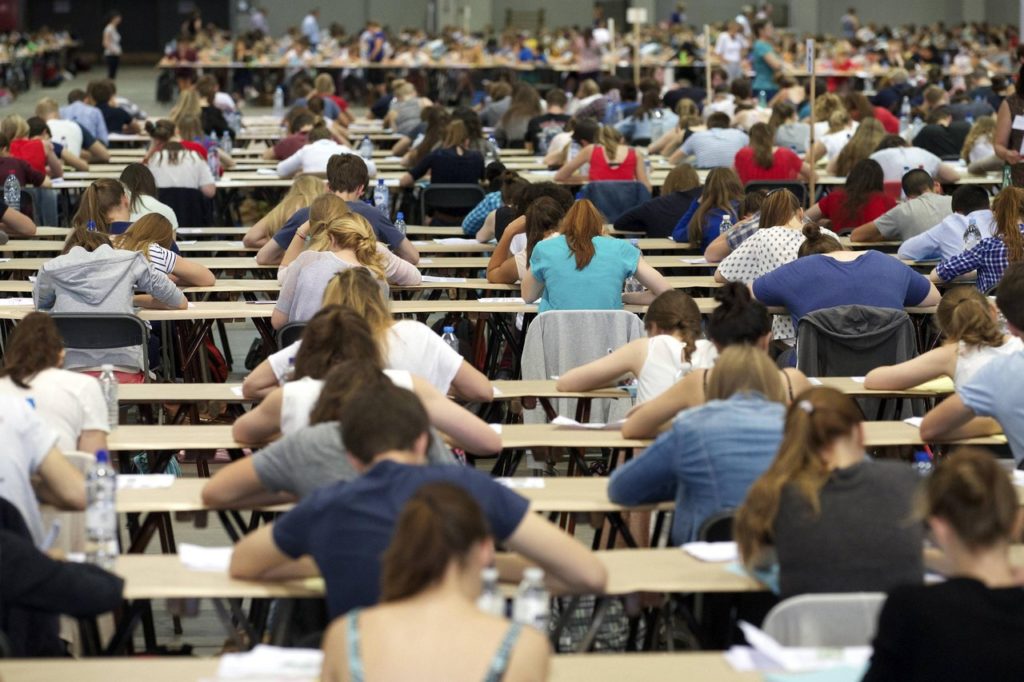
From 2028, candidates for medicine, dentistry and veterinary medicine in Flanders will sit a single admission exam on the same day and will immediately see their place in the ranking.
The Flemish government approved the reform on Friday in a policy note by Education Minister Zuhal Demir. The changes follow a thorough review of the admission exam after it came under pressure in 2025 over possible fraud involving AI.
Under the new system, applicants for the three courses will no longer take separate exams. Instead, they will sit one joint test and must indicate in advance their first, second and third study preferences.
Related News
- Boris of Brussels: The new minister-president on expats, locals, and the city's identity crisis
- Teenagers in Belgium most likely to grow up in workless households in EU
- Rejected for being ‘too old’ or wearing a headscarf: Discrimination on Brussels’ job market persists
The way results are assessed will also change. There will no longer be a separate pass mark; instead, all candidates will be ranked, with science carrying the greatest weight.
The exam will also place greater emphasis on both academic and interpersonal skills. These, including empathy and communication, will be tested in a more targeted way.
By removing the separate pass threshold, the government aims to end the current situation in which students can technically pass without securing a place. In 2025, for example, more than 2,600 candidates passed the medicine exam, but only 1,741 places were available.
In future, all participants will be ranked from highest to lowest score. Only those who finish within the number of available places will be allowed to start the course, and every candidate will be able to see their final position.
The exam will still consist of two parts, one in the morning and one in the afternoon. The first section will cover biology, chemistry, physics and mathematics.
According to the review, candidates who perform well in that section also tend to do well during their studies. For that reason, it will count most heavily in the final ranking, Demir’s office said.
The second section will assess academic and social skills, such as empathy and communication. The minister said research had shown these abilities could be measured better, and a university working group is redesigning that part of the exam based on successful models used abroad.
Demir is now working on the reform with the examination board, the universities and the education ministry. The authorities will also examine what changes can already be introduced for the 2027 exam, ahead of the full rollout in 2028.
“An exam that determines so many futures should not be reviewed once every ten years, but every year,” Demir said. “That is why independent researchers will monitor it continuously from now on. This will allow us to see in time what can be improved, instead of waiting for something to go wrong.”
Flemish Minister-President Matthias Diependaele also welcomed the changes. He said the aim was to ensure that students choosing medicine, dentistry or veterinary medicine are properly prepared to begin their studies.
He said the reformed exam, due to take effect from the 2028-2029 academic year, would bring one common test on a single day, a more transparent ranking system and a strong focus on the knowledge and skills needed for the courses. “Less complexity, more clarity and more efficient organisation,” he said.
