
Kristina Chetcuti, a registered health coach (UKIHCA) specialising in behaviour change and lifestyle medicine (ELMO), answers your lifestyle dilemmas.
Q. "Dear Kristina, is there anything I can do to get rid of this stubborn little roll of flab around my lower belly? My BMI and waist-to-height ratio are both within the healthy range. I eat quite healthily and exercise regularly: I cycle to work every day, run three times a week, do one strength-training session a week and get some seven hours of sleep a night. Is this belly fold the result of an eight-hour sedentary job? What can I do about it?”
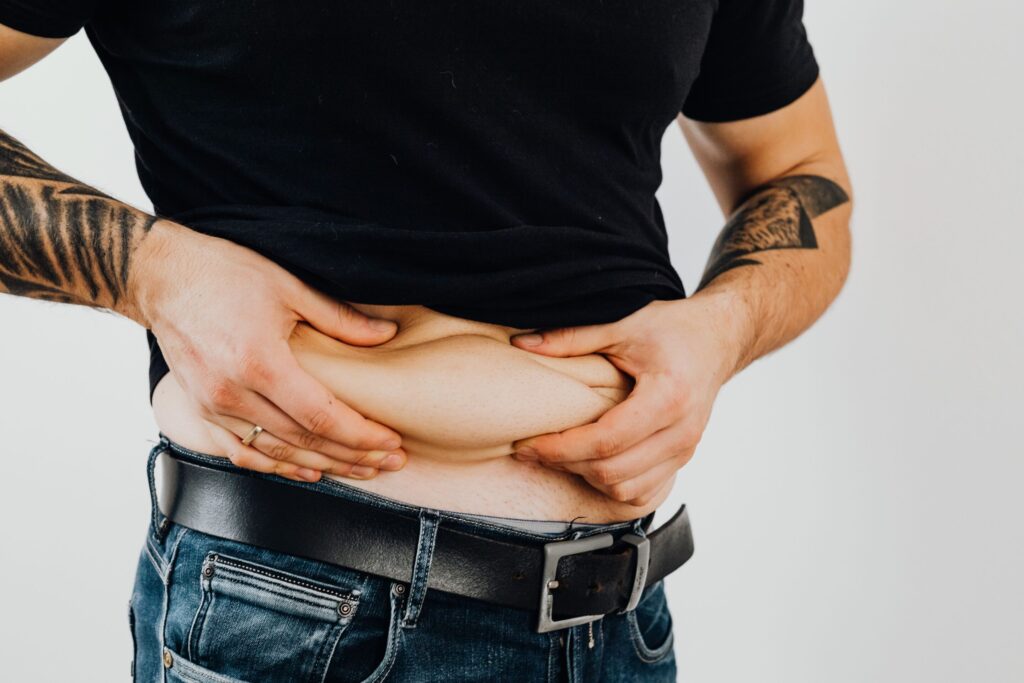
A. This ‘flab’ you are describing can be several different things, and each calls for a different approach. Your question is, therefore, a good opportunity for us all to lift our shirts and have a look at our bellies. Normalement not outdoors or you'll catch your death of cold in this freezing spell.
Right, everyone, eyes down and let's have a closer look at the area below our belly buttons. Is the abdomen protruding and relatively firm? Does it look smooth, with no obvious folds, and is there very little you can pinch between your fingers?
These features can be associated with visceral fat, which is stored deep inside the abdomen, around the internal organs. This type of fat can be particularly harmful because it is associated with a higher risk of type 2 diabetes and cardiovascular disease. If you are worried about this, please speak to your GP.
But, good news: your description doesn't seem to fit this picture.
It could, instead, be loose skin. Does it look thin and wrinkly, with a texture rather like crepe paper? Does it look as though it's sagging when you stand? And, above all, does it feel like an empty envelope when you pinch it between your finger and thumb? If so, it could be excess skin left over from a time when you perhaps lost a significant amount of weight.
Or, it could simply be a natural distribution of subcutaneous fat. Shirts up once more. Is the ‘roll’ soft and easy to pinch? Does it feel smooth and cushiony? Then you're probably looking at a layer of fat stored just beneath your skin.
So, for one final check: stand relaxed and pinch the fold between your thumb and forefinger. Are you holding mostly skin, skin with a substantial layer of soft tissue underneath, or skin with a firmer layer beneath it?
From your description, and given that you mention in your email that you're a man in your early 50s, I suspect that this bothersome ‘flab’ is largely subcutaneous fat. If so, please be grateful for it. Subcutaneous fat is not simply a blobby layer of padding; it does quite a lot for us.
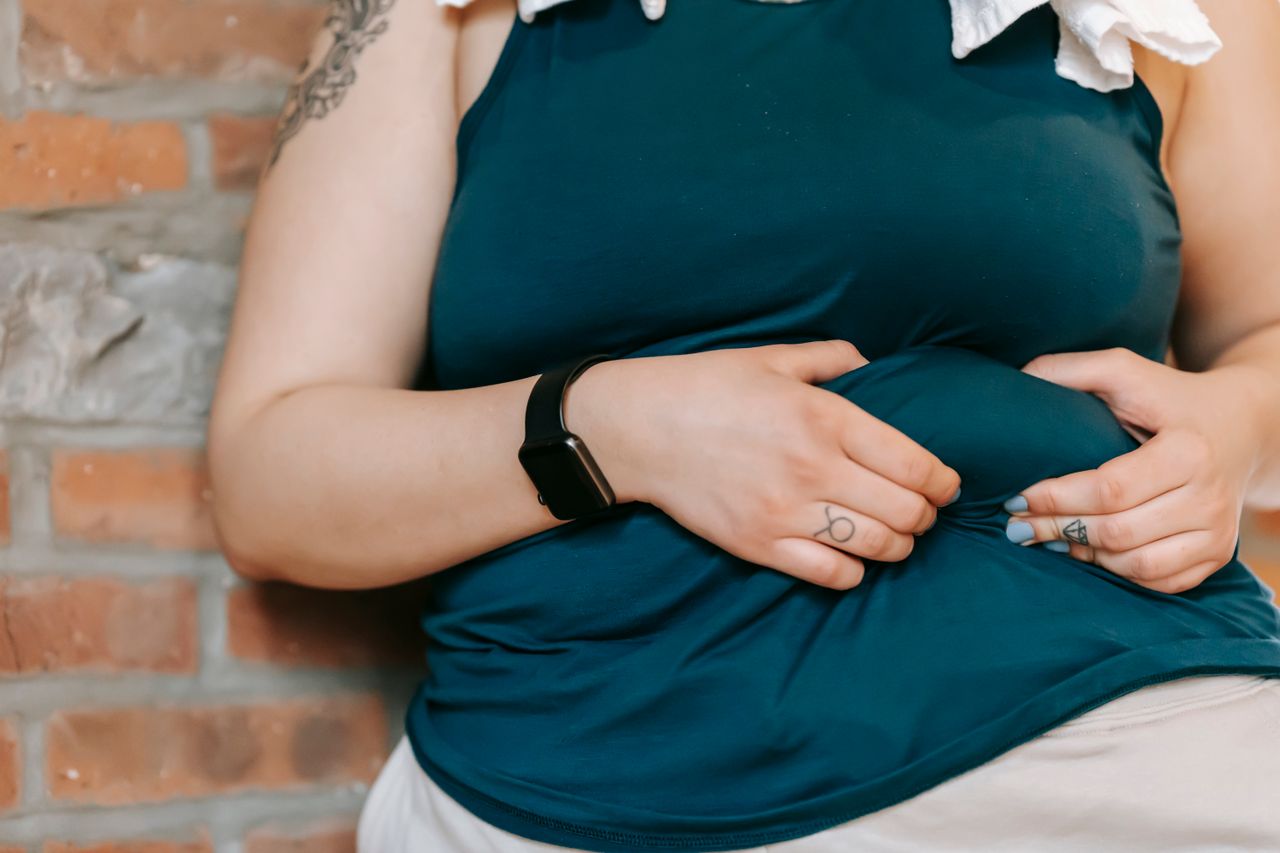
Keep in mind that for much of human history, food availability was very unpredictable. For this reason, our bodies cleverly evolved to store surplus energy in the layer of fat just beneath the skin which could then be tapped into when food was scarce. This reserve helped keep us going through (sometimes long) periods without food.
Credit: Pexels
Subcutaneous fat also provides thermal insulation, which is a blessing when temperatures in Belgium are hovering around -3°C. There are other perks: it provides a degree of cushioning, from say minor bumps (especially if, like me, you’re always knocking into furniture); and it releases important hormones such as leptin, which puts up the signpost when we’re full and we can stop eating.
Therefore, having some subcutaneous fat is not only perfectly normal, but also beneficial. Incidentally, men tend to store more of it around the abdomen, while pre-menopausal women typically accumulate it more around the hips, buttocks and thighs. After menopause, women tend to shift towards a more abdominal pattern of fat distribution (so very unfair).
Back to your ‘fold’. Should you be thinking about losing weight? I don't think so. Your BMI is within the healthy range. Even more useful here is your waist-to-height ratio. For the benefit of other readers, a useful rule of thumb is to keep your waist to less than half your height (to measure your waist, wrap a tape measure around your middle, halfway between your lowest rib and the top of your hip bone, keeping the tape snug but not pressing into your skin).
You might want to stop homing in on this little roll every time you look in the mirror. Sometimes we can become quite distorted in the way we see our own bodies.
Contrary to the parade of flat stomachs and sculpted physiques we see all over Instagram and TikTok, a healthy male body isn't supposed to consist entirely of muscle: little folds of subcutaneous fat are part and parcel of being human.
So next time you lift your shirt and catch sight of that fold, spare it a kind thought.
Despite all this, if you're still bothered by the little roll of flab, there are a couple of things you could consider adding to your already healthy lifestyle:
Food
Are you perhaps eating too little in an attempt to lose this flab? Actually, improving your body composition may be more useful than losing weight. Make sure you include adequate protein and fibre in your meals, and as far as life permits, limit ultra-processed foods and sugary drinks.
Also take a look at your alcohol intake because that can contribute to abdominal fat accumulation. Perhaps you would consider a four-week experiment sans l'alcool and see whether there'll be any change in the size of that fold?
Movement
You run and cycle consistently which is brilliant for cardiovascular fitness. Would you want to look at your strength training and maybe add another session so you prioritise building and maintaining muscle?
Also, you ask whether your sedentary office job could be responsible for the ‘fold’. Sitting doesn't create loose skin or subcutaneous fat but wrong posture can affect how the tissues around your lower abdomen sit, making an existing fold more noticeable.
More worryingly, prolonged sitting also means less muscle activity so it may be worth breaking up long periods of sitting at your desk by getting up, walking around or simply stretching your legs.
One final note: the look and feel of your abdomen can't reliably tell you what type of fat or tissue you're dealing with. If you're concerned about abdominal fat, or your health risks more generally, please speak to your GP.
