
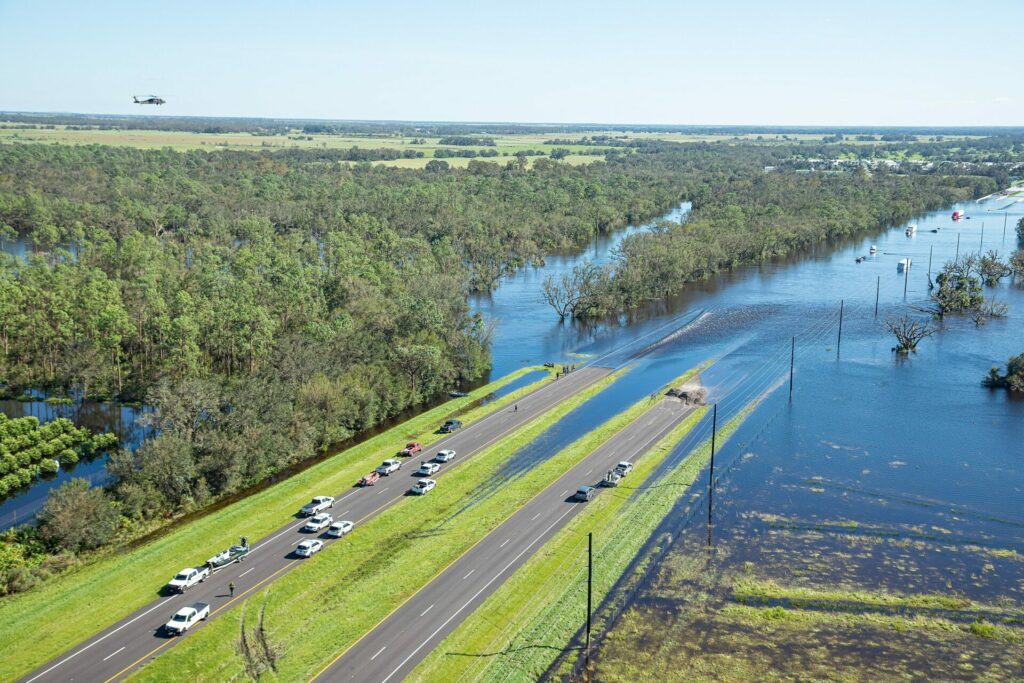
Natural disasters worldwide cost Swiss reinsurance giant Swiss Re $115 billion in the first 11 months of this year, with the effects of Hurricane Ian (which struck the southeast US in September) weighing heavily on the company’s finances, the group announced on Thursday.
Hurricane Ian was one of the most powerful storms to hit the US and Cuba, accounting for almost half of the company’s losses this year. Damages are estimated to amount to $50-65 billion, Swiss Re said in a press release. This would be the most expensive natural disaster since Hurricane Katrina in 2005.
“Hurricane Ian and other extreme weather events such as the winter storms in Europe, flooding in Australia and South Africa, as well as hailstorms in France and the US, resulted in an estimated $115 billion of natural catastrophe insured losses this year to date,” the company stated.
This is the second consecutive year in which total insured losses exceeded $100 billion. Over the course of the last ten years, average annual increases have amounted to 5-7%.
Related News
- EU grants Belgium €87 million in emergency aid in wake of floods
- Belgium frees up millions for climate damage in Mozambique
“Urban development, wealth accumulation in disaster-prone areas, inflation, and climate change are key factors at play, turning extreme weather into ever-rising natural catastrophe losses,” explained Martin Bertogg, Head of Catastrophe Perils at Swiss Re.
The expert noted that there had been an increase in the frequency of catastrophic events. “When Hurricane Andrew hit 30 years ago, a $20 billion loss event had never occurred before – now there have been seven such hurricanes in just the past six years.”
Other minor disasters, such as floods and storms, caused more than $50 billion in insured losses. Last year, heavy flooding which caused disaster across large parts of Belgium, Germany, the Netherlands, Luxembourg, and France caused around €38 billion in damages.
