
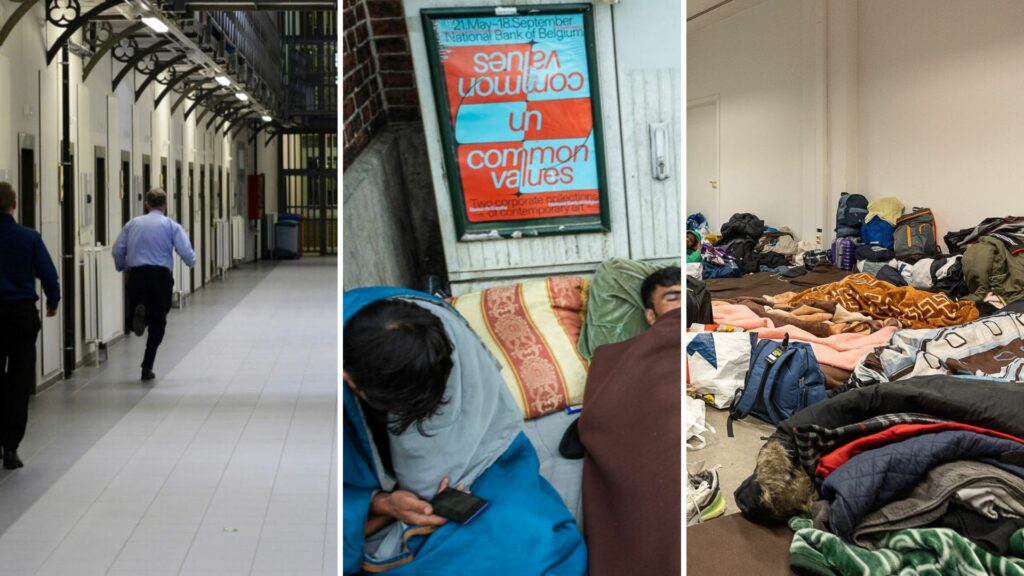
The Belgian authorities have again been criticised for their failures in terms of respecting human rights, specifically concerning the handling of the reception crisis that has been dragging on for 1.5 years now, but also for prison overcrowding and the structural discrimination against foreign nationals in the labour market.
An Amnesty International report is highly critical of Belgium's inability (and/or unwillingness) to provide asylum seekers with the shelter and guidance they are legally entitled to, as well as its inaction to solve this crisis, which already started in October 2021.
"The Belgian authorities continue to show themselves cruelly unworthy of the values they claim to uphold by leaving hundreds of asylum-seekers — including children — homeless and destitute, in total contradiction of their obligations regarding the right to asylum," said Philippe Hensmans, Director of Amnesty International's French-speaking Belgian section.
From people sleeping on a long line of mattresses in front of the reception centre in Brussels to minors and families with children left sleeping rough in the freezing cold, the report refers to a series of human rights abuses that have occurred in the country.
While Belgium's refugee agency and the State have faced thousands of convictions for failing to fulfil their responsibilities, even this level of legal action has not spurred any real changes. It is "high time that Belgium proved that respect for human rights is not an empty promise," said Hensmans.
Additionally, Amnesty also denounced the overcrowding in "dilapidated" prisons where detention conditions are described as "inhumane," the fact that the authorities sell weapons that are "likely to be used to commit serious violations of human rights and international humanitarian law," and the "direct and persistent" structural discrimination against people of foreign origin – in the labour and housing market, but also by the police.
What do you think? Let @Maajtee know.
Belgium in Brief is a free daily roundup of the top stories to get you through your coffee break conversations. To receive it straight to your inbox every day, sign up below:
1. A scandal in plain sight: the European Parliament's General Expenditure Allowance
An expert on EU malfeasance has condemned the complete lack of transparency surrounding MEPs' "General Expenditure Allowance" (GEA). Claiming that the €4,778 in monthly funds received by each MEP under the GEA feeds into a "broader culture of impunity" at the European Parliament which, in turn, is inseparably linked to the Qatargate corruption scandal. Read more.
2. From reception crisis to racism: Amnesty criticises Belgium's human rights record
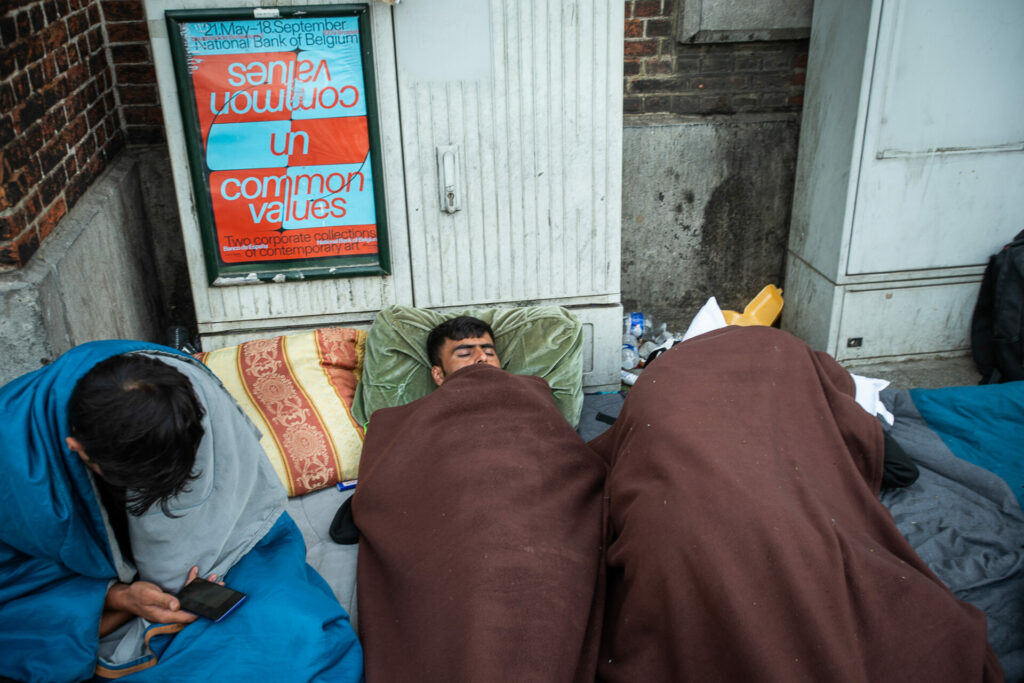
Amnesty International has criticised Belgium for its ongoing failures in the 1.5-year-long reception crisis, but also for prison overcrowding and the structural discrimination against foreign nationals in the labour market, in a report published by the NGO on Tuesday. Read more.
3. Schaerbeek's controversial Good Move plan has positive effect on public transport
Schaerbeek's Good Move plan was met with criticism followed by consecutive nights of protests first introduced. However, almost six months on, public transport operator STIB confirmed it has had a positive impact on travel times for buses and trams. Read more.
4. 'Deliberately cutting corners': Energy suppliers charge more fees for energy sharing
People in Belgium who want to share energy with a neighbour or family are reportedly not being allowed to do so for free. Five energy suppliers are already charging high administrative costs when they catch wind that a customer plans on sharing energy. Read more.
5. Belgium triumph in Germany for the first time since 1954
Belgium's Red Devils beat Germany 3-2 in Cologne on Tuesday evening, their first away victory over the European giants in over a century. Read more.
6. Today in History: Strike of 1886 ends, Belgium's first major worker revolt
On this day, 29 March 1886, the first major workers' revolt in industrial Belgium ended after 11 days of violent insurrection by factory workers. Also known as the Belgian strike of 1886, the revolt would change the country's history forever. Read more.
7. Hidden Belgium: De Achtersikkel
Turn down the Biezekapelstraat in Ghent and you are plunged into the distant period Barbara Tuchman called 'the calamitous 14th century'. The massive stone houses in this dark lane date from that violent period when wealthy families lived in houses that were built like fortresses. Read more.
