
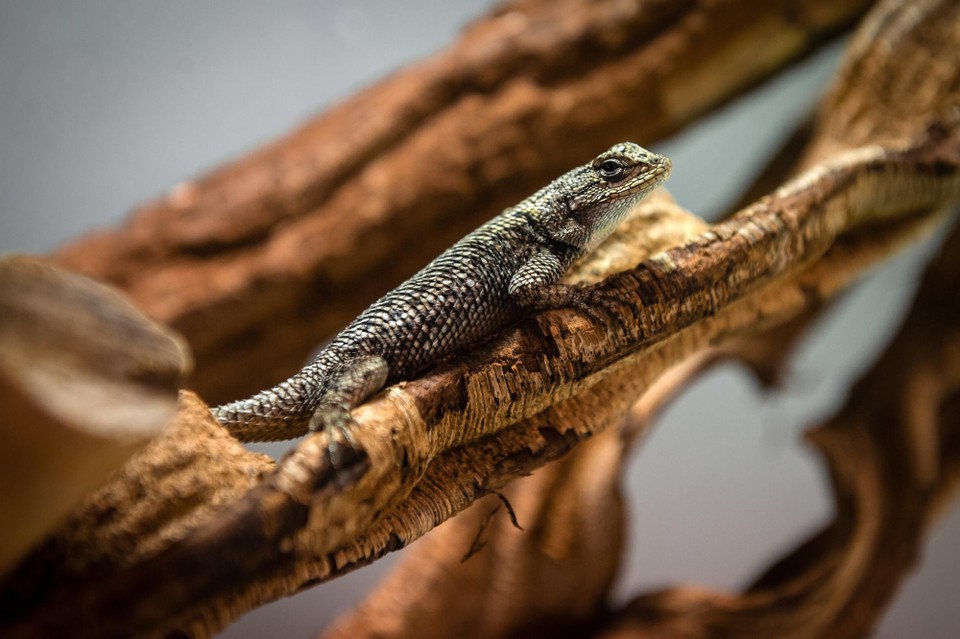
Six Guatemalan spiny-tailed iguanas were born in Antwerp Zoo on Thursday, the first time that the reptiles have ever been born in captivity anywhere in Europe.
"The birth of the six Guatemalan spiny-tailed iguanas is a special birth, because breeding these reptiles from Central America is not easy," a local zookeeper called Sam told Het Nieuwsblad.
The lizards will be kept in the maternity ward of the zoo's reptile building for the next few weeks, after which they will be made available for viewing by the general public. Fortunately, visitors keen on seeing the little creatures for themselves are unlikely to find it too difficult.
"The Guatemalan spiny-tailed iguanas like to show themselves, which is remarkable," Sam explained. "Other species of iguana typically hide under a rock, in rock crevices or in hollow logs for shelter."
A captivating creature
The lizards, which are endemic to the Motagua Valley in central Guatemala — one of the driest valleys in Central America — have a number of distinctive qualities which make them highly worthy of both scientific and popular interest.
One particularly striking feature is the fact that they are ovoviviparous: this means that the eggs from which the species' young hatch are located inside, rather than outside, the mother's body. This, in turn, entails that it is often extremely difficult to determine whether or not a female spiny-tailed iguana is actually expecting offspring.
"A big belly in the female indicates good news," Sam explained. "But otherwise her pregnancy is a well-kept secret. When the mother feels the little ones wriggling and rooting in her belly, she is ready to give birth. Just before birth, the movements of the young are already visible in the mother's abdomen."
Related News
Nevertheless, Sam noted that he has, in fact, recently become aware of the fact that another of the zoo's female Guatemalan spiny-tailed iguanas is set to give birth soon. "For the time being, there is still another pregnant female [which we have] separated from the rest to give birth to her young in peace. So we are expecting a few more little ones soon."
In addition to the problem of identifying the exact stage of the female's reproductive cycle, determining the sex of young spiny-tailed iguanas is also often extraordinarily difficult. Sam noted that this is due to the fact that the differences between males and females typically only become discernible once the animals reach maturity.
"They will only discolour as they get older," Sam explained. "Then you will really see what the sex of the animals is. Their colourful blue body and yellow head make the males easy to recognise. The females are less colourful, mostly silvery. I wonder when we will be able to see their true nature."
