
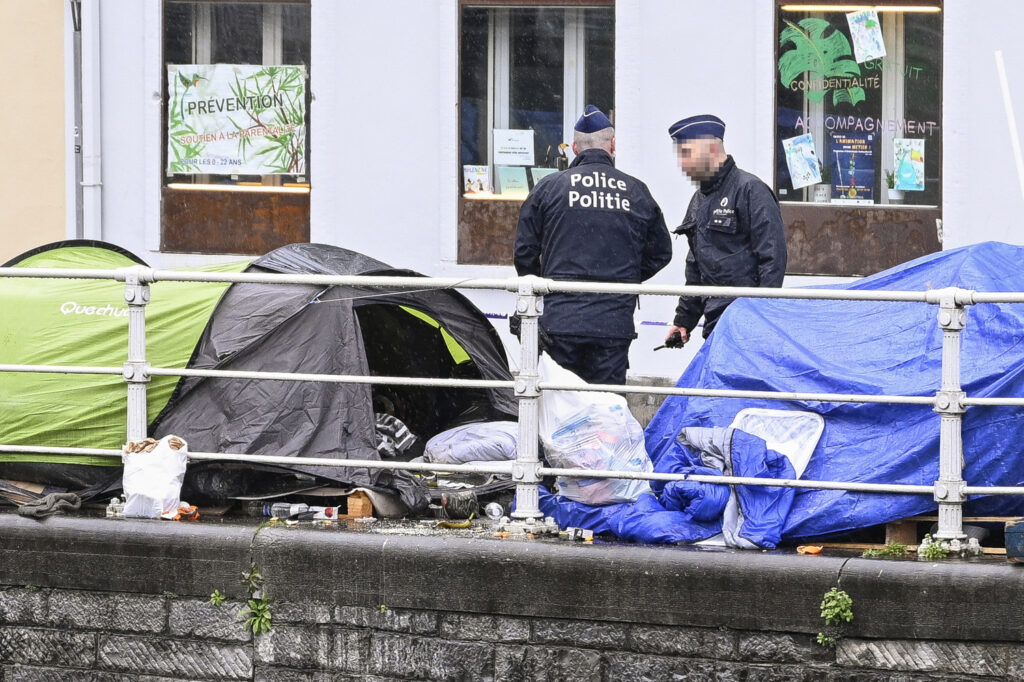
Last year, 6,434 reports of unaccompanied migrant children were registered in Belgium, marking a 30% increase compared to 2021.
This number has never been so high in Belgium, reported La Dernière Heure on Friday, citing an answer from Nicole de Moor (CD&V), Secretary of State for Asylum and Migration, to a parliamentary question.
A third of the alerts (specifically 2,200) concerned children between the ages of 11 and 15.
The Secretary of State claims that every unaccompanied child seeking international protection is housed in a suitable place at Fedasil, the government's asylum reception agency. "The current state of the network does not require the opening of new emergency centres for unaccompanied foreign minors," she said.
Less than a month ago, three municipalities in Brussels called on the government to take action on the high number of unaccompanied migrant children in the area around Gare du Midi.
Vulnerable boys of Magrebian origin aged 11 to 18 are reported to be living in the area. The president of the public social services centres (CPAS) explained at the time that the issue is being ignored, resulting in these children being increasingly socially marginalised.
These unhoused, unaccompanied migrant children are extremely vulnerable and at risk of developing mental health problems and addiction issues, as they lack a social environment at a crucial stage of development.
The Fedasil centres are not always suitable for children under 15, and many young people remain unhoused even after they are granted asylum.
As for migrant minors in transit, those who present themselves to Fedasil are "directed to an observation and orientation centre before being directed to a reception place," the Secretary of State added.
Refusal to comply
Belgium's reception of migrants and asylum-seekers is notoriously dysfunctional, with Fedasil having received more than 6,000 convictions for wrongful conduct since early 2022. These convictions often go ignored, and lawyers assisting asylum seekers report that the Federal Government refuses to comply with the law, leaving migrants to sleep on the street, including unaccompanied minors.
The humanitarian crisis at the borders of the EU shows no sign of subsiding. The first three months of 2023 were the deadliest for migrants crossing the Mediterranean since 2017. At least 441 people perished in what the International Organisation of Migration describes as the "world's most dangerous maritime crossing," due to decreased levels of state-led rescue missions, as well as deliberate moves to impede the rescue efforts of NGOs.
In light of this, migrant children often experience many traumatic events in their journey to arrive in countries like Belgium, and they often become unaccompanied due to the deaths of their guardians or forceful family separations carried out at the borders of the EU.
Related News
- 'Where is the action?': Politicians under fire for rights violations at EU's borders
- Almost 1,000 undocumented migrants sent back in first quarter
"The moment they arrive, they already have very long, tragic stories and complicated trajectories, and they are therefore already carrying a lot of weight their shoulders," Ilse Derluyn, UGent migration expert, explained to the Brussels Times earlier this year.
Through her research, Derluyn found that unaccompanied migrant children may have difficulties in forming relationships and placing their trust in adults. This trauma and mistrust stems from experiencing direct violence at the hands of border police or smugglers or from having other negative experiences with officials in reception centres, for example.
