
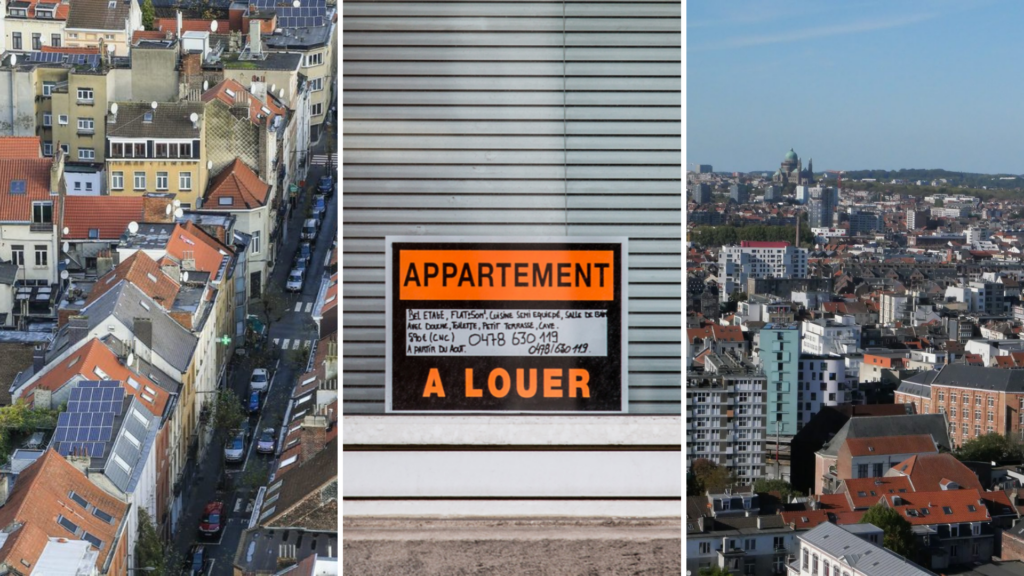
With the eyes of the world fixed on the Middle East and the grim turmoil unfolding, many in Brussels will have overlooked Saturday's significance for renters – who make up more than 60% of the capital's residents.
As inflation has chewed away at purchasing power over the past year, this group has been spared the most significant erosion of disposable income by a limit that prevented rent indexation for properties without sufficient energy efficiency certificates. Introduced 14 October 2022, the measure represented a major safeguard against what in most cases would be the biggest hit to personal finances.
The protection in Brussels followed similar legislation in the other regions, which also lasted only one year despite ardent campaigning for an extension from tenants' associations. Prolonging the indexation freeze was not without political support, most notably from the region's Secretary of State for Housing.
But MPs were divided on the matter and the ordinance has now expired, leaving many renters liable to face a substantial increase in housing costs. It is not yet clear whether new limits will be brought in to shield against last year's indexations being recuperated by even higher increases now or retroactive demands from landlords. There are fears that without such assurances, indexation arrears could add up to massive debts.
The failure to implement lasting regulations on rents in the capital will be a widely felt disappointment as the city's rental commission already noted a 20% rise in rent prices from 2004–2018. This was without including indexation. On the question of more structural rent controls in Brussels, regional authorities argue that the majority of stakeholders in the rental market have pushed against legal price caps. No surprise.
However, the argument against imposing limits on rents is primarily that it would discourage property owners from investing in their buildings, or could hit the region's construction sector. Yet this was precisely where the expired indexation freeze delivered, serving as a lever for the city's housing stock to be improved. The efficiency gains would greatly reduce greenhouse gas emissions and benefit the economy in carrying out the work.
In this context, can Belgium afford not to continue the indexation limits? Let @Orlando_tbt know.
Belgium in Brief is a free daily roundup of the top stories to get you through your coffee break conversations. To receive it straight to your inbox every day, sign up below:
1. End of Brussels rent indexation limits condemned by housing group
The Housing Platform, which brings together a number of associations and trade unions including the CSC and the FGTB, rallied in Brussels on Friday to condemn the end of the measure limiting the indexation of rents for energy-inefficient housing. Read more.
2. 'Serious savings still required': Brussels suffers drastic budget cut

The Brussels-Capital Region Government has agreed to make substantial cuts in next year's budget, with local ministers warning that the city should prepare for even more serious belt-tightening over the next few years. Read more.
3. Belgian inventions that changed the course of history
How many globally renowned objects were invented in little, old Belgium? You may be surprised. Read more.
4. Remarkable surge in European real estate prices
In a much-anticipated release, Eurostat, the European statistical office, has offered a glimpse into the European real estate landscape for the second quarter of 2023, and the findings are nothing short of remarkable when compared to the situation back in 2010. Read more.
5. Palais de Justice facade renovation works finally begin on Monday
The much-anticipated maintenance works on the facade of the Palais de Justice in Brussels began on Monday, 140 years after the initial opening of the courthouse. Read more.
6. 'Belgian democracy is in terrible danger', warns former Qatargate judge
The Belgian judge who formerly presided over the Qatargate corruption probe has claimed that widespread corruption has put his country's democratic system in "terrible danger". Read more.
7. Half of e-scooter users ride with multiple people on the same vehicle
Despite the practice having been banned since 1 July 2022, half of electric scooter users continue to ride with multiple people at least once a month, a European survey on road users' attitudes (ESRA) by road safety institute Vias revealed on Monday. Read more.
