
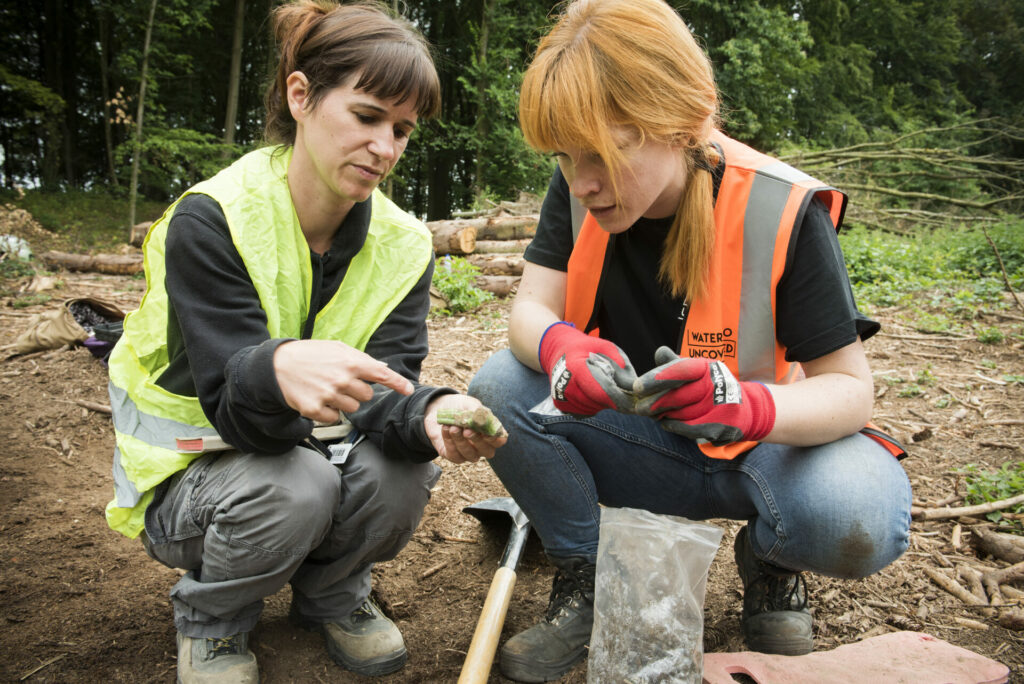
Historic artefacts discovered on the battlefield of Waterloo – scene of Napoleon’s final defeat – will be on show this weekend at an exhibition in London.
The objects, ranging from musket balls to uniform buttons, were excavated during digs over the past decade by Waterloo Uncovered, a Belgium-based charity working with military veterans from the UK, Belgium, the Netherlands, Germany and the United States, together with professional archaeologists.
Carried out with the support of the Walloon Heritage Agency, the excavations took place at key locations in the battle, such as Hougoumont, where British Guards famously closed the North Gate, and Mont-Saint-Jean Farm, the site of Wellington’s field hospital, where surgeons carried out hundreds of amputations without anaesthetic.
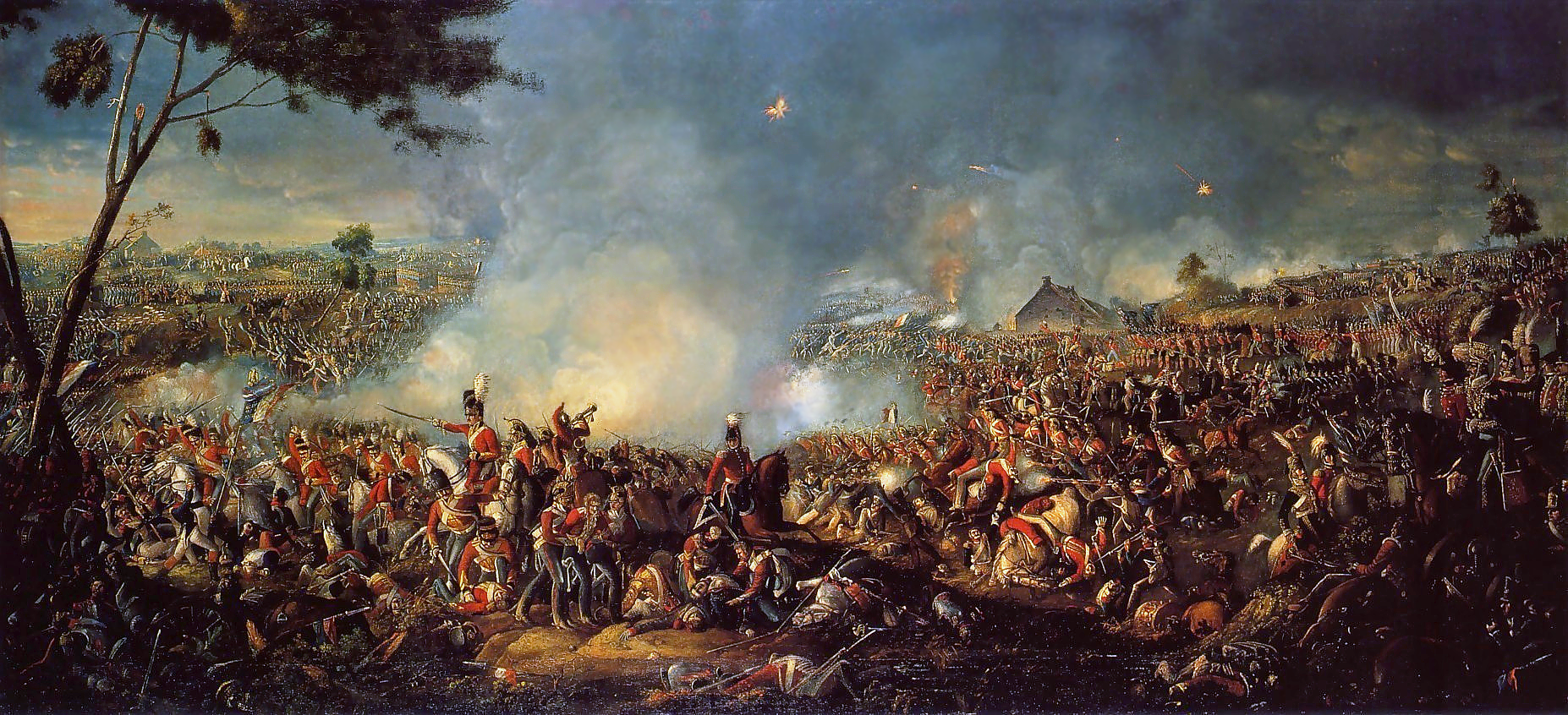
The Battle of Waterloo, 1815 by William Sadler (1782–1839).
The free exhibition is taking place at the Royal Hospital Chelsea, which has served as a retirement home for veterans since 1692. The venue is particularly fitting: Wellington commissioned a painting of the Chelsea Pensioners, famed for their iconic scarlet tunics, reading his report of the battle, the Waterloo Dispatch, after the allied victory on 18 June 1815.
During the exhibition, entitled ‘Life of a Waterloo Soldier’, modern-day veterans, who receive wellbeing support from Waterloo Uncovered after combat trauma, tell the story of their counterparts from 210 years ago.
They selected the artefacts on show from the charity’s archaeological collection, which includes hundreds of objects.
Abigail Boyle, chief executive of Waterloo Uncovered, said: “Through the insights of our veteran beneficiaries, we are able to bring alive the story of the Waterloo soldier. But, equally important, the exhibition will demonstrate the power of archaeology for veteran wellbeing and recovery.”
Chelsea Pensioner Michael Vowles, a Royal Artillery veteran, said: "I’ve really enjoyed understanding how these objects can each provide little insights into what it was like to be a solider during the battle."
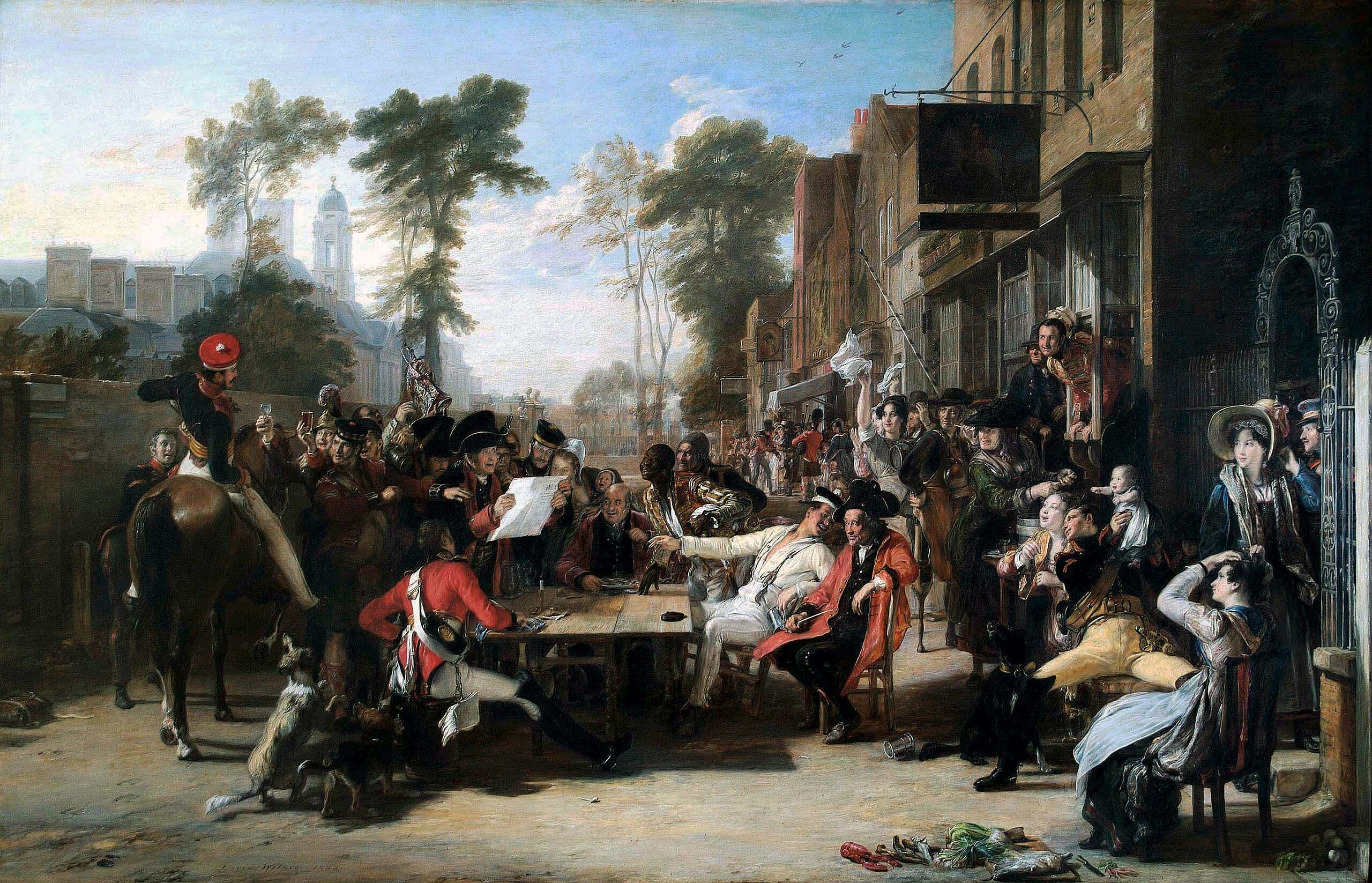
David Wilkie's painting of Chelsea Pensioners Reading the Waterloo Dispatch
Recent digs on the battlefield have also uncovered human remains, which have been undergoing tests by noted Belgian forensic pathologist Philippe Boxho at the University of Liège and Caroline Laforest, an osteoarchaeologist at the Royal Belgian Institute of Natural Sciences in Brussels, with the aim of discovering more about the men who fought and died.
More than 10,000 soldiers lost their lives during the battle, and 20,000 horses were killed or severely maimed. The dead were stripped and often had their teeth removed (Waterloo teeth” or “hero’s teeth” were sold for dentures for decades after), before being dumped in mass burial pits or burnt on pyres.
Evidence suggests that many bones were later exhumed and ground down to be sold as agricultural fertiliser or used to whiten sugar.
The exhibition is open to the public on Saturday and Sunday (29-30 November), from 10.00am-4.30pm. Location: Soane Stable Yard, Royal Hospital Chelsea, London SW3 4SR.
