
Among the array of feature and short films that this year's edition of Film Fest Gent presented, another medium managed to stand out: VR movies.
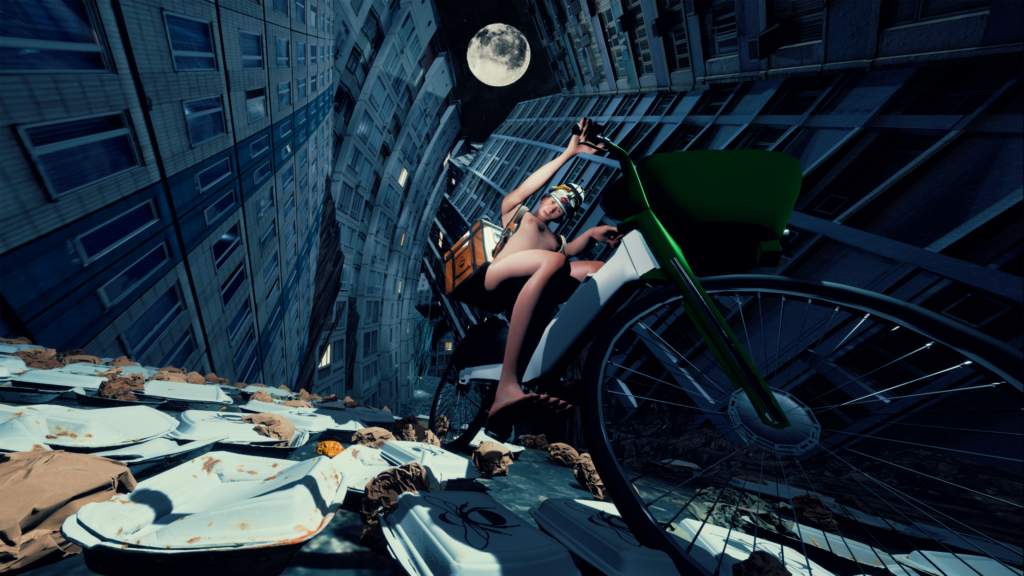
Honeyboys was one of the two VR movies shown at the 53rd edition of the festival. It debuted at the Venice Film Festival in 2026. The story is about a journey in an apocalyptic world, which the creators call a “machine,” alongside a naked ginger delivery driver, exploring several themes, such as the modern-day consumer society.
The movie, directed by Tibor de Jong, with animation by Doris Konings and music by Erik de Jong, was partially funded by the Flemish Audiovisual Fund.
It all started with a lockdown in China
Honeyboys directly critiques the consumption society of today, a theme which serves as the core of the film. Tibor sees the Covid-19 lockdown, particularly in China, and the gig economy created as a result of that, as the “seed” for the project.
When starting this movie, Tibor felt that it was important to look at his part in this consumption economy, and used that as inspiration. “In all the things I do, it is partly a reflection of the world. But I also like to hold up a mirror to myself in it,” the director said, “Who am I really? Where do I stand? What is my place in that world?”
De Jong feels like he has inevitably become a part of this world, because of his place in society. “You let those delivery people come without thinking about it."
To coincide with the consumption theme, De Jong and his team also tackled the idea of a layered society, which they portray on a small scale in Honeyboys. “The entire world system of all audible things. That actually exists only for us on the very top part,” he said.
Iconography
Iconography is one of the most important parts of visual storytelling. The director feels like it's a crucial part of the film, certainly for one as cryptic as Honeyboys.
De Jong feels that it is important for the viewers to find their own story within the film, and for this, “you naturally need symbols and things that the viewer can use (...) you need to extend the invitation.”
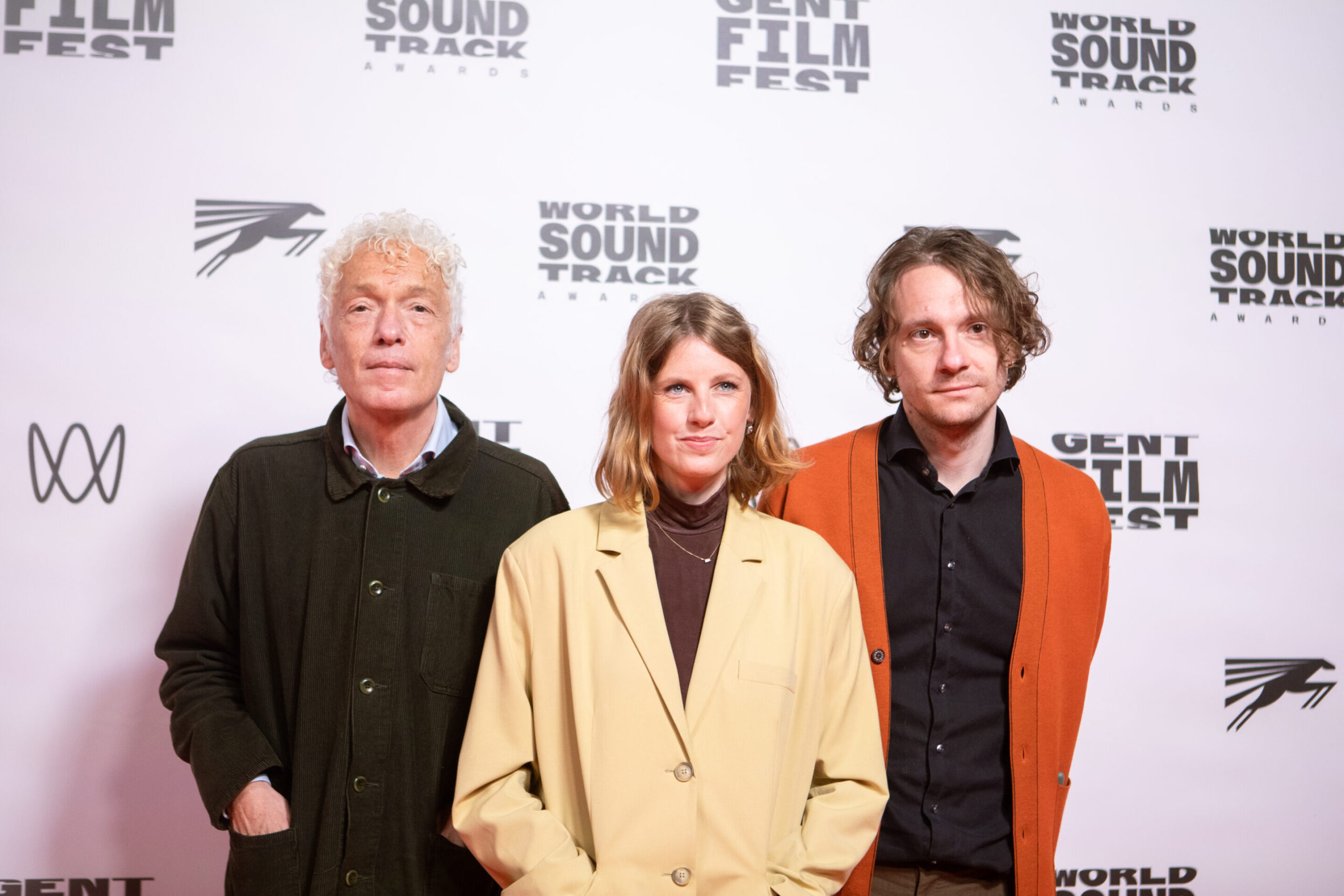
Erik de Jong (left), Doris Konings (middle), and Tibor de Jong (right). Credit: Aagje Van Raemdonck
An important part of the movie is the egg, which symbolises a product of consumerism. “It's a symbolic food product, and it is also an embryo at the same time,” he said, also portraying it as a symbol for cycles, another important part of the film according to the creators.
Konings felt like the logo for the delivery bags was one of the most difficult icons to come up with.
“I thought about what it had to be, for just as long as making the film itself,” she said. To her, it was an important symbol, which was in the end just meant to be a “simple” bee.
Why a VR movie?
Virtual reality is a tricky landscape to navigate and it certainly wouldn’t be the first choice for a film medium. But despite that, it is an amazing tool for immersion, said De Jong. “VR is a medium you enter. Because you put on the headset and it is stereoscopic. Something almost magical happens inside your head, transporting you into the world.”
The story he wanted to tell required a certain technique that regular films don’t utilise – stereoscopy. A technique that creates the illusion of three-dimensional depth by using flat images. In VR, the headset sends two slightly different images for each eye that mimic the way humans see the world.
It gives off the illusion the viewer is transported somewhere completely different. Experiencing the story in a different way. “You create the world and the world tells the story to you in an environmental way, instead of someone explaining it to you.” the director said.
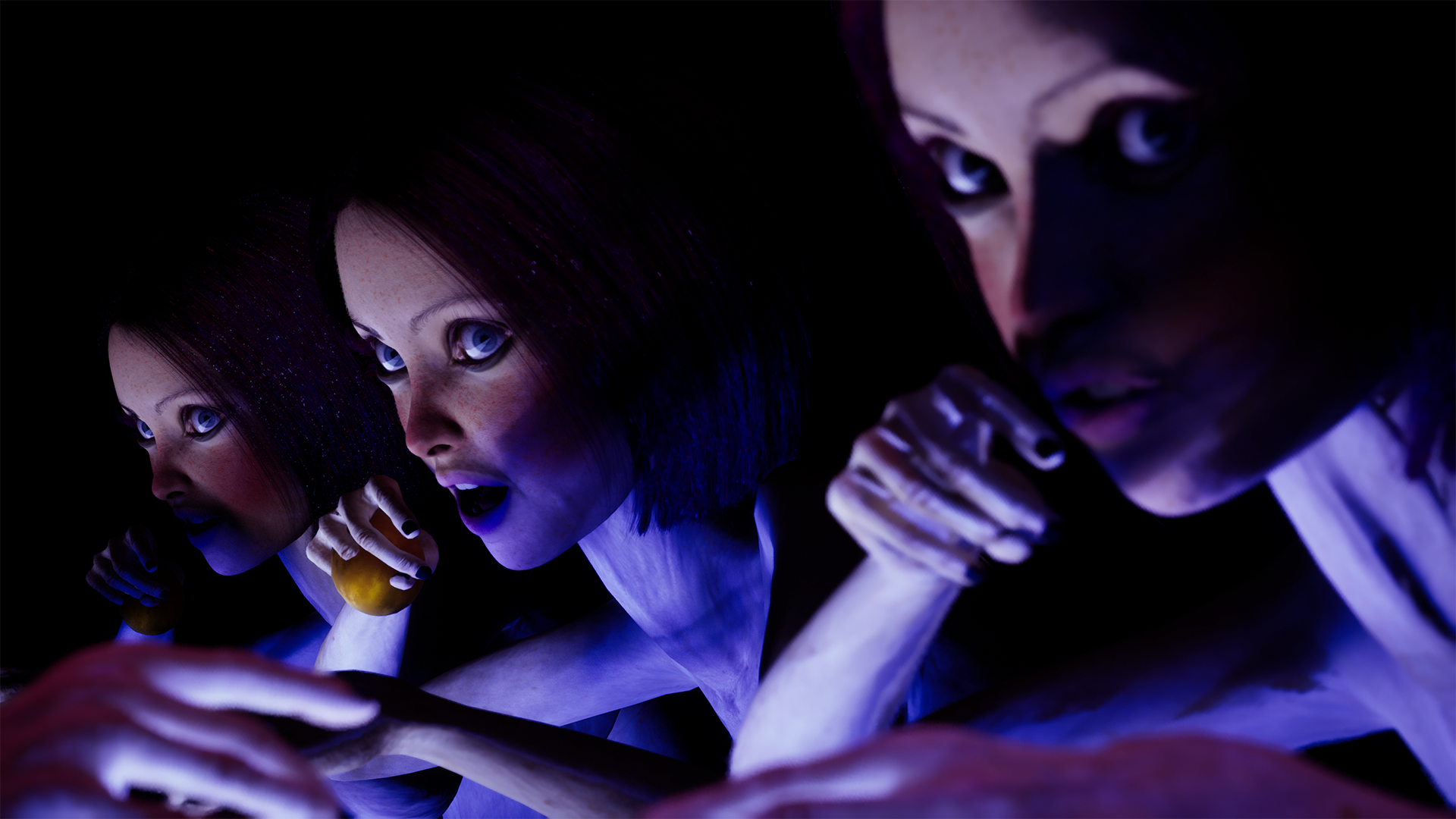
The golden eggs. Still Honeyboys. Credit: Nemo Vos
Despite this, VR comes with a lot of technical challenges.
Konings, the animator of the movie, said that “unlike in a regular film, you can't really cut. Because every time you do that, your body moves to a different location in the scene."
As a result, the film is made as a one-shot. "You can't take close-ups. So you really have to make things move closer to the camera or further away.”
Another challenging element De Jong noted was the importance of trusting the viewer to grasp the story as they are experiencing it.
“So no one sees exactly the same thing. Everyone looks at different things. So you can never let your whole story or your whole experience depend on that. It is just a separate, specific element that you simply have to trust the viewer sees,” he said.
The production
When it comes to the production process of Honeyboys, Konings shared that it all took approximately eight months, during which they worked tirelessly seven days a week. Additionally, the creation of the story itself took a year and a half, along with securing funding, using applications and other details surrounding the movie.
Honeyboys is the project De Jong and Konings have been working towards as their biggest and most ambitious creation yet.
“We sort of worked towards that with short projects. And this had to become a sort of big summary of all our techniques and experiments,” the director shared, “So that was pretty much it for us. The outcome of a very long period. Just doing things for three or four years.”
Beginning to tackle such a complex project always starts small and gradually builds into something more complete. De Jong starts his development process with a big black empty space in his game engine software.
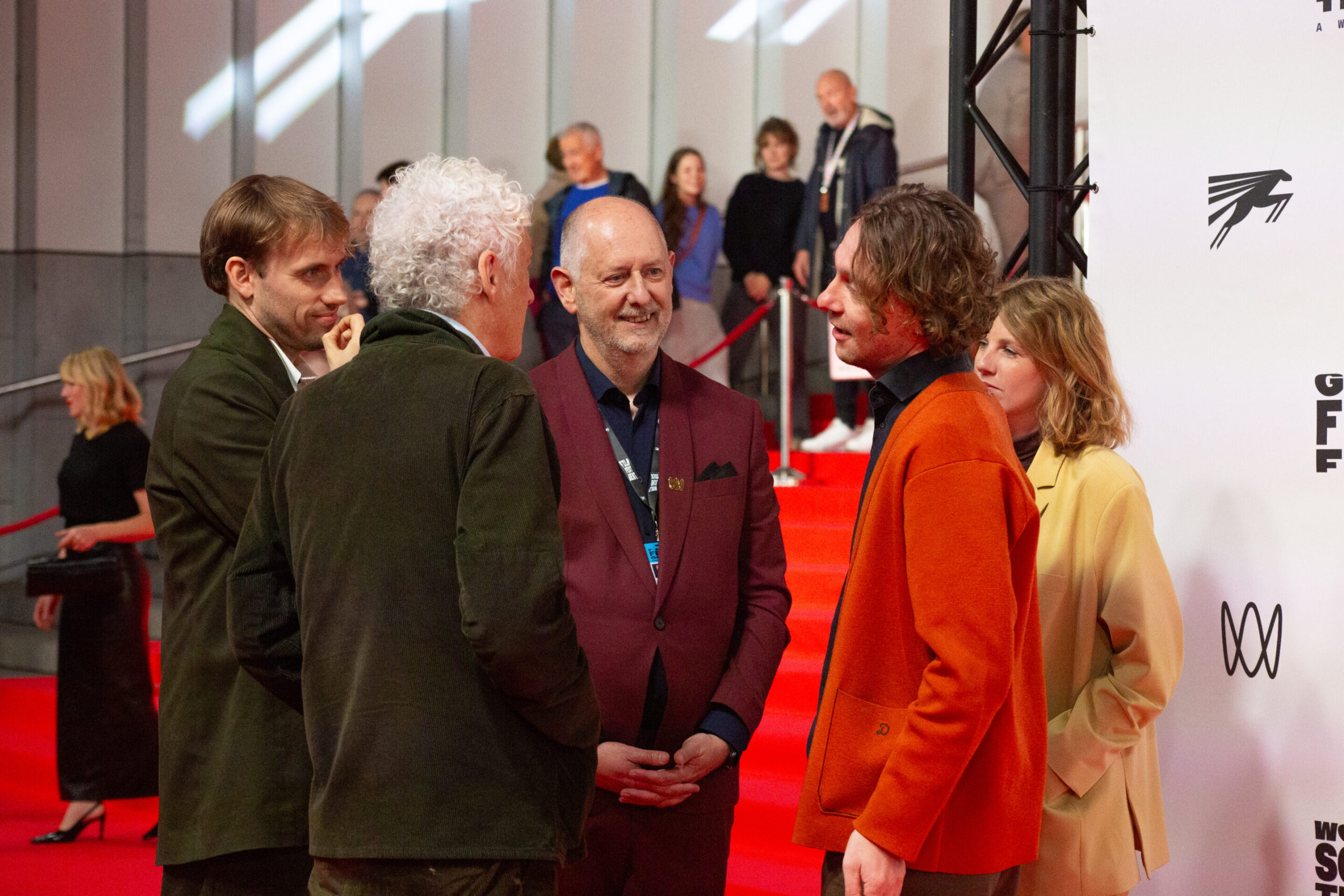
The creators of Honeyboys talking to Wim De Witte at the red carpet. Credit: Martina Firova
From then on it is a slow ascent towards his world taking shape and ideas becoming more concrete. “So a bit of story, a bit of image, a bit of this. Then I work on it for a while until a sort of clear subject emerges. Then I go to Doris,” he said.
When Konings manages to animate what De Jong created, they both take their collective work to their composer, Erik de Jong. His creative freedom allows him to compose something completely unique. “Which gives the thing a different charge of the feeling of a different rhythm or a different twist," De Jong added.
Erik went on to share his take on producing VR music. “The difference between a regular feature film and VR is that the music is much more a part of the landscape, and not so much of the scene. And with film music, it's always a case of where the film music actually comes from.”
Bringing VR to the broader audience
With their art studio Nemo Vos, De Jong and Konings try to make their VR films more accessible in multiple ways.
They own a lot of VR headsets, which they use to bring their movie to the public through screenings.
Diversion, a French company, helps them distribute their film to film festivals, which brings the movie to a worldwide audience. They have already done so at famous festivals such as Venice and the Gent Film Festival to very positive reactions.
“We are also going to cinemas,” De Jong said. According to him, in the Netherlands, VR headsets are already available. Something they also intend to do in France, giving even more people the chance to see Honeyboys.
