
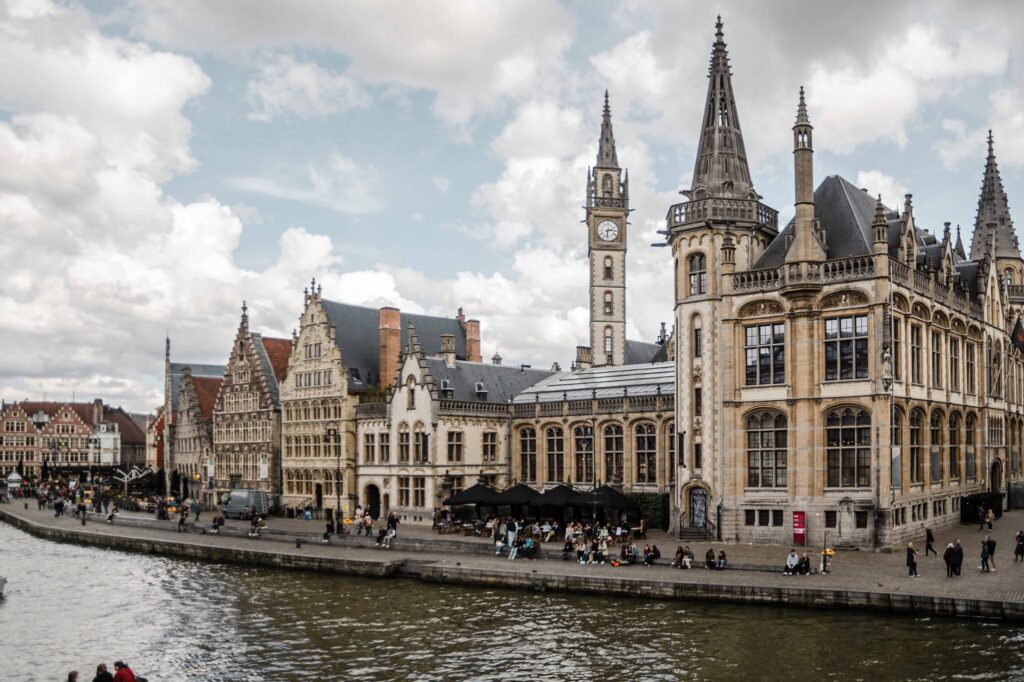
With its soaring turrets, ornate façades and unrivalled position overlooking Ghent’s historic waterfront, 1898 The Post is one of Belgium’s most striking hotels. But transforming a protected landmark into a luxury retreat was no simple task. Leo Cendrowicz meets the couple who took on the challenge – and have now given its former porter’s house a new lease of life.
When husband-and-wife Geert De Paepe and Greet De Paepe-Kerkstoel bought Ghent’s magnificent former post office in 2014, they had no intention of becoming hoteliers. Their plan was rather more straightforward: turn the historic building into four enormous apartments, keep one for themselves and sell the other three.
Instead, they created 1898 The Post, a luxury boutique hotel overlooking the city's celebrated Graslei waterfront. And last month, they expanded their hospitality venture with the opening of 1898 Porter’s House, a four-room retreat in the former porter’s residence next door to its award-winning sister hotel.
Neither project was quite what they originally envisaged.
“We fell in love with the building,” De Paepe recalls. “We looked at the rhythm of the windows and started asking architects what else we could do. And we came across the idea of a hotel.”
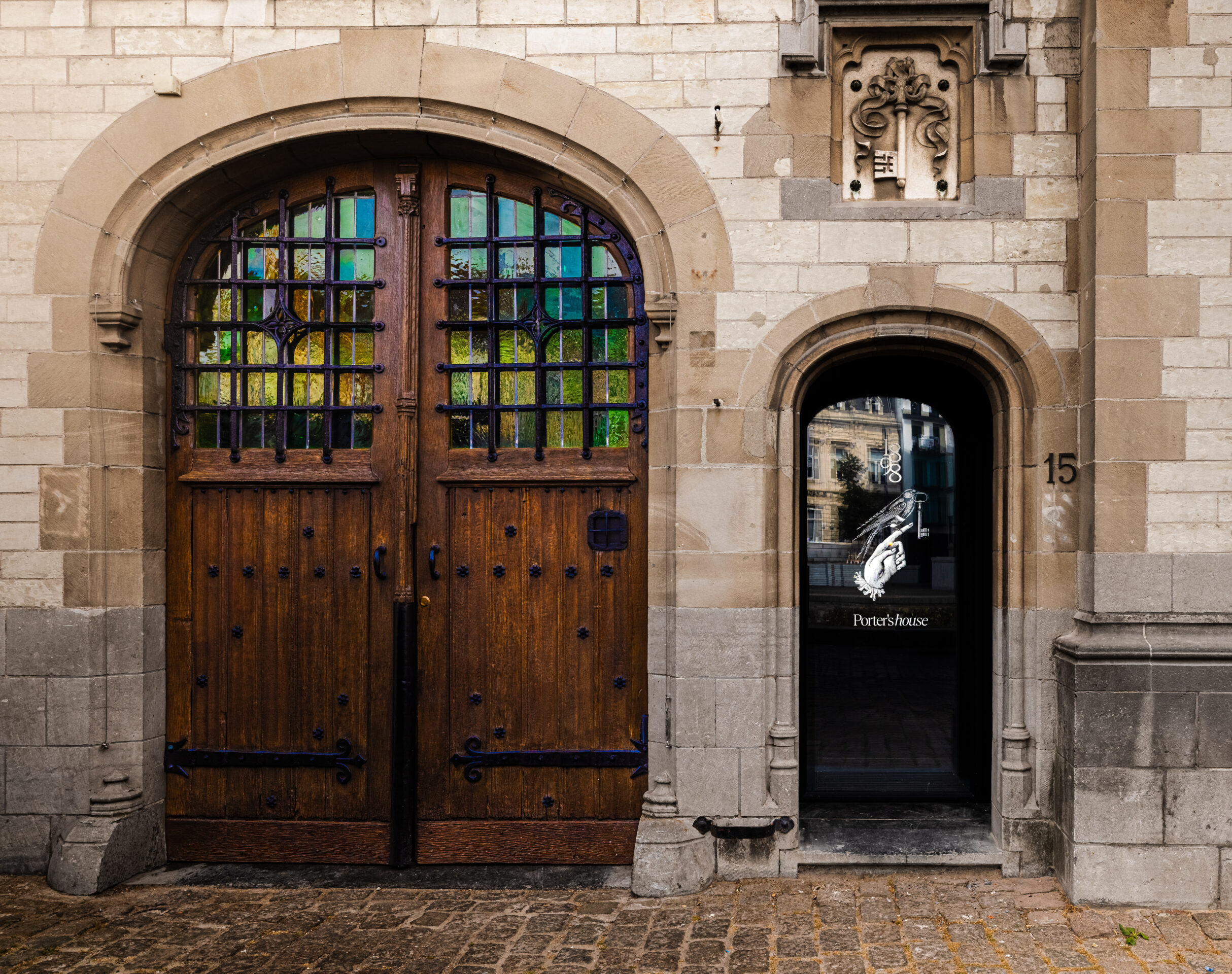
Porter's house.
Even acquiring the property had been an ordeal. De Paepe, a property developer, knew the previous owner, who had run into financial difficulties. Negotiations with creditors collapsed when an undisclosed bankruptcy petition emerged, forcing him to start again with the administrators.
After finally securing the building, the couple faced a different question: could they create a hotel worthy of such an extraordinary address?
Few hotels in Belgium can rival its setting. Standing above the Graslei, the historic quayside where merchants once unloaded their goods, 1898 The Post overlooks the River Leie and one of Europe's most picturesque urban panoramas. Across the water, stepped gables rise above the Korenlei; behind the hotel, Ghent's medieval towers punctuate the skyline.
The building itself is almost absurdly photogenic. Its turrets, clock tower, pointed arches and richly carved stonework suggest something considerably older than its late-19th-century origins. Designed by architect Louis Cloquet, the former Hotel des Postes et des Télégraphes combines Neo-Gothic and Neo-Renaissance flourishes with the grandeur of a city at the height of its commercial confidence.
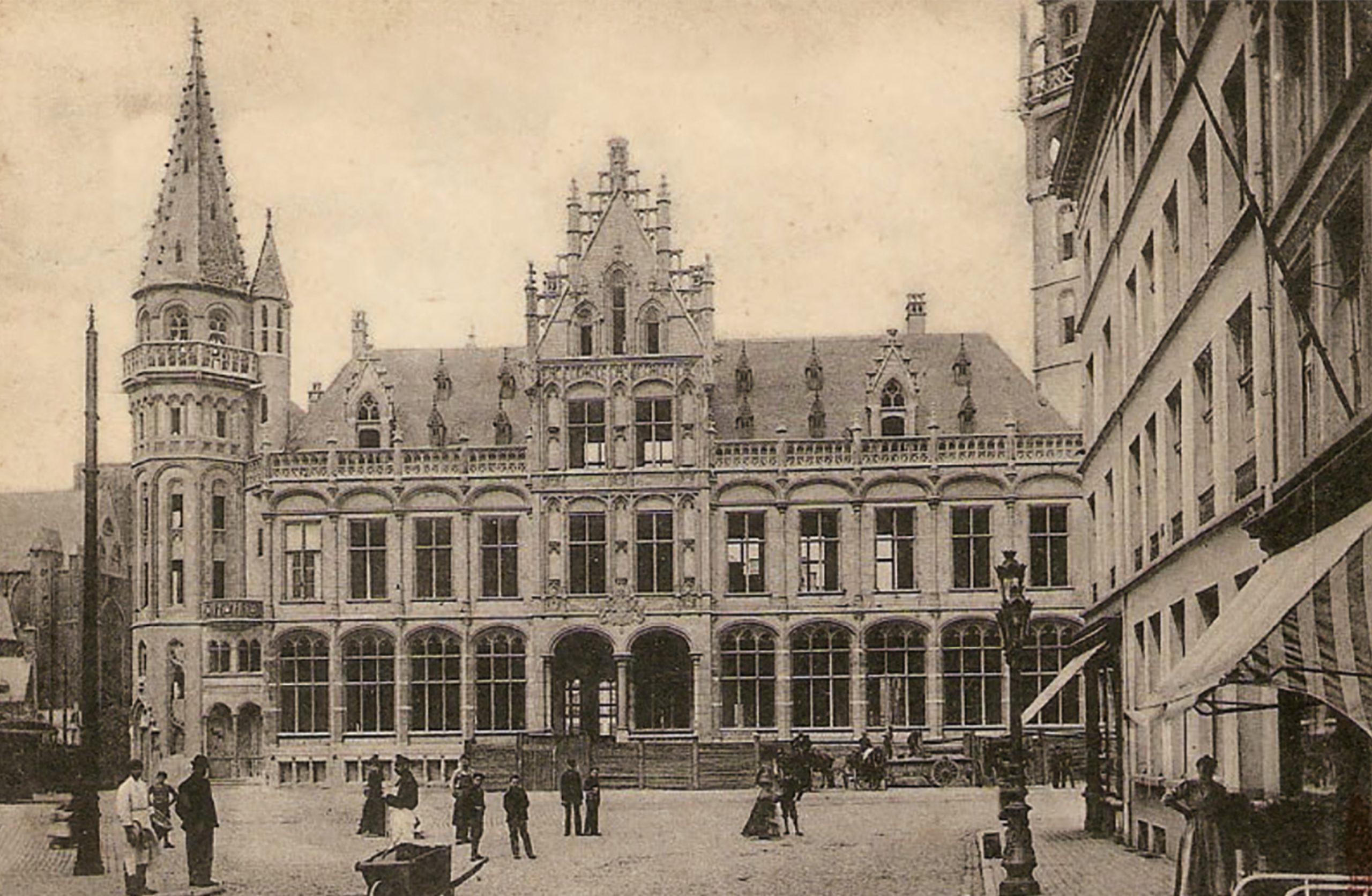
The Porthouse.
According to De Paepe, the site had originally been earmarked for an opera house. Foundations were laid before political manoeuvring redirected the project elsewhere, leaving the city to commission a post office instead.
Turning this architectural extravagance into a functioning hotel, however, required considerably more than installing comfortable beds.
The building's protected status imposed strict limitations, while its original construction presented surprises. De Paepe remembers discovering that floors across its three towers differed in height by as much as 20 centimetres, apparently because of uneven concrete work dating from construction.
“Everything looked level, but there was a difference of about 20 centimetres,” he says. “We had to find solutions.”
The result is a hotel where unexpected steps and subtle changes in floor level are part of the experience. Standardised rooms were never an option.
“No room is a copy of another,” De Paepe-Kerkstoel says. “Every room is different.”
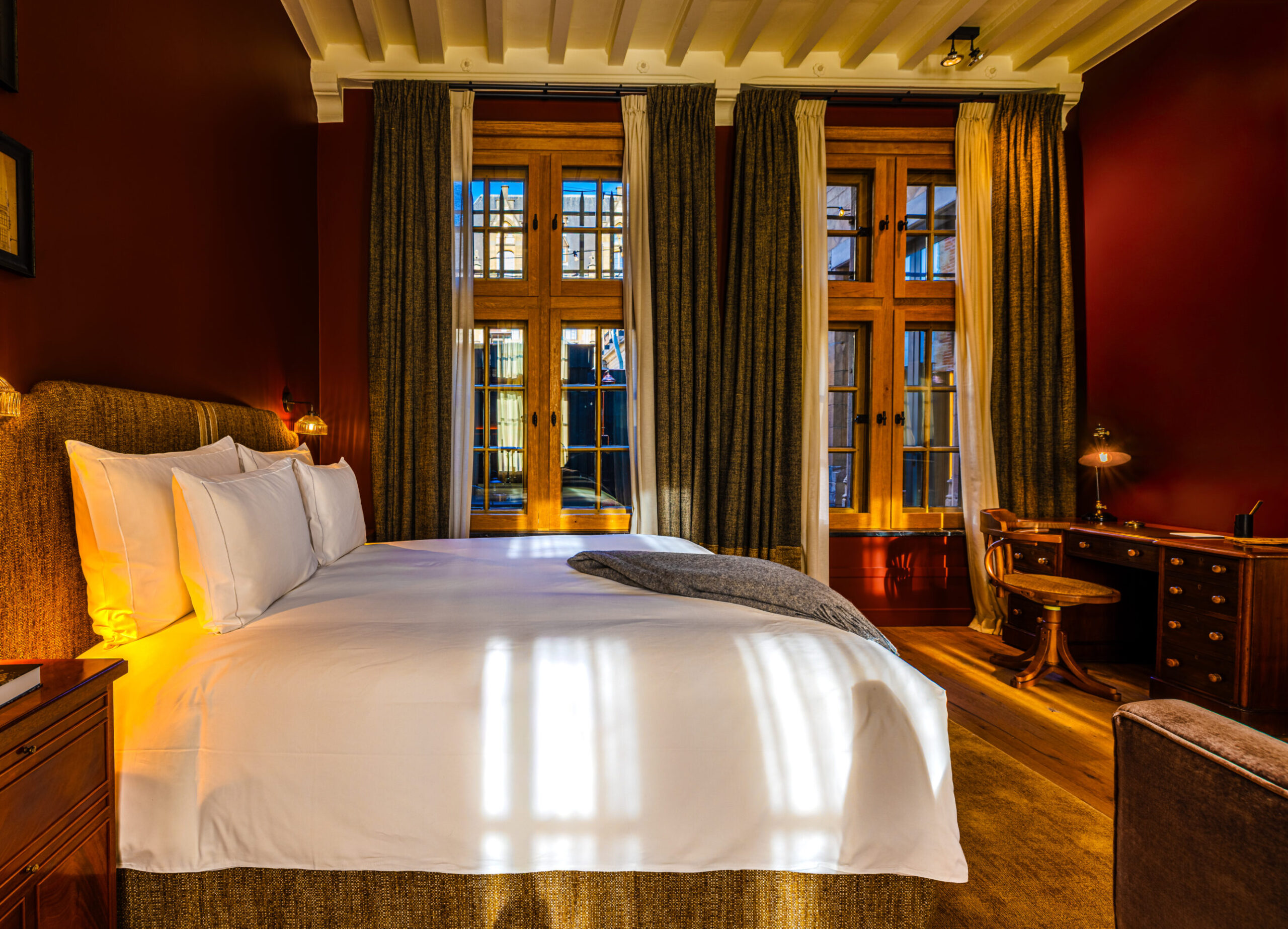
Family suite in the Porter's house.
Renovation began in February 2016, and the hotel opened 18 months later, on 15 August 2017. Initially, the couple entrusted its management to an outside company, but they felt the operation failed to do justice to the property. In October 2020, they took control themselves.
For De Paepe-Kerkstoel, who previously worked in fashion, the challenge was not simply to create a luxurious interior, but to ensure that the service matched the surroundings.
“If the candles aren't lit at the right time in the evening, it's another feeling,” she explains. “It's thousands of little things.”
She regularly joins the breakfast team, tasting dishes and discussing improvements. The hotel employs around 35 full-time staff, supplemented by students and flexible workers. Its cocktail bar, The Cobbler, has also become a destination in its own right.
“We've trained a lot of our own competition,” De Paepe jokes, explaining that several of Ghent's cocktail bartenders began their careers there.
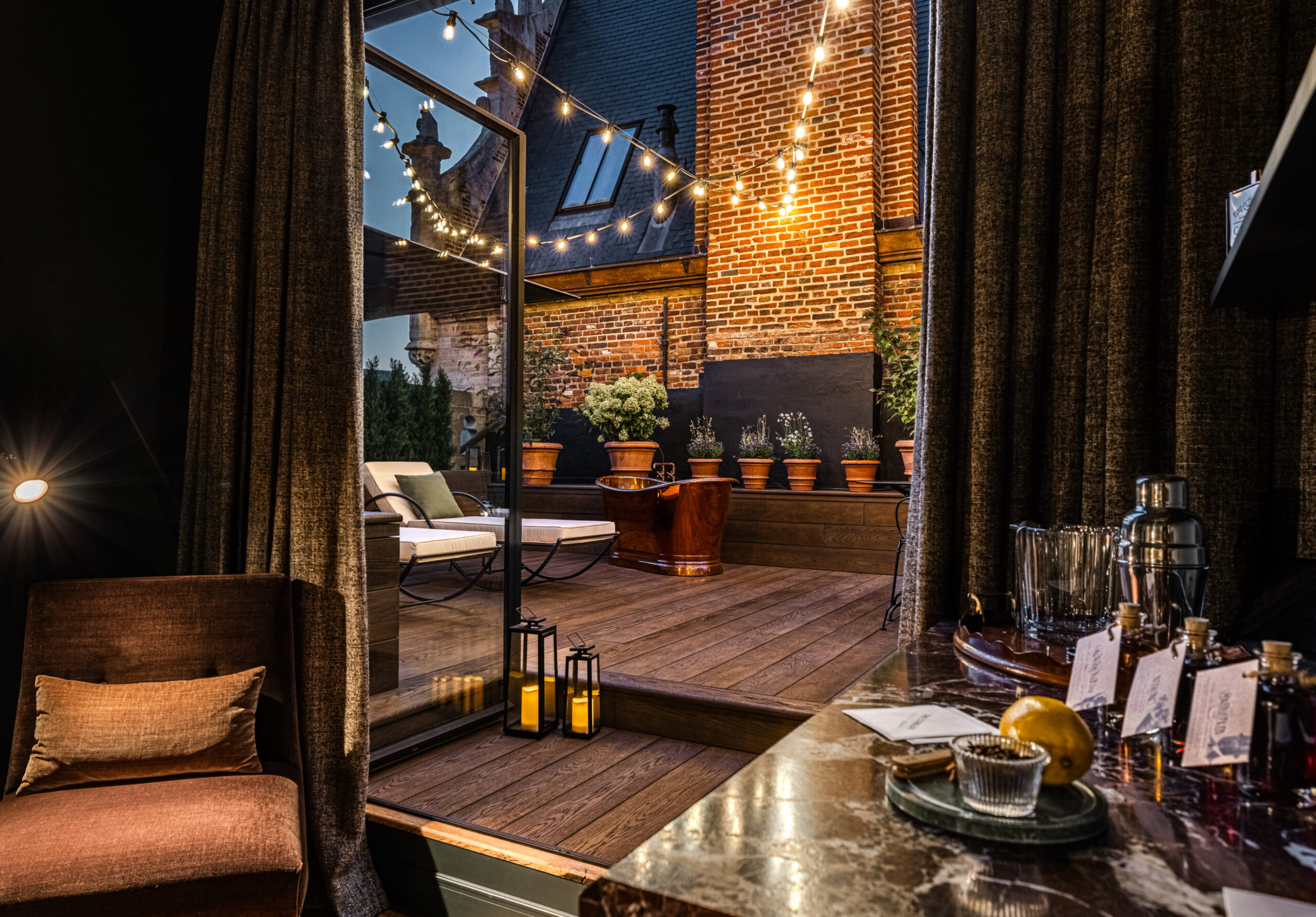
Porter's house. Graslei terrace suite.
The couple's latest venture, however, is more personal. The building that once housed the post office porter was, until recently, their own home.
They bought it in 2019 and lived there for several years, but found that residing beside a hotel meant never truly escaping work. In September, it reopened as 1898 Porter’s House, offering individual suites or exclusive use of the entire property for up to ten guests.
The accommodation includes marble bathrooms, private terraces and outdoor bathing facilities, while guests can arrange private catering and butler service. But De Paepe-Kerkstoel insists the idea was never simply to create another luxurious hotel.
“It's not simply about luxury; it's about atmosphere, intimacy and harmony,” she says.
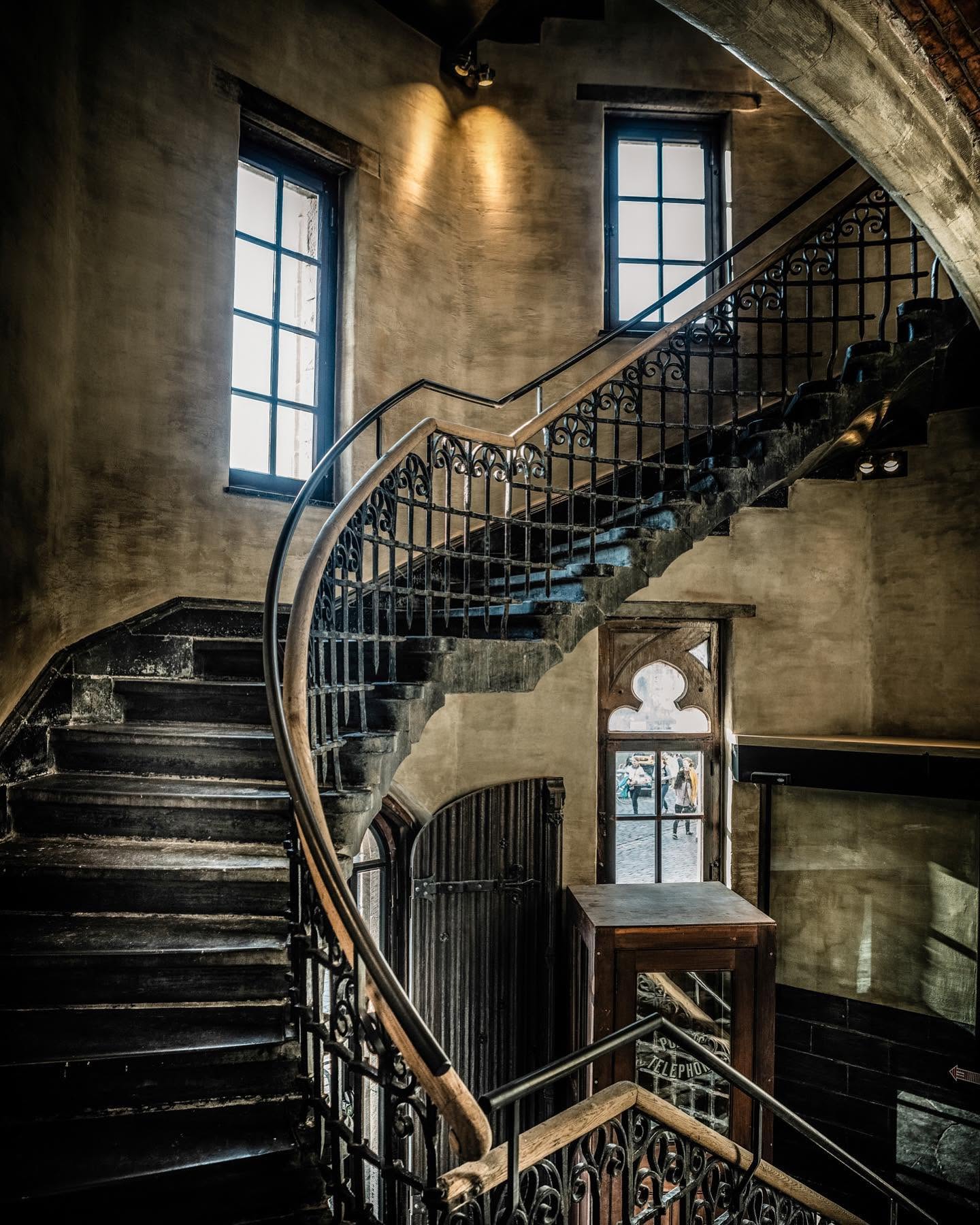
The hotel's steps.
She wanted guests to feel they had their own home in Ghent, complete with the services of the hotel next door. The building's history, she felt, should remain central to the experience.
“I believe every building has a soul, and we wanted to respect that rather than impose something completely different,” she says.
To achieve this, the couple turned again to interior designer Geraldine Dohogne, who had worked on 1898 The Post. For the Porter’s House, she researched the building's history and its relationship with Ghent's old port, incorporating architectural details inspired by the original doors and woodwork.
Dohogne introduced oak flooring and Carrara marble while preserving original beams, doors and windows wherever possible. Her aim was to create a timeless interior rooted in its surroundings, rather than the anonymous luxury of an international hotel.
In a building with such an extraordinary exterior, the challenge was to make the experience inside live up to the view outside.
