
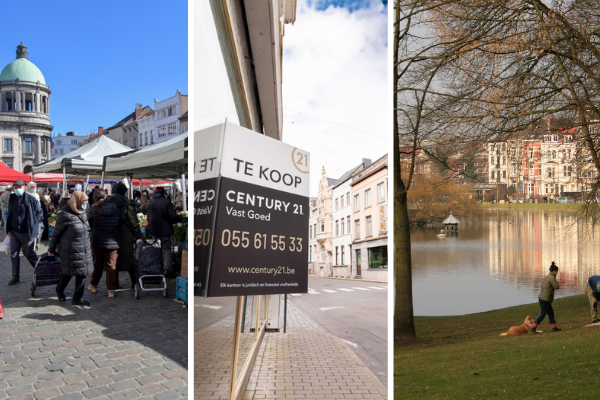
Belgians are born with a brick in the stomach, or so the saying goes. The dream of building your own home is one that many pursue, with err... mixed results. But whether starting from scratch or plumping for property that already exists, climbing the property ladder is a pricy business.
Yet if there's one thing that estate agents the world around hammer into prospective buyers, it's "Location, location, location." Latest figures from Belgium's national office for statistics highlight this mantra, showing how much prices can vary across the country.
Unsurprisingly, Brussels is the most expensive region with the trendy (or frankly, rather posh) quartier of Ixelles topping the list with a terraced or semi-detached house selling for a median of €835,000. This won't come as a shock to those who know the city – with its well-kept avenues, swanky restaurants, and proximity to EU institutions, the neighbourhood has become a honey-pot for folks with cash to splash.
Perhaps a little more striking is the gap from the city's most-coveted areas to the least. Molenbeek – an area infamous for terror incidents – is at the bottom of the pile with a median price of €300,000. It's hardly a drop in the ocean but at well over half a million cheaper than Ixelles, and for a location that would in larger cities qualify as "a stone's throw from the city centre", it almost seems a bargain.
Sure, the area lacks the hip café culture cachet, but the drop in value is quite impressive. In other European capitals (I'm looking at you, London) you wouldn't get a proverbial shoebox for this price. And as someone who enjoyed living in the area, it really doesn't deserve the bashing that some politicians go in for.
All the same, with prices showing no sign of depreciating, buying bricks remains a distant dream for many, no matter where it is.
Are you dreaming of your own place? Let @Orlando_tbt know.
Belgium in Brief is a free daily roundup of the top stories to get you through your lunch break conversations. To receive it straight to your inbox every day, sign up below:
1. From Ixelles to Molenbeek: The five most (and least) expensive Brussels neighbourhoods
Statbel, the Belgian statistical office, has published its complete annual data for 2021 housing prices for the country. Read more.
2. Euro hits lowest value in 5 years: How will it affect you?
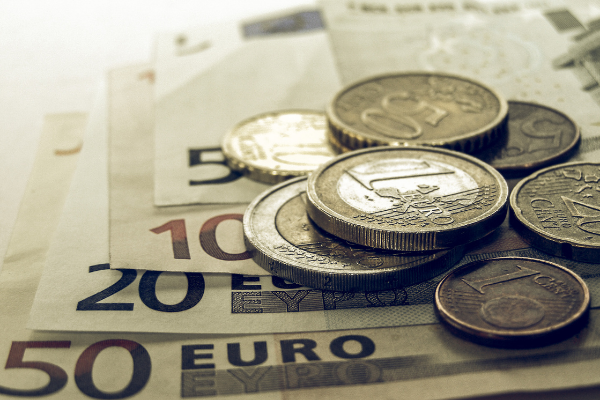
The Euro currency dropped to its lowest point against the US Dollar since 2017, after being valued at $1.05 on Wednesday – nine cents less than at the same time last year. The new figures mean that the EU currency has dropped by 13% in a year. Read more.
3. Belgium ‘fully prepared’ as Russia shuts off gas to Poland and Bulgaria
Following the announcement that Russia has halted gas supplies to Poland and Bulgaria on Wednesday, Federal Energy Minister Tinne Van Der Straeten said that Belgium is “fully prepared” for the impact of that decision. Read more.
4. Major Belgian cities in precarious water situation
Major Belgian cities, in most of Wallonia and some of Flanders, are depleting their renewable water resources at the highest rate in northern Europe, according to data from Aqueduct, the World Resources Institute’s atlas of water risks. Read more.
5. Work-life balance: 6 in 10 white-collar workers in Belgium have flexible hours
Nearly six in 10 (57%) white-collar workers in Belgium have flexible hours, according to a report from European HR & payroll service provider SD Worx. The finding illustrates the uptake of flexible working hours and teleworking. Read more.
6. Wildlife organisations oppose Belgian ban on importing hunting trophies
A ban on the import of hunting trophies has found opposition from a surprising place: the Belgian World Wildlife Fund (WWF). Read more.
7. Canine diets: Vegan dogs healthier than carnivores
Dogs on a vegan diet need fewer trips to the vet, less medicine and are healthier, according to a study by the University of Winchester. Researchers studied over 2,500 dogs to explore the health advantages of vegan canine diets. Read more.
