
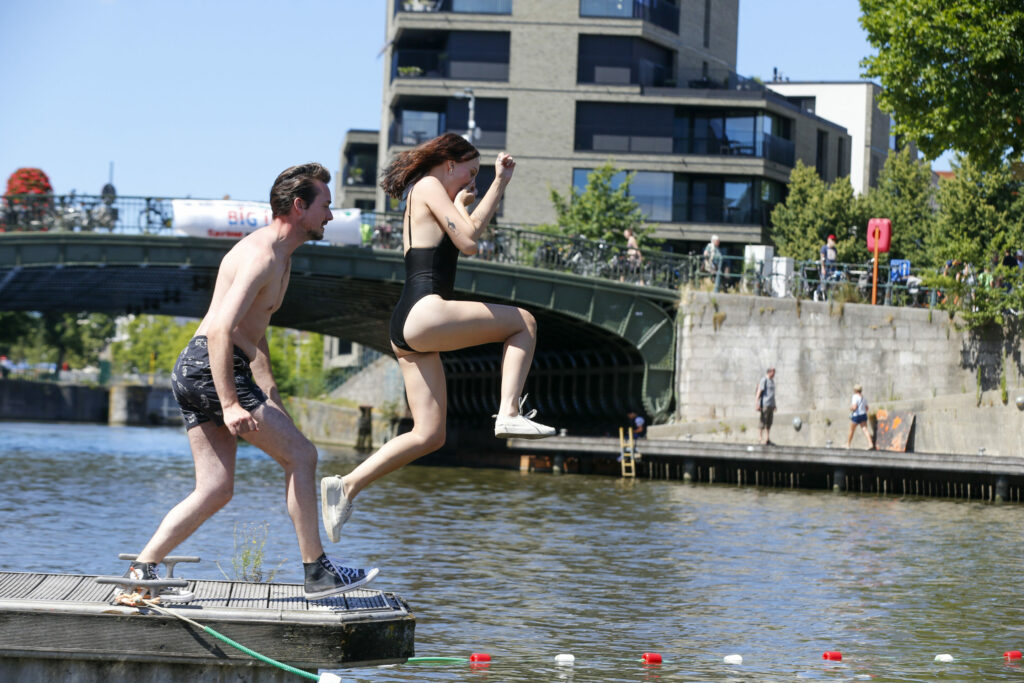
The lack of open swimming areas in Brussels was (partly) the focus of a new study, which has revealed that nearly half of waterways in both the Belgian capital and Flanders are clean enough to swim in.
The surprising result comes from Watermonsters, the largest citizen research ever into water quality in Flanders and Brussels, carried out by Waterland VZW, KU Leuven and De Standaard.
Remarkably, the study revealed that 43.3% of tested rivers, streams and canals meet the standards for bathing water quality. This was carried out by volunteer scientists who took over 6,000 measurements.
On the other hand, researchers also found that 42.3% of waterway locations showed poor results. This was due to excessive concentrations of the E. coli bacteria, which is found in faeces and enters waterways via the sewage system.
It is the first time that E. coli levels have been mapped out in Brussels and Flanders’ canals, rivers, streams and ditches. This type of pollution mainly comes from households, rather than agriculture or industry (which is the result of PFAS pollution).
Researchers were looking into the functioning of sewage systems and the presence of E. coli – with water quality levels being the only reliable indicator. The presence of E. coli also betrays the presence of other pollutants, such as detergents and medicine residues.
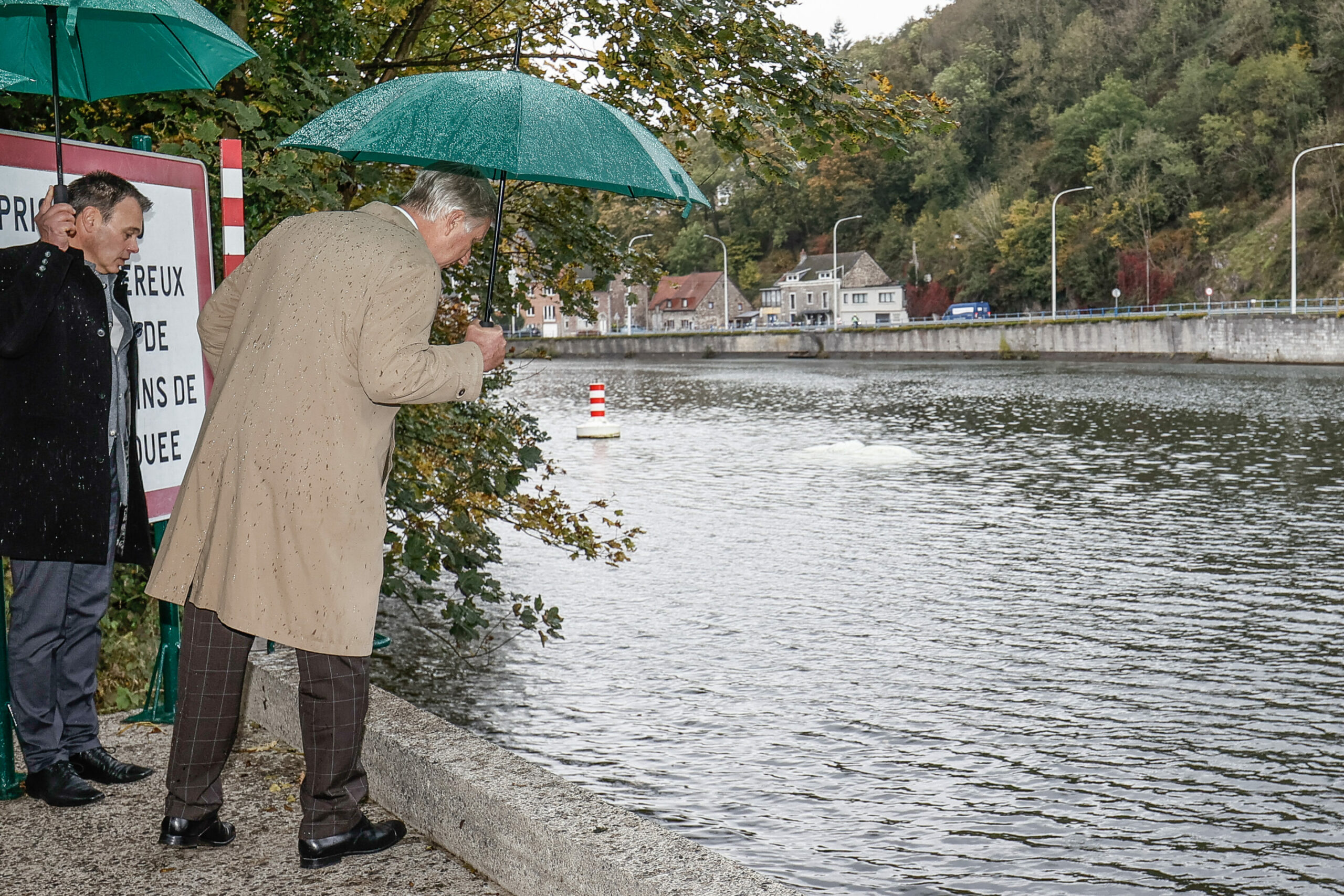
King Philippe of Belgium pictured during a royal visit to the drinking water production site of Vivaqua, in Tailfer, Lustin, on Wednesday 20 October 2021. Credit: Belga
Positive measurements were found in city centres, notably Ghent, Antwerp and Bruges. This is where sewerage infrastructure is well developed and functions well, especially in dry weather. Researchers did not single out Brussels, as the city is considerably larger in both urban area and population size.
Generally, regions with an average sewerage coverage, combined with a low population density, also had good measurements. These include areas such as Polders or Kempen Plateau.
However, excessive values were found in the rest of Flanders. What researchers call "a fragmented settlement pattern" – which includes villages and countryside smallholdings – has driven excessive discharges of E. coli bacteria into Belgian waters – greatly impacting water qualities.
This small minority is responsible for a disproportionately large pollution. Some 290,000 homes that are still not connected to the sewer network. This amounts to between 12 and 13% of homes.
The constant dripping and continuous flow of untreated water from these homes into canals and streams is having a disproportionate effect on water quality, Watermonsters' study has revealed.
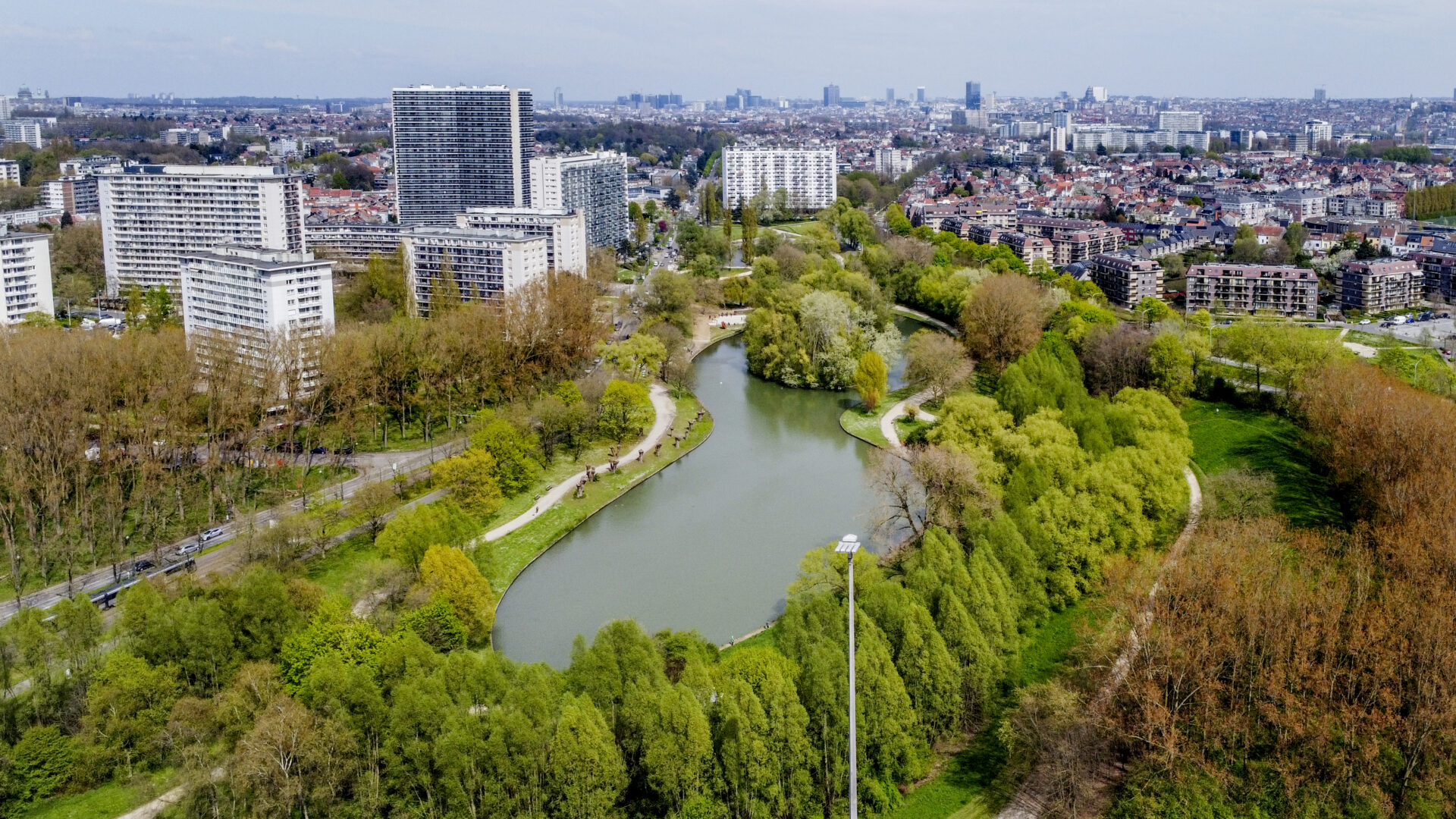
One of the ponds in Neerpede Park. Credit: Belga / Hatim Kaghat
The presence of PFAS in drinking water has dominated headlines in the last few years, particularly in Wallonia. Yet the question of water quality and open swimming remains a sore point, particularly in Brussels.
In the 19th century, the city's historic waterway, the River Senne, was covered and diverted after it became an open sewer filled with refuse and decaying organic matter. Last month, the city's last (and only) open air swimming pool closed down.
Today, it appears that water pollution from sewers is still an issue, as shown by Watermonsters' study. On the other hand, nearly 45% of sampled rivers, canals and streams meet the standards for bathing water quality – meaning that many opportunities for open air swimming are being missed.
While sources of pollution are scattered across both Flanders and Brussels, researchers underline that no single measure that can solve all of the issues – but there is still a long way to go towards a truly clean water policy.
