
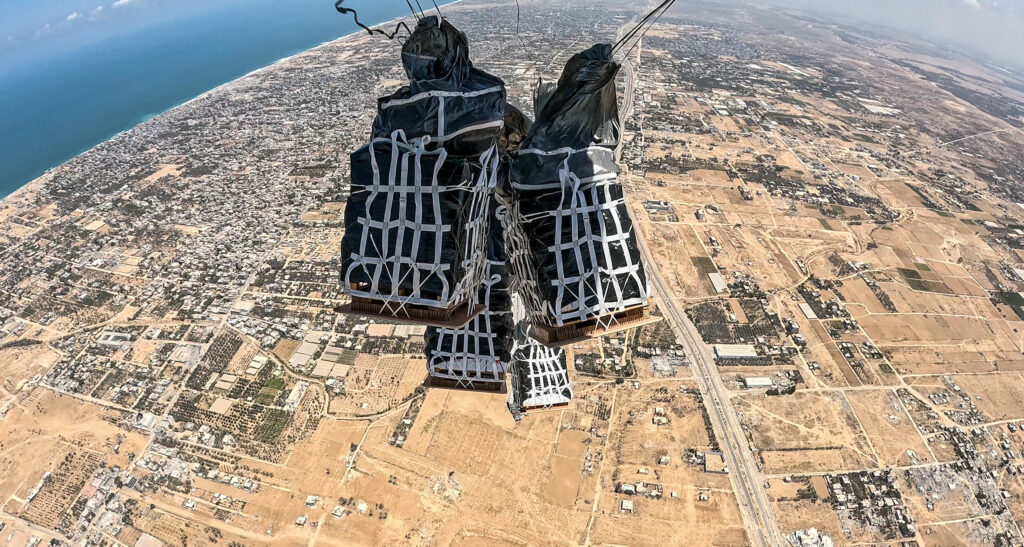
Belgium has now dropped 71 tonnes of aid and relief supplies over the Gaza Strip during five flights since the start of August, the Belgian Defence Ministry announced in an interim assessment of air drops on Friday.
Since the start of Operation Cerulean Skies 2, the Belgian Defence has carried out five A400M flights to drop 76 aid packages, which account for approximately 71 tonnes of relief supplies over Gaza.
After nearly two years of Israel's war in Gaza – which was triggered by the Hamas-led attack on 7 October 2023 – the Strip is considered at risk of widespread famine, and humanitarian organisations have described the situation there as "catastrophic". Despite this, access to humanitarian aid by road remains limited by Israeli forces.
Belgium's first air drop took place on Sunday 3 August (14 tonnes of aid divided over 16 packages), followed by more drops on Monday 4 August (16 tonnes, 16 packages), Wednesday (12 tonnes, 12 packages) and Thursday (15 tonnes, 16 packages).
The last drop took place on Friday (today), when the Defence Ministry dropped 14 tonnes of relief supplies over Gaza, divided into 16 packages.
Critised method
The Belgian military A400M aircraft dropping these aid supplies left the military airport in Melsbroek to fly to Jordan on 1 August, following a decision by Prime Minister Bart De Wever (N-VA), and the Ministers for Defence, Theo Francken (N-VA) and Foreign Affairs, Maxime Prévot (Les Engagés).
As Belgium is conducting this operation as part of a multinational coalition led by Jordan, a Belgian detachment of military personnel also flew to the country. From there, they prepare and carry out the air drops of humanitarian goods over the Gaza Strip.
Other countries, such as Canada, Germany, and France, have also dropped aid supplies over the Gaza Strip in recent days.
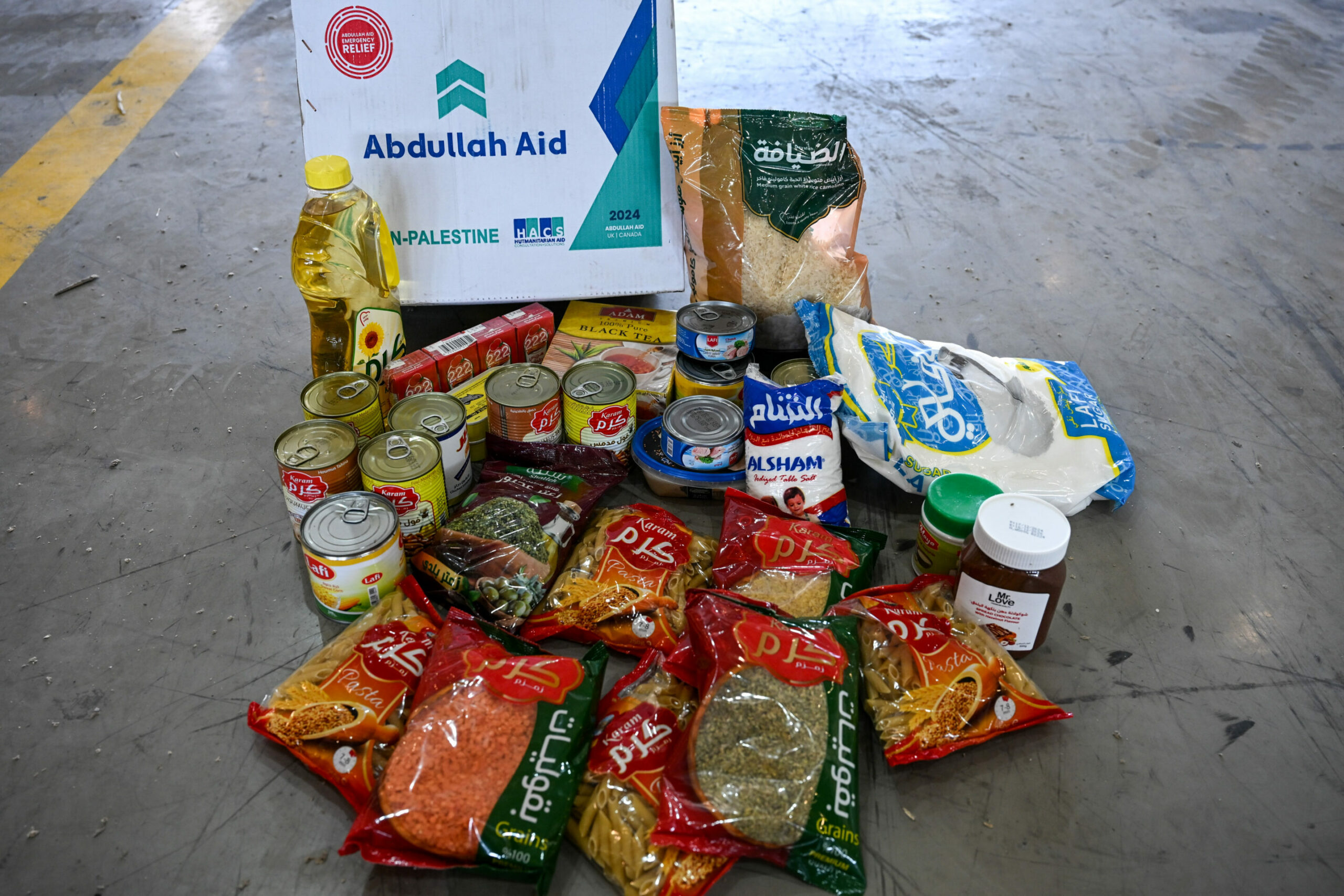
Packages of aid that was dropped over Gaza. Credit: Belgian Defence Ministry
On Friday, the UN Office for the Coordination of Humanitarian Affairs (OCHA) stressed that while "every attempt to provide aid is welcome," airdrops cannot replace overland deliveries. "In terms of scale and effectiveness, there is no alternative to land aid. A truck can transport far more at a much lower cost."
Additionally, the drops pose risks to the people in the nearby area, despite the fact that military experts say they are precise within a 50-metre range. On Monday, a nurse from al-Aqsa Hospital was killed during the drops after being hit on the head by an emergency package.
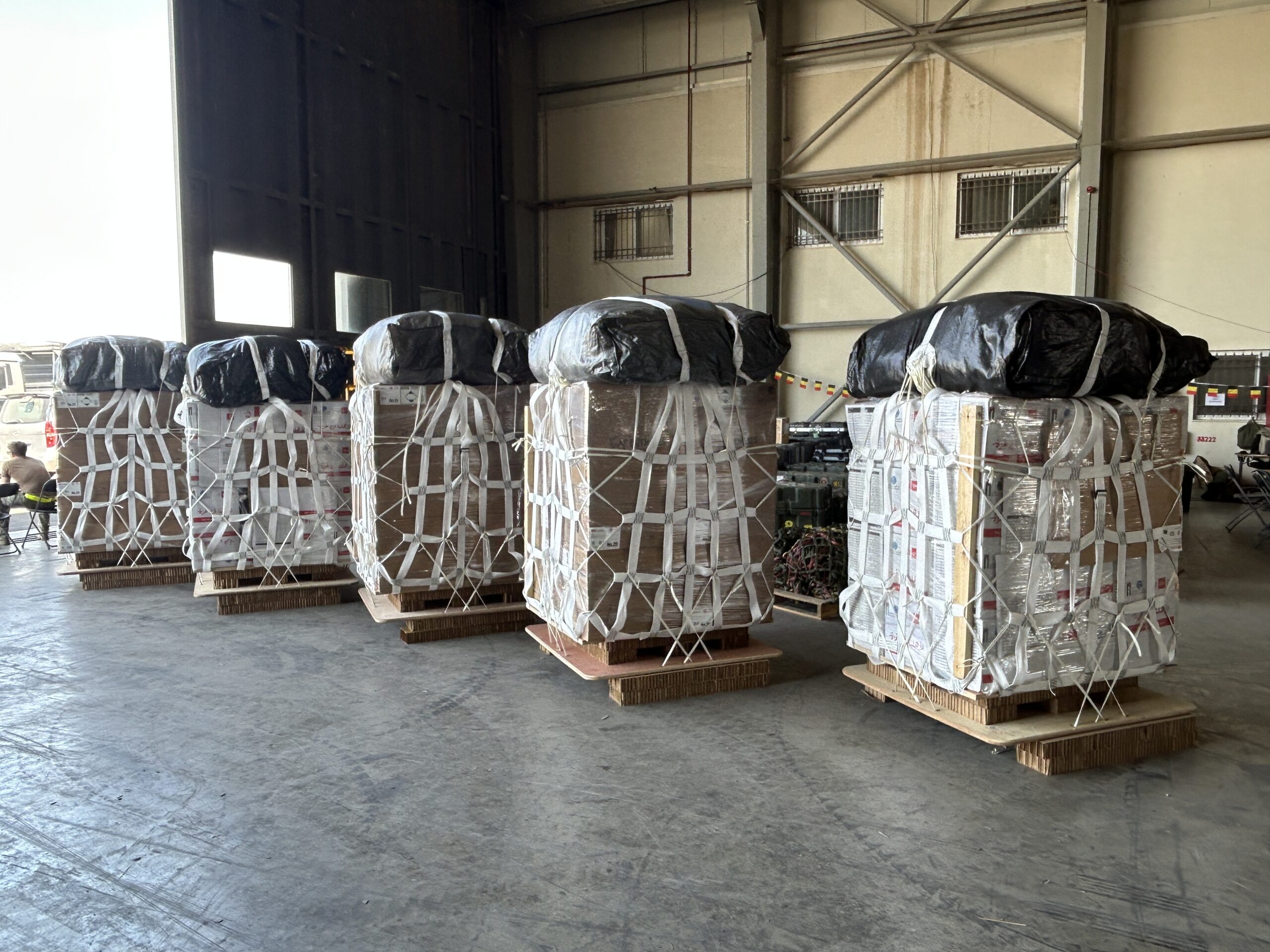
Packages of aid that was dropped over Gaza. Credit: Belgian Defence Ministry
On Friday, Belgian Foreign Minister Maxime Prévot also summoned Israeli ambassador Idit Rosenzweig-Abu, following Israel's announcement that it intends to occupy the City of Gaza.
Prévot wants to make clear to Ambassador Rosenzweig-Abu that Belgium disapproves of this decision and, by extension, the continued colonisation of the Palestinian territories. The meeting is taking place on Friday afternoon, but no communication is expected to follow afterwards.
In recent days, Israeli Prime Minister Benjamin Netanyahu's proposal to opt for a total occupation of the Gaza Strip, including the City of Gaza and the refugee camps, has led to concern and disapproval among the Israeli opposition, the families of the hostages and a large part of the international community. On Thursday night, the Israeli security cabinet approved this option.
'Disproportionate' operations
The United Nations has already rejected the plan. On Friday, Prévot's cabinet discussed a series of unacceptable decisions that violate international law. "We must strongly advocate for a withdrawal of these plans, which would definitively jeopardise any prospect of a ceasefire and a peaceful and sustainable two-state solution."
"While it is legitimate to want to destroy the terrorist group Hamas, this should not be done through disproportionate operations that will further lengthen the already very long list of Palestinian civilian casualties," Prévot said.
Israel's war in Gaza was triggered by the Hamas-led attack on southern Israel on 7 October 2023, which saw around 1,200 people killed and 251 taken hostage. Currently, 50 hostages are still held in Gaza, of whom Israeli officials believe 20 are alive. Most of those freed so far emerged as a result of diplomatic negotiations. Talks toward a ceasefire that could have seen more hostages released collapsed in July.
Meanwhile, more than 60,000 Palestinians have been killed during Israel's military campaign, according to Gaza's Hamas-run health ministry.
