
Belgium's health institute Sciensano has confirmed the country's first listeria infection linked to a deadly outbreak of the infection in France, as reported by VRT on Wednesday.
Earlier this week, two people died and several fell ill in France after becoming infected with listeriosis. More than 20 people ranging in age from 34 to 95 have been infected.
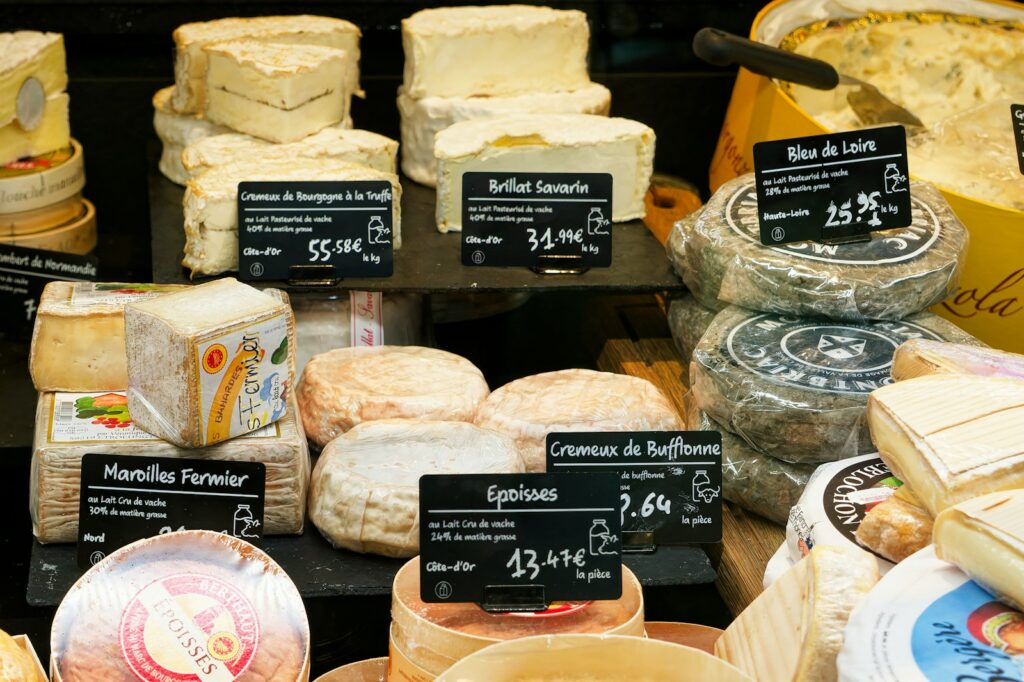
French supermarkets have recalled several varieties of cheese in connection with the outbreak, including camembert and brie.
The French health ministry has confirmed a possible link has been established between these cases of listeriosis and consumption of cheese produced by dairy firm Chavegrand, based in Maison-Feyne, Creuse.
Although the infected products are sold under various brands, they all come from the same source. Authorities confirmed 21 cases matching the same bacterial profile, 18 of which have emerged since early June.
Listeria case in Belgium
Sciensano confirmed today that a Flemish person has also been infected with listeriosis linked to French cheese.
"We are aware of one person infected with listeriosis, matching the strain involved in the outbreak in France," said Hélène Bonte of the Belgian Federal Agency for the Safety of the Food Chain (FASFC).
According to Bonte, this is not the first infection in Belgium this year. “In total, we already know of 62 listeria infections in 2025, but this is the first that we can link to French cheeses,” she said.
A number of leading retailers in Belgium have issued recalls of cheese over the past week. Bonte told VRT News that "The cheese was sold at Colruyt, Okay and Comarkt supermarkets."
The following products have been removed from supermarket shelves:
- Everyday Camembert 250 g. Best before date: 13/8/2025. Sold between 26/6/2025 and 12/8/2025. Article number: 2910
- Buchette de chèvre, Brand: Fleur de pré. Barcode: 3606520602921. Best before date: 29/07/25 to 19/08/25. Weight: 180g
- Camembert (240g), Brand: Le Le Père Alexandre, Best before date: up to 17/08/2025
- Camembert de caractère (250g), Brand Vieux Porche, Best before date: between 21/08/2025 to 30/08/2025
Consumer watchdog Foodwatch has condemned the French authorities for their handling of the contamination, and said the scandal “could have been avoided”. In a statement, the organisation said that evidence suggested contamination had been present since “at least April 2025”.
“The cheeses from this company, which supplies almost all major retailers in France, should have been kept under particular scrutiny. It is clear that this was not the case. We are now in firefighter mode: reacting when it is too late,” Foodwatch said.
Listeria in fish products
There are also concerns about Listeria infections in fish products. Yesterday, Albert Heijn recalled fish fillets from its stores in agreement with FASFC.
The company recalled “Hollandse nieuwe with onions - 2 pieces" with a best-before date of 17 August 2025. They were sold in Flanders from 8 to 13 August 8 to 13, 2025.
Listeria was also found in fish products at Carrefour stores. The following products have been removed from shelves:
- Fish & Chips cod filets (packs of 2, 200 g) — EAN: 5400101043237 — Lot: 5209533 — Use before date 14/8/2025
- Battered cod filets (2×110 g) — EAN: 5400101025837 — Lot: 5209588 — Use before date 14/8/2025
- Japanese dab meunière (6×200 g) — EAN: 5400101025813 — Lot: 5211536 — Use before dated 18/8/2025
Customers are requested not to eat any of the above-mentioned products and to take them back to the shop where they will be given a full refund.
What is listeria?
Listeria infection – also called listeriosis - is an illness caused by bacteria that can spread through food. It can be very serious for pregnant women, babies, the elderly and those with weakened immune systems.
Listeria symptoms usually start within two weeks of eating contaminated food. Mild cases can include fever, muscle aches, nausea, tiredness, vomiting and diarrhoea, while more severe symptoms may include headache, stiff neck, confusion, loss of balance and convulsions.
People experiencing these symptoms after eating soft cheese are advised to consult their doctor, specifying the consumption.
